
North Korea Demonstrates New Hypersonic Glide Vehicle Strike Capability
Military Watch Magazine Editorial Staff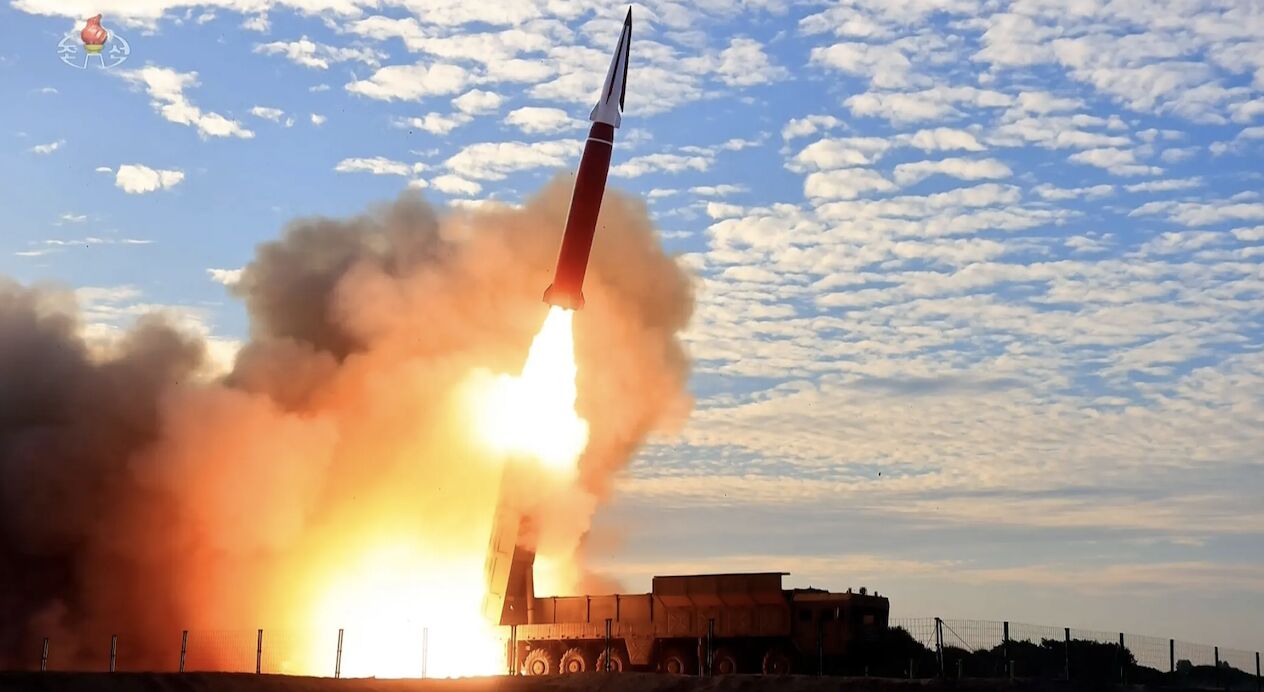
North Korean Hwasong-11Ma Hypersonic Ballistic Missile Launch
North Korea has announced the successful test of a new missile system incorporating a hypersonic glide vehicle, marking the latest test since such systems were first flown in September 2021. South Korean forces detected two short-range ballistic missile launches from the country’s eastern coast, reporting that the projectiles travelled approximately 450 and 600 kilometres before falling into the sea, indicating that the vehicles are intended for a short range tactical system. North Korea in 2025 became the first country to unveil a short range ballistic missile with a glide vehicle, which is an evolution of the KN-23 design better optimised to evade enemy air defences.
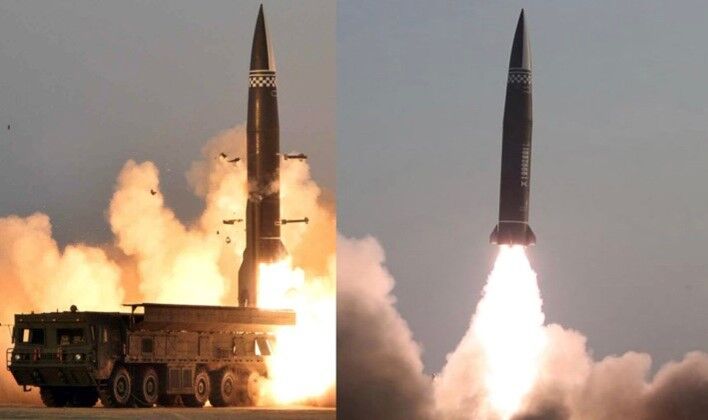
Images released by the Korean Central News Agency showed a missile displayed on a transporter-erector-launcher and a monitoring screen identifying the weapon as the Hwasong-11Ma-1. The system appears to be an evolution of North Korea’s Hwasong-11 family of short-range ballistic missiles, referred to in the West as the KN-23, with analysts assessing that it is equipped with a hypersonic glide vehicle. Unlike a conventional ballistic missile warhead, a hypersonic glide vehicle can manoeuvre during the terminal portion of flight rather than following a predictable ballistic trajectory. This can complicate the task of missile-defence systems, particularly when combined with high speed and a relatively low flight path.

North Korean state media described the new weapon as being of “great significance” and said it incorporated “ultra-modern defence technology.” Chairman of the ruling Korean Workers’ Party Kim Jong Un stated that the development would strengthen the country’s warfighting capabilities, warning that “the enemy will know better what such progress means without any explanation.” The new capability would give adversaries “an incurable headache and a very cruel and unavoidable blow,” he added.

The value of hypersonic glide vehicles was first demonstrated in high intensity combat in March 2026, when Iran fired fired the Fattah 2, which integrates one such vehicle, against high value targets in Israel. Iran is widely speculated to have been able to bring the missile into service with the help of technology transfers from North Korea. The two Western adversaries having maintained close defence ties since the 1980s centred around transfers of Korean missiles and related technologies. North Korea’s decision to integrate hypersonic glide vehicles onto short range ballistic missiles could result in such systems proliferating widely, most immediately to Russia where large scale procurements of various missile types from the East Asian state have continued at scale.
