
North Korea’s New AI-Enabled Hypersonic Missile Introduces Revolutionary Advances in Penetration Strike Capabilities
Military Watch Magazine Editorial Staff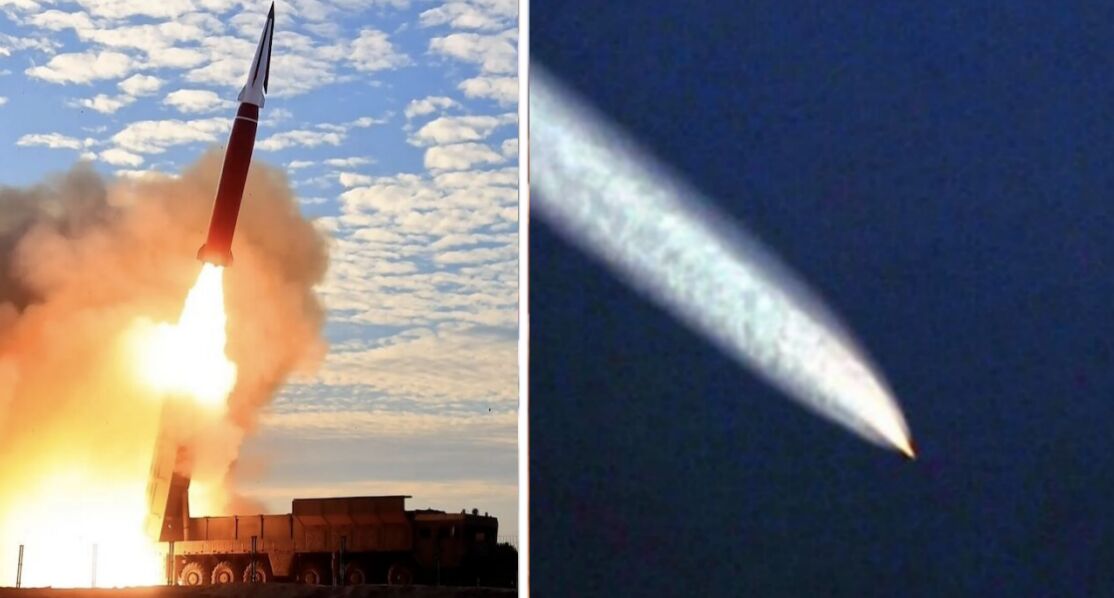
North Korean Hwasong-11Ma Hypersonic Missile
North Korea has tested an intermediate-range strategic missile equipped with artificial intelligence technology capable of changing its flight path at low altitude, potentially complicating efforts by adversaries to track and intercept it. The launch was overseen personally by chairman of the ruling Korean Workers’ Party Kim Jong Un, with state media reporting that the missile was launched from the Wonsan area and struck a designated target approximately 1,000 kilometres away. South Korea’s military separately reported that the missile travelled more than 700 kilometres, while Japan’s Defence Ministry assessed its flight distance at approximately 680 kilometres. The discrepancy in the reported distances was subsequently highlighted by North Korean officials as evidence of limitations in the two neighbouring countries’ tracking capabilities.
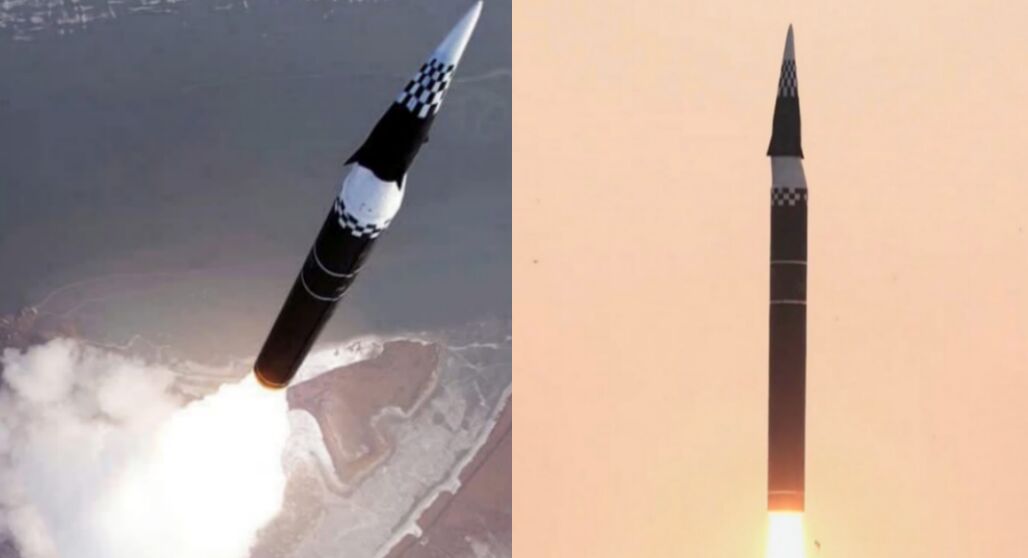
Director of the General Affairs Department of the Workers' Party of Korea Kim Yo Jong claimed that the missile was capable of employing several different flight modes, including a “wave-like trajectory mode” that could cause the weapon to alter its path at lower altitudes. She stated that South Korean and Japanese authorities had failed to track the missile from its initial “skip points” when this trajectory was employed. She further claimed that artificial intelligence had been incorporated into the missile’s guidance system, allowing it to change its flight orbit at low altitude. She noted that the system can select at least four different flight-orbit modes depending on the intended purpose and target. She concluded that “there is no way to avoid this attack.”
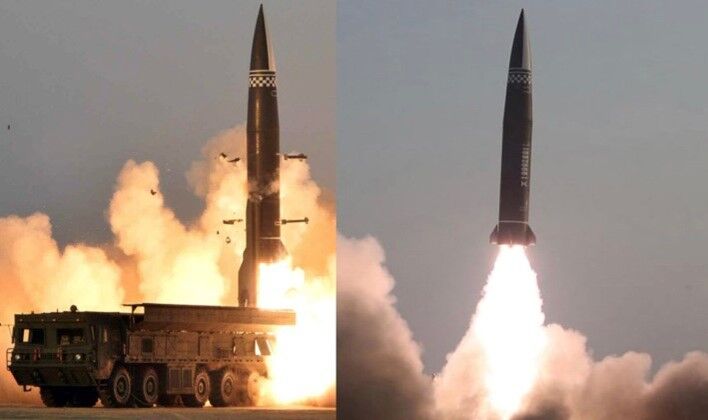
North Korea’s less advanced missile types have proven highly capable of evading detection by the latest U.S.-origin missile defence systems in the past. The KN-23 introduced into service in 2019 combined a semi ballistic depressed trajectory with an ability to conduct extensive in flight manoeuvres throughout its flight path, which was described by North Korean state media as an “irregular orbit” with “low-altitude gliding leap type flight mode,” and otherwise as a “peculiar mode of guiding flight.” This made the KN-23’s missiles more difficult to detect or track, and proved sufficient that the AEGIS systems in South Korea unable to even detect them – which was revealed after a test launch in October 2019. The latest generation of missiles with hypersonic glide vehicles expand on these capabilities significantly further.
