
New Biden Administration Already Taking a Hard Line in Asia: Pledges to Back Japanese Maritime Claims, Strip North Korea of Missiles, and Arm Taiwan
Military Watch Magazine Editorial Staff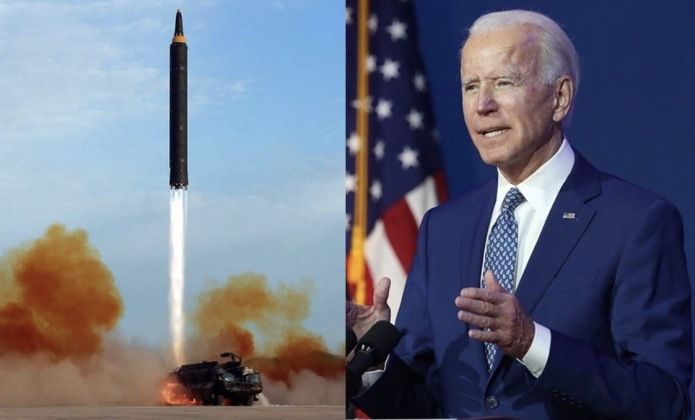
President Joe Biden and Korean Hwasong-12 Ballistic Missile
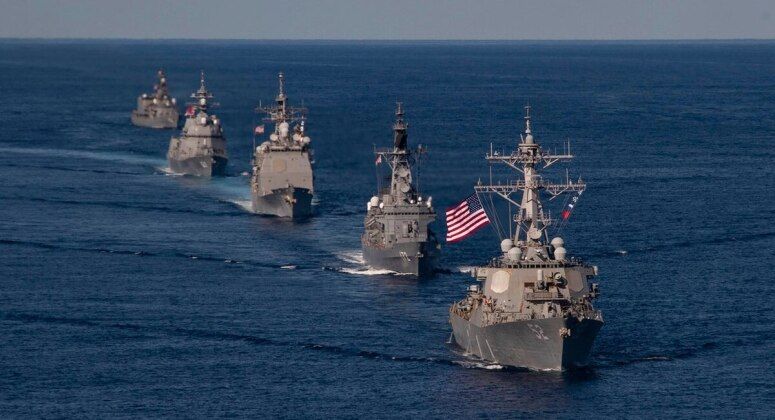
Less than a week into office the new Joe Biden administration has already shown signs of taking a hard line against traditional American adversaries in East Asia, with pledges for action targeting both China and North Korea. On January 22nd the White House released an official statement that the U.S. would work with regional partners to deter North Korea, followed by statements that Pyongyang’s nuclear program could negatively effect the interests of Washington and its allies and strong indications of a hard line position. A Pentagon release the following day showed that newly appointed U.S. Secretary of Defense Lloyd Austin had pledged that the United States would defend Japanese territorial claims over the Senkaku/Diaoyu islands, which read: “Secretary Austin further affirmed that the Senkaku islands are covered by Article V of the US-Japan Security Treaty, and that the United States remains opposed to any unilateral attempts to change the status quo in the East China Sea.” The formerly Chinese islands were captured by the Japanese Empire and previously expected to be returned to Chinese control after Tokyo's surrender in 1945, although the defeat of the U.S.-aligned Republic of China in the Chinese Civli War in 1949 ultimately led the U.S. to maintain control of the Islands before returning them to Japan. Article V of the security treaty between the U.S. and Japan commits either side to defend the other in the case of an attack - meaning the U.S. effectively pledged to intervene if China sought to retake the disputed islands.
Secretary Austin also discussed with Japanese Defense Minister Nobuo Kishi options for collaboration against North Korea to strip not only its nuclear arsenal, but also all kinds of ballistic missiles from thee country - the latter being assets it has fielded since the late 1970s. Also on January 22nd, State Department Spokesperson Ned Price pledged that the U.S. would arm Taiwan - a controversial policy since Taipei was not member of the United Nations and was technically a non-state actor. He stated to this effect:
"The United States notes with concern the pattern of ongoing PRC attempts to intimidate its neighbours, including Taiwan. We urge Beijing to cease its military, diplomatic, and economic pressure against Taiwan and instead engage in meaningful dialogue with Taiwan’s democratically elected representatives… We will stand with friends and allies to advance our shared prosperity, security, and values in the Indo-Pacific region — and that includes deepening our ties with democratic Taiwan. The United States will continue to support a peaceful resolution of cross-strait issues, consistent with the wishes and best interests of the people on Taiwan. … We will continue to assist Taiwan in maintaining a sufficient self-defence capability."
Much like the Obama administration which began the Pivot to Asia initiative in the early 2010s, the Biden administration appears intent on maintaining a balance of power in the region which favours U.S. and Western interests and taking a hard line against those East Asian states which remain outside the U.S. sphere of influence.
