
U.S. Navy Deploys F-18E/F Fighters to Jordan to Counter Iran: Super Hornet Armed to Seek and Destroy Iranian Drones
Military Watch Magazine Editorial Staff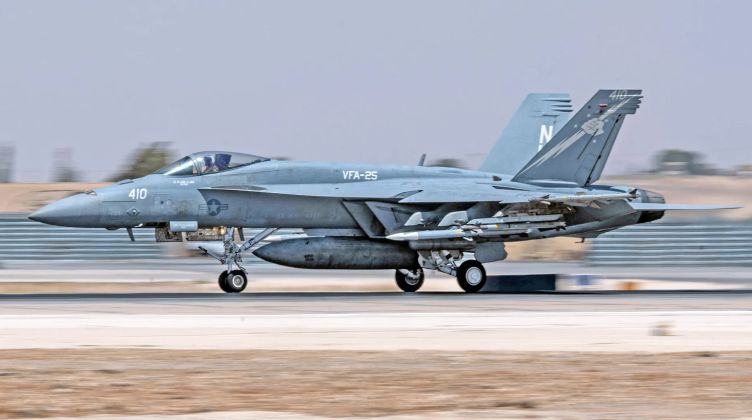
U.S. Navy F-18E Super Hornet in Jordan
The U.S. Navy Fifth Fleet has deployed F-18E Super Hornets fighters from the supercarrier USS Theodore Roosevelt to Muwaffaq Salti Airbase in Jordan, as part of a broader surge in deployments to the Middle East aimed at expanding options to counter Iranian forces. The aircraft were reportedly deployed as early as August 3, just three days after Israel launched an unprecedented air strike on the Iranian capital Tehran which killed the Chairman of the Hamas Political Bureau Ismail Haniyeh. Deploying under Strike Fighter Squadron 25 ‘Fist of the Fleet,’ the Super Hornets were previously speculated to have been deployed to Qatar, which has emerged as a central hub of American military operations in the Middle East due primarily to ongoing disputes with the United Arab Emirates, which has distanced itself from Washington in its conflict with Tehran. Qatar is widely reported to be hosting a contingent of F-22 Raptor fifth generation fighters, which were redeployed to the region from Alaska to respond to ongoing tensions. Qatar, Jordan and Morocco are considered the three Arab states most closely aligned with the United States and broader Western Bloc, with the latter two also maintaining close defence ties with Israel and having over the past two years donated military equipment to Ukraine.
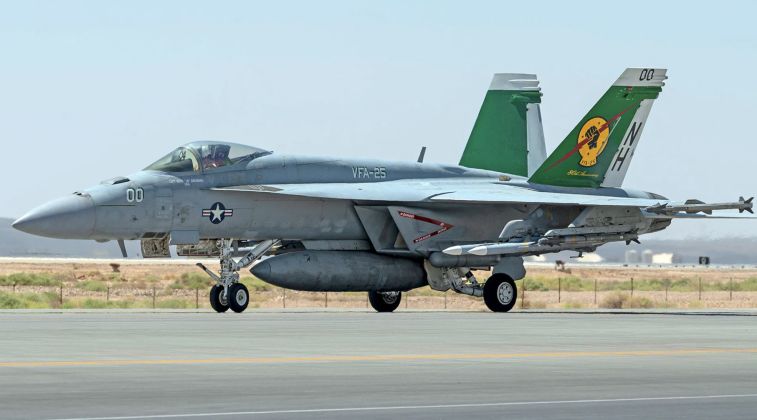
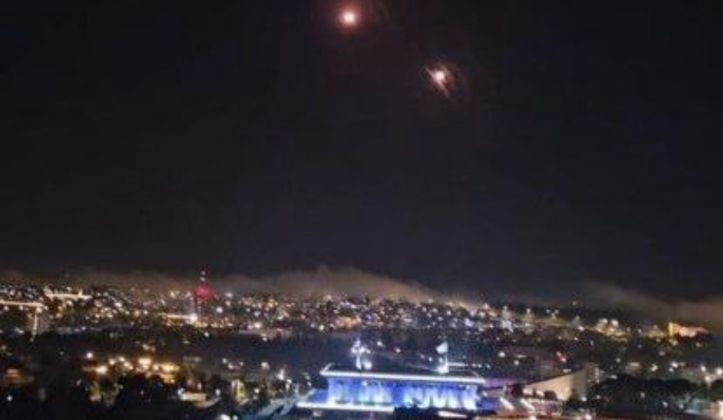
Footage of F-18E/F Super Hornet fighters in Jordan shows that the aircraft are heavily armed with AIM-120 and AIM-9 radar and infrared guided air to air missiles. Although the Iranian fighter fleet almost exclusively relies on obsolete combat aircraft from the Vietnam War era, with its most modern fighters being two squadrons of MiG-29s acquired from the Soviet Union shortly before its disintegration, the drone fleet of the Iranian Revolutionary Guard Corps has proven to have a formidable regional reach. During a previous Iranian strike on Israel on April 13, which was launchd to respond to an Israeli attack on an Iranian diplomatic building in Damascus that killed two senior generals, U.S. Air Force F-15E Strike Eagle fighters equipped for air to air combat played a pivotal role in blunting drone attacks on Israeli targets.
It is expected that F-18E/F fighters are intended to fulfil a similar role to the F-15s. The Super Hornet’s combat potential is much more limited than that of the F-15E, however, with its range, speed, radar size and missile carrying capacity all being far inferior to the heavyweight aircraft deployed by the Air Force. The fighter class was developed during the 1990s largely to respond to a sharp post-Cold War contraction of defence spending, which resulted in three proposals for carrier based stealth fighters all being cancelled, while the Super Hornet was favoured for its low production and operational costs. Although the Navy was initially expected to acquire only a limited number of F-18E/F fighters, serious delays to development of the F-35C stealth fighter forced the service to rely far more heavily on the Super Hornet to replace Cold War era aircraft that were being phased out.
