
NATO in the Black Sea? U.S. Destroyer Pays a Port Visit to Ukraine's Port of Odessa Just 200km from Crimea
Military Watch Magazine Editorial Staff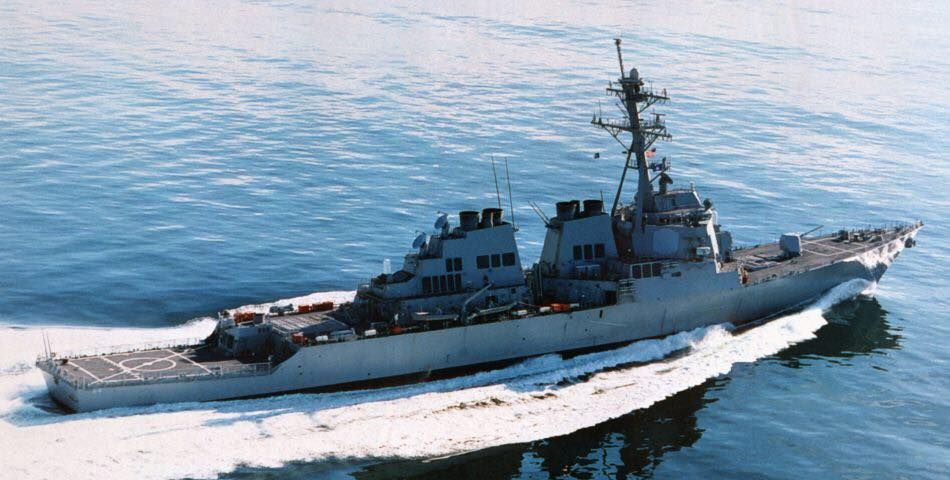
US Navy Arleigh-Burke Class Destroyer
The U.S. Navy's heavily armed guided missile destroyer USS Carney, an Arleigh-Burke class destroyer carrying a considerable arsenal of Tomahawk cruise missiles, arrived in Ukraine's Odessa. The destroyer is armed with the Aegis air and ballistic missile defense system, one of the most potent in service in the Western bloc, as well as up to 90 Tomahawk cruise missiles. The warship's visit marks Ukraine's geopolitical shift from the Russian sphere of influence to become a strategically valuable Western client state, and marks the first visit by a NATO vessel to the Eastern European country in 2018. The ship's arrival comes amidst moves by Washington to sell lethal arms to the Ukrainian government, not least including highly potent Javelin anti tank missiles, something strongly opposed both by neighbouring Russia and by the previous US administration as a potentially major destabilising factor.
The U.S. Navy says the port visit is a demonstration of the two countries' shared "commitment to promote security and stability" in the region. It is indeed highly symbolic and demonstrates the extent of the geopolitical shift undertaken by Ukraine, formerly a one of the most prominent and developed regions of the Soviet Union. According to the U.S. Navy, the Carney's mission includes seeking "opportunities to enhance interoperability with partners in the Black Sea." While NATO powers remain overwhelmingly outmatched by far more numerous Russian forces in the region, maintaining a military presence and carrying out regular military exercises in the Black Sea is considered a critical asset to maintaining a overall favourable balance against Russia - which the Western bloc gained and has sought to maintain since the 1990s. Ukraine's shift to the Western bloc has notably facilitated growing defence ties and even joint military exercises in the Black Sea, the NATO-Ukraine Sea Breeze 2017 drills being but one example. Ukraine's port of Odessa is situated less than 200 km away from Crimea, a disputed territory currently under Russian control and integrated into the country's territory as a restored province in 2014, and about 300 km from Sevastopol - home of Russia's Black Sea Fleet. The U.S. missile destroyer's deployment to Odessa put these facilities well within range of its cruise missiles, as well as allowing the destroyer to fire deep into Russian territory.
The presence of NATO vessels in the Black Sea, other than those of Turkey, Bulgaria and Romania, is limited by the 1936 Montreux Convention forbidding non-Black Sea naval powers from maintaining forces in the sea for more than 21 consecutive days. The treaty also imposes restrictions on the class and tonnage of these vessels, putting what is effectively the only limit on NATO's naval presence in the region. One key example of this is that U.S. aircraft carriers are notably absent from the region, one of the few strategically critical regions to which its Navy has deployed without its most prolific assets.
