
Nakajima G10N Fukagu; Imperial Japan’s Intercontinental Bomber Made to Strike America
Military Watch Magazine Editorial Staff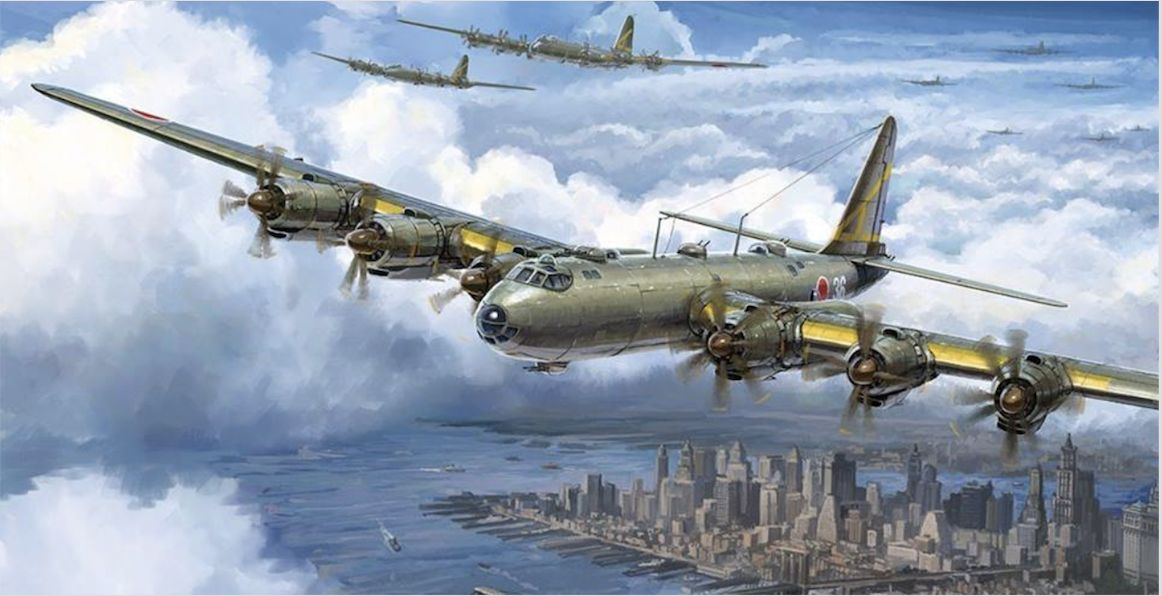
Imperial Japan's G10N Fukagu Intercontinental Range Bomber - artwork
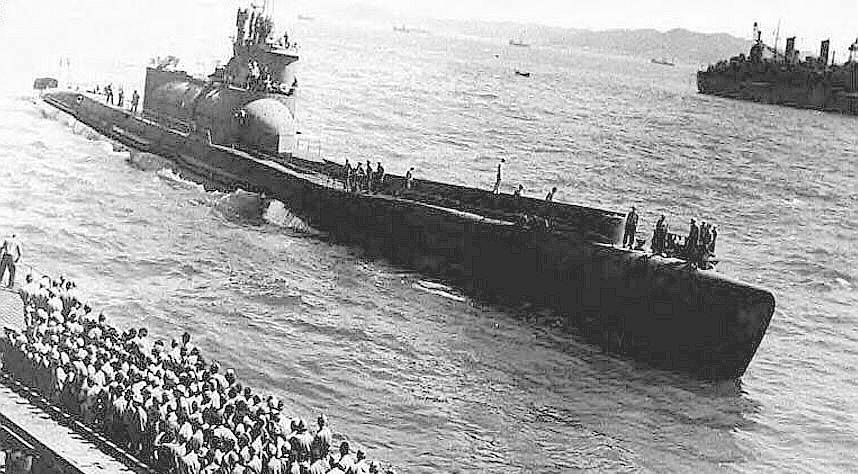
One of the first designs for an intercontinental range heavy bomber, Imperial Japan begun a program in 1942 to develop an 18,000km range six engine combat jet intended to strike targets on the United States mainland - which was otherwise beyond the reach of the Japanese air and fighter fleets. The G10N was named after the largest lava tube at the foot of Japan’s iconic volcano Mount Fuji, Fugaku, which epitomised its nature as the most lethal platform in the country’s bomber fleet. The bomber was intended to take off from the Kuril Islands, then in northern Japan, to strike targets across the U.S. mainland including cities and industrial centres. The bombers would serve in a complementary role to the I-400 Class long range submersible aircraft carriers being developed under renowned Marshal Admiral Isoroku Yamamoto - the architect of the Pearl Harbour attacks - which were intended to launch strikes on the U.S. West Coast undetected. While three of these warships were completed before the war’s end however, they were never deployed. The G10N bomber program went even less far, terminating in 1944 due to a lack of resources before reaching prototype stage - ending hopes for air attacks on the U.S. mainland or an eventual victory.
There were reportedly set to be three derivatives of a Japanese intercontinental range military aircraft, and alongside the bomber the airframe was also set to be developed into a transport, for 300 troops, and a gunship with forty downward firing machine guns in the fuselage for intensive ground attacks - firing 640 rounds per second. The bomber variant, however, was prioritised under the program. The aircraft were set to use six contra-rotating propellers - in much the same way as the Soviet Tu-95, and would be powered by six engines. Some reports indicate that the bombers were intended to land in German held France for maintenance and rearming, before launching a return sortie and again landing in Japan.
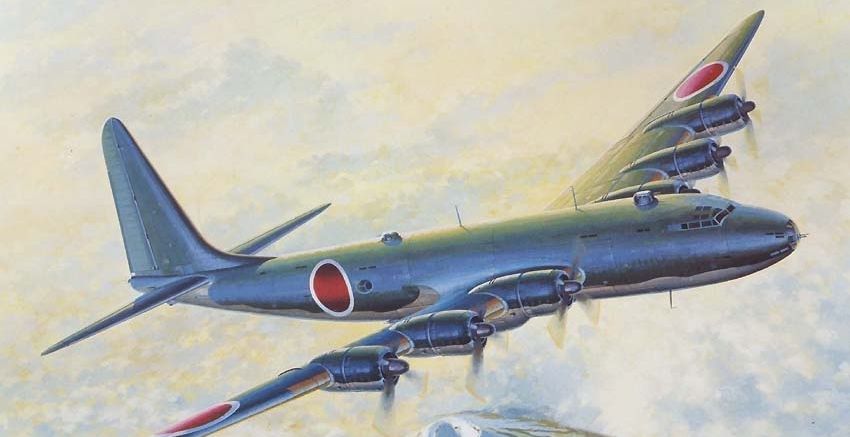
A factory was built in Mitaka, Tokyo, for the bombers, but the extreme complexity of the 4 row 36 cylinder 5,000 hp Ha-54 made in unfeasible for the Empire's strained economy as the mainland came under intensive American bombardment. The development of Japan’s Ni-Go and F-Go nuclear weapons programs in parallel could have potentially provided the Fukagu with a far more potent weapons payload capable of placing the U.S. mainland in the firing line of Japanese nuclear strikes. Had the bomber program been initiated and strongly pursued before the Pacific War’s began, when more resources were available and the country had time to build more combat aircraft, they could have potentially played a pivotal role in undermining the industrial capacity of the U.S. mainland. Even with a considerably shorter range, the ability to strike the American West Coast would have been a game changer for the Japanese military as Japanese cities were firebombed by American aircraft deploying from the Pacific - and a degree of mutual vulnerability could have provided Tokyo with vital bargaining power. The ability to target key shipyards on the U.S. West Coast in California, which were vital to facilitating an American victory and if disabled could have turned the tide of the Pacific War, made Japan's failure to sufficiently investing such a program a major facilitator of its defeat.
Had the Fukagu entered service, it would have provided Japan's bomber force with a unique intercontinental range which has since only ever been developed by the United States and the Soviet Union - which even China's People's Liberaiotn Army is yet to achieve due to the range limitations of its sole heavy bomber class the H-6. Ultimately Japan’s failure to develop the Fukagu into a viable prototype, much less an operational combat aircraft, meant it was extremely vulnerable and had very limited options to counterattack or deter the United States - which proved instrumental in the Empire's defeat. An understanding of this provides a vital lesson to states preparing for the potential waging of intercontinental wars, ether defensively or offensively, regarding the value of intercontinental range strike capabilities as a key facilitator of mutual vulnerability.
