
U.S. Air Force MQ-9 Reaper Drone Crashes After Violating Afghan Airspace: Did the Taliban Shoot it Down?
Military Watch Magazine Editorial Staff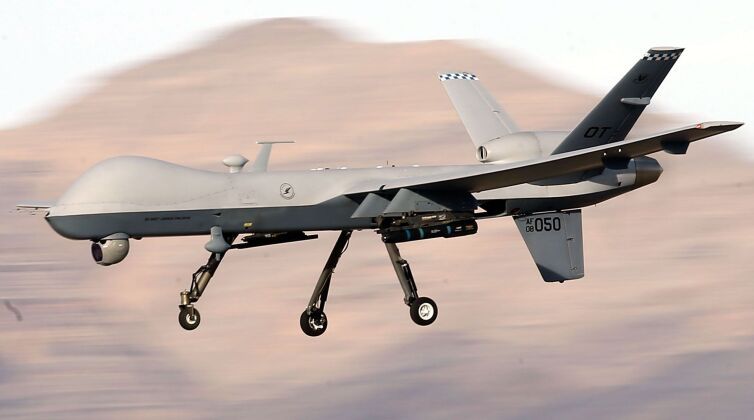
MQ-9 Reaper Drone
A United States Air Force MQ-9 Reaper unmanned aerial vehicle is confirmed to have crashed near Maidan Shahr in central Afghanistan’s Maidan Wardak province, approximately 40 kilometres southwest of the capital Kabul. The Reaper is among the most widely used types of combat aircraft in the Western world, and has been deployed for reconnaissance and combat operations from Venezuela, to Yemen, and the South China Sea. The aircraft was remotely piloted from Al Udeid Air Base in Qatar, which is the central hub of American air operations in the Middle East and Central Asia. It is reported to have been flying a routine surveillance mission against targets in Afghanistan, violating the country’s airspace while doing so.
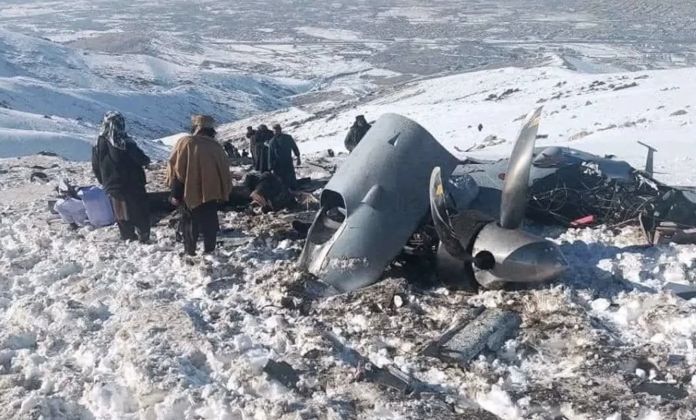
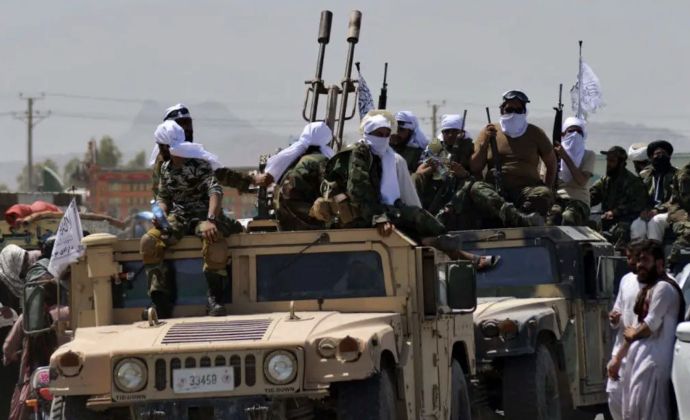
Conflicting reports indicate that the aircraft may have suffered a mechanical failure, or may have been shot down by local Afghan government forces. This incident is the first in which an MQ-9 has been lost in Afghanistan since the withdrawal U.S. forces in August 2021. Afghan forces field significant numbers of handheld surface-to-air missile systems, as well as combat capable helicopters which can perform air defence duties against relatively slow unmanned aircraft like the MQ-9. Costing approximately $150 million each, the MQ-9 Reaper made headlines 2023-2024 for the significant numbers that were shot down by Yemeni Ansuruallah Coalition paramilitary units, with over ten reported to have been destroyed in the theatre over a period of little over a year.
The MQ-9 first entered service in 2007, and is prized for its very low training and operational costs, which have allowed the U.S. Air Force to conduct air strikes at a fraction of the cost of utilising manned aircraft such as F-16 fighters. The aircraft quickly became the world’s most iconic multirole unmanned combat aircraft, and gained notoriety during the early 2010s for the extensive civilian casualties caused in Pakistan and Afghanistan after the Barack Obama administration initiated an intensive air campaign that primarily used the aircraft. The aircraft gained most prominence when deployed by the CIA to assassinate Iran’s most decorated military officer General Qasem Soleimani on January 2, 2020, marking one of the most high profile killings in the Agency’s history, and a major turning point in Washington’s decades long conflict with Tehran. The U.S. Air Force is currently estimated to operate approximately 300 MQ-9s. Although cost effective for low intensity operations, their survivability in high intensity conflict, such as in the Pacific, is considered to remain limited.
