
Tehran Signals Willingness to Confront the United States in Iraq; Implications of Iranian Missile Strike on Kurdish Leadership
Military Watch Magazine Editorial Staff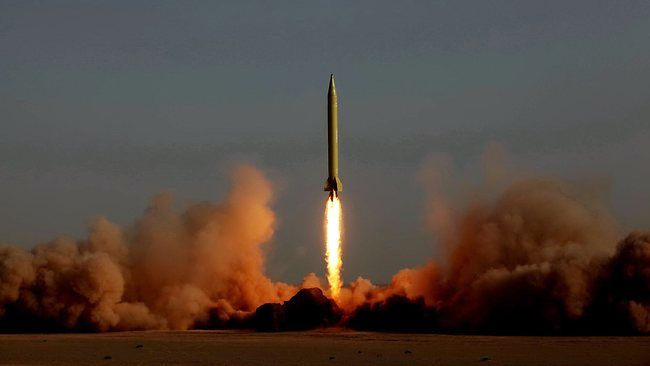
Iranian Shahab 3 Ballistic Missile
Iranian Major General Mohammad Ali Jafari, chief commander of the Islamic Revolutionary Guards Corps (IRGC), has confirmed that Iran had conducted a missile strike on the Kurdish Peshmerga in Iraq. He referred to the attack as a “highly meaningful message” not only to Kurdish forces - but to all of Tehran’s enemies. "IRGC's recent revenge against the terrorists conveys a highly meaningful message to the enemies, The particularly those superpowers who think they can impose their evil plots on us and bully us," Jafari stated. The target of the attack was a conference by the political office of the Kurdish Peshmerga - a party which retains a number of armed militias which retain a strong presence in Iraq. The conference took place in Koya, in Iraq's semi autonomous Kurdistan region, which has on several occasions attempted to move towards declaring formal independence from Baghdad.
Iran’s strike on Iraqi Kurdistan represents not only the growing role of Tehran in internal Iraqi affairs, but also its greater willingness to confront its regional adversaries which have been closely aligned with Iraq’s Kurdish separatist movement. Iran’s longtime regional adversary Israel has notably actively supported the Kurdish independence movement - officially endorsing Iraqi Kurdistan as a fully separate state. Iraqi Kurds have also long maintained ties to the United States, which has provided extensive military support to Kurdish militias as one of Washington’s most reliable partners in Iraq. An attack on the Kurdish leadership therefore can be interpreted as a direct attempt to undermine one of America’s closest partners and foremost assets in the country while demonstrating Tehran’s support for the government in Baghdad - which has strongly opposed the Kurdish separatism.
The Iranian strike was inevitably met with condemnation by Iraqi Kurdistan’s Western supporters, though it was far from the first time that the country had militarily intervened on Iraqi territory. Iranian F-4 Phantoms had previously carried out airstrikes on Islamic State militants near the border, while Iranian officers have reportedly been deployed to assist a number of Iraqi Shiite militias in combatting Islamic State jihadists in Iraq alongside the Iraqi army. More recently, reports have surfaced that Iran has begun the deployment of ballistic missiles to Iraqi territory - allowing them to better strike targets in Israel and Saudi Arabia in the event of a regional war. Iran has also reportedly provided the Iraqi armed forces with combat aircraft for use in its conflict with Islamic State. Iran’s critical interests in Iraq, and its strong political, economic, military and even religious ties to the government in Baghdad have made it a key player in determining Iraq’s future - one which is set to facilitate not only the suppression of aspirations for full Kurdish independence, but also potentially an Iraqi shift away from the United States and the Western Bloc.
