
MIG-29KR Fighters Incoming; Russian Carrier Admiral Kuznetsov to Reenter Service With Cutting Edge Aircraft and Cruise Missiles
Military Watch Magazine Editorial Staff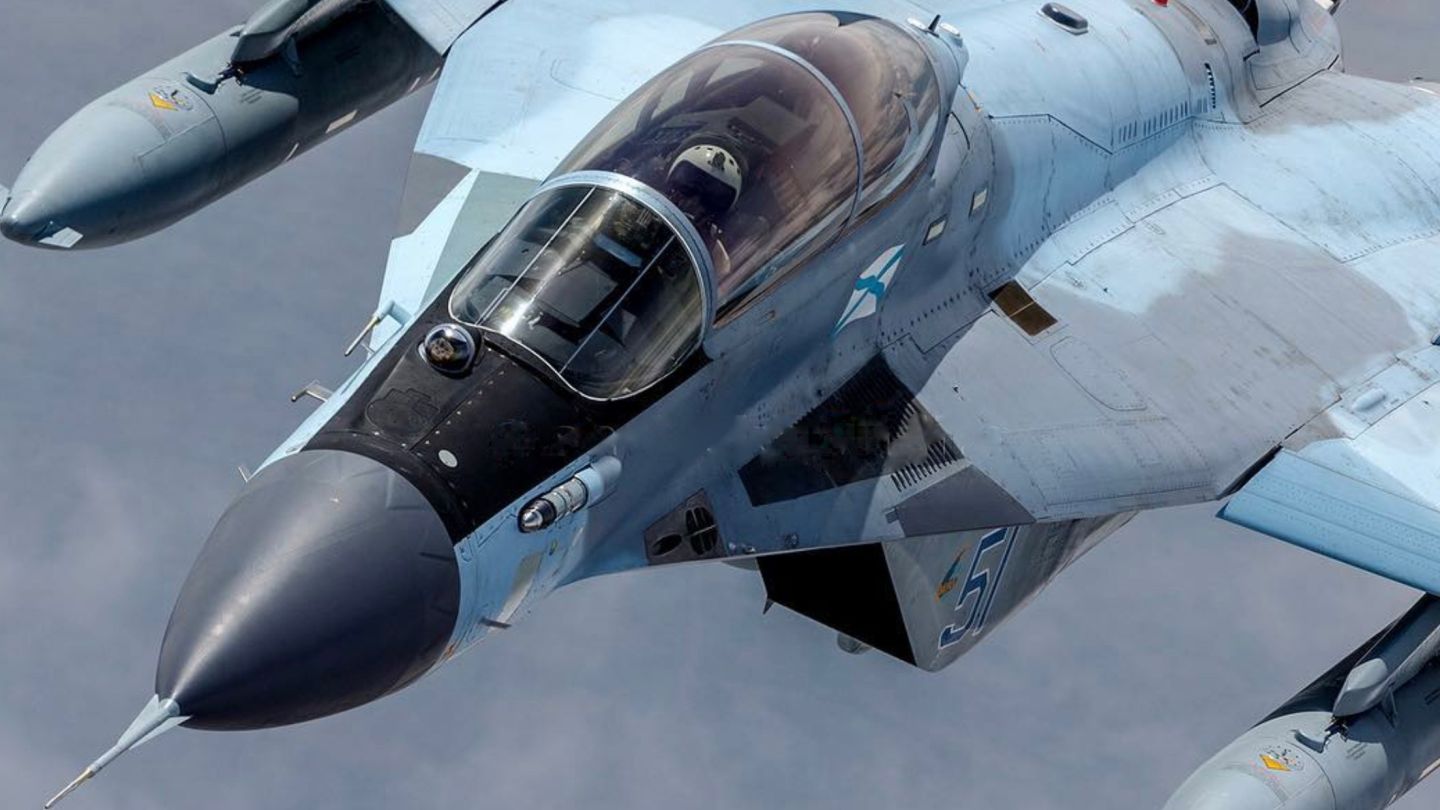
Russian Navy MiG-29K Carrier Based Twin Engine Fighter
With the Russian Navy’s sole aircraft carrier the Admiral Kuznetsov currently undergoing a lengthy refit, it has recently been revealed that alongside an overhaul of its propulsion and weapons systems the 65,000 ton warship will also field a new complement of fighters - the MiG-29KR twin engine medium weight jets. The Kuznetsov's long troubled steam turbine power plant is set to be replaced entirely, while new weapons systems will include Pantsir-M point defence systems, capable of engaging enemy aircraft and missiles with considerable accuracy at short and intermediate ranges, and and P-800 Oniks cruise missiles. These anti ship platforms retain an over the horizon firing range of 600km and are travel at two and a half times the speed of sound with fire and forget capabilities and formidable electronic countermeasures. While its capabilities as a carrier leave much to be desired relative to rival platforms such as the U.S. Nimitz Class or upcoming Chinese Type 002, the Kuznetsov may well be the most heavily armed carrier with the most firepower in the world for a warship of its kind - fitting in with its role as a heavy aircraft carrying carrier cruiser rather than a pure carrier.
Formerly deploying approximately 20 MiG-29K fighters alongside a dozen of the heavier Su-33 Flanker air superiority fighters, the new refitted warship will deploy a formidable complement estimated at 40 MiG-29KR aircraft alongside supporting rotary wing craft such as the Kamov Ka-27. The new MiG-29K variant will make use of a number of next generation technologies including new electronic warfare suites, radar absorbent materials which reduce its signature by approximately 78%, new infra red search and track systems and new heavily specialised anti ship standoff munitions. Nevskoye Design Bureau chief Sergei Orlov stated regarding the capabilities of the new fighters: “Some adjustments will be made precisely to accommodate MiG-29K/MiG-29KUB aircraft. Pilots want something new, something better and more reliable. Actually, the entire aircraft and technical compound of shipborne systems will be modernised." Some MiG-29KR jets were reportedly tested onboard the warship during operations in Syria.
While the Su-33 is a considerably superior fighter in terms of its capabilities, there are a number of key factors which have led the Russian Navy to choose the lighter MiG-29K to modernise its air wing. Not only are the Flankers poorly optimised to deploying using the Kuznetsov's ski jump system, performing at a fraction of their potential as a result, but the considerable cost of producing more Su-33 fighters to fulfil a small order for just a dozen or so new jets would be extremely expensive. By contrast not only is the lighter MiG-29K well suited to operating from a ski jump, the role for which it was primarily designed, but the fighter can be produced in larger numbers which significantly reduces the already far lower unitary costs. The jets are already in production for export for the Indian Navy’s own carrier warships, the INS Vikrant and INS Vikramaditya. Nevertheless, a number of reports indicate that the Russian Navy is planning to potentially retain a small contingent of refurbished Su-33 jets for continued operations from the Admiral Kuznetsov - possibly to retain the service’s familiarity with operating carrier based air superiority fighters in preparation for the planned induction of navalised Su-57 variants onboard planned future carriers.
The new MiG-29K jets, though lacking the specialisation and high performance airframes of the Su-33, will not only be less costly to operate, but will also be far more versatile and able to perform both air defence, air to ground and anti shipping roles to support the Admiral Kuznetsov's own arsenal. The new Kh-35U sea skimming cruise missiles, in service since 2015 and retaining a 300km standoff range, will allow the MiG-29 jets to complement the firepower of the Kuznetsov's P-800 missiles in ship to ship engagements - while also being capable of striking land based targets deep into enemy territory from a safe distance. The Kh-31, a Mach 3.5 platform with a lower but still considerable standoff range of approximately 100km, will also make the MiG-29K lethal as a ship killer and a strike platform. With Russia's carrier strike group relying heavily on surface to air missile batteries to engage enemy missiles and aircraft, moreso than fighter jets, the MiG-29KR strongly reflects this in its capabilities by more heavily emphasising strike rather than air to air combat roles.
