
U.S. Marine Corps F-35Bs Seek and Destroy Venezuela’s Su-30 Fighters at Major Bases - Reports
Military Watch Magazine Editorial Staff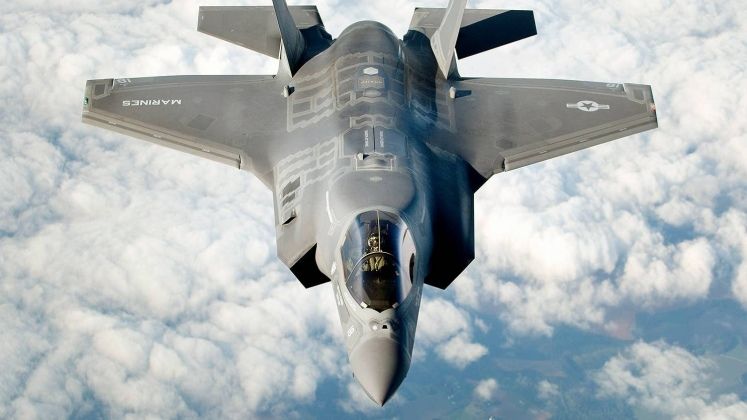
U.S. Marine Corps F-35B
Marine Corps
The U.S. Marine Corps deployed F-35B fifth generation fighter aircraft from forward bases in Puerto Rico to spearhead the air campaign launched against Venezuela in the early hours of January 3. The aircraft are reported to have targeted Venezuelan airbases hosting Su-30MK2 fighters, after airspace was cleared by missile strikes on S-300V and Buk-M2 surface-to air-missile systems. Unconfirmed reports indicate that seven fighters were destroyed on the ground, including both Su-30MK2 and F-16 aircraft. The destruction of local air defences is reported to have paved the way for helicopter insertions into Caracas, including the insertion of U.S. Army Delta Force operators to capture Venezuelan President Nicolas Maduro. The assault follows a months long military buildup against the country by the United States, which was initiated in September.
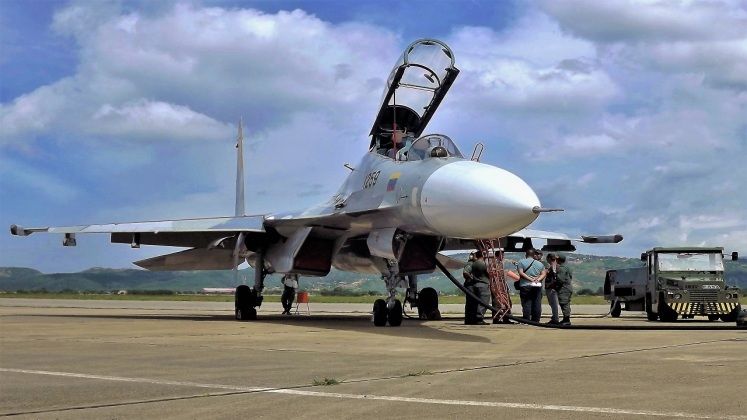
The F-35 is considered an optimal aircraft for air defence suppression roles, with its combination of advanced stealth capabilities, an outstandingly potent electronic warfare suite, and a unique passive sensor array to collect intelligence on enemy radar emissions, having been specifically designed for such missions. Venezuela’s airspace is by far the best protected in Latin America, with an air defence network having been built around the S-300VM long range system and the Su-30MK2 fighter. Although advanced when ordered in the 2000s, however, these assets are increasingly considered out of date today, and are fielded in only limited numbers which restricts their utility against the much larger U.S. forces arrayed against the country. Planned further procurements of much greater numbers of more advanced fighters and air defence systems were cancelled after the death of Venezuelan President Hugo Chavez in 2013.
Although the Su-30 is the longest ranged fighter in the Americas, its reliance on an obsolete mechanically scanned array radars limited its viability for high intensity air-to-air combat against modern fifth generation fighters. The aircraft were reportedly expected to serve as trainers for a much larger fleet of Su-35 ‘4++ generation’ air superiority fighters which were intended to be procured from the mid-2010s. No incidents of air-to-air combat have been reported, possibly indicating that fighters were not scrambled to intercept incoming targets, and that Venezuelan defences were compromised or otherwise left in disarray before the assault. Although the possibility of a ground attack on Venezuela has remained limited, the destruction of critical infrastructure and decapitation of the leadership appears to have been rapidly achieved, fuelling significant speculation regarding a possible coup within the ruling socialist party or the defence establishment, possibly both, to allow the United States to apprehend the president.
