
Malaysia Considers JF-17 Light Fighters to Replace its MiG-29
Military Watch Magazine Editorial Staff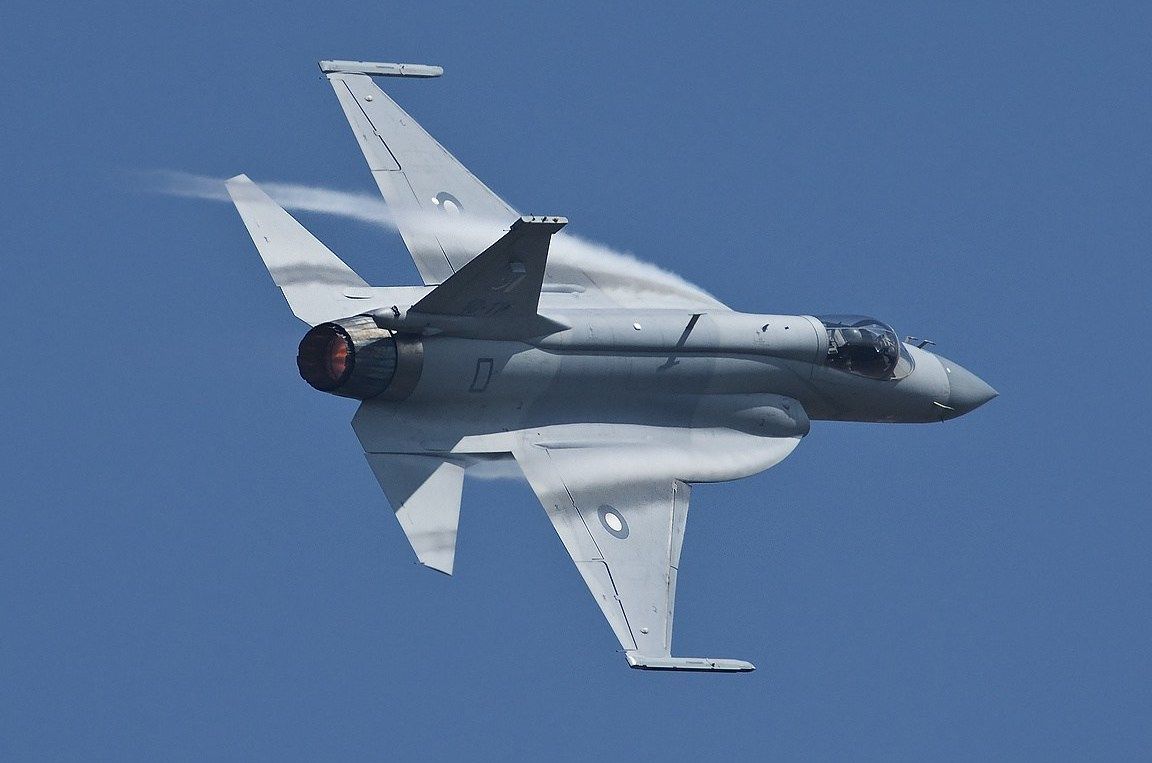
JF-17 Thunder Light Fighter
Chenjun
Pakistan and Malaysia have begun preliminary discussions regarding the potential export of JF-17 Thunder single engine light fighters to meet Kuala Lumpur's defence needs. The JF-17 is a joint product of China’s Chengdu Aircraft Industry Corporation and the Pakistan Aeronautical Complex (PAC), and is heavily based on the Chinese J-7 with a number of signifiant enhancements which allow it to contend with and in many fields outperform modern fourth generation fighters. Speaking at the Defence Services Asia (DSA) 2018 exhibition in Kuala Lumpur, an official form PAC said the two governments have had “primary level talks” about a potential sale of the fourth generation fighter to meet the aerial combat requirements of the Royal Malaysian Air Force (RMAF). The official stated: “We are aware of the potential requirements in Malaysia for cost-effective fighter aircraft. There have been no serious talks but through government to government channels there have been what we can describe as primary level talks about the JF-17 program.”
Malaysia’s Air Force currently fields the Russian MiG-29 an U.S. F-18 twin engine light fighters, which fulfil a complementary role alongside the country’s elite Su-30MKM heavy platforms. With both the MiG-29 and the F-18 nearing the end of their service lives, and with Malaysia’s program to acquire a replacement twin engine light fighter stalling largely due to a lack of funds, the country has shown renewed interest in acquiring the JF-17. While lighter and carrying less ordinance than either of Malaysia’s currently light fighters, and lacking the extreme manoeuvrability of the MiG-29, should the South East Asian state acquire the latest Block III variant of the JF-17 it will provide the Air Force with a number of advantages over previous platforms. The JF-17 will be able to deploy a number of Chinese and U.S. made weapons, including advanced Chinese air to air platforms such as the PL-12 which have few rivals elsewhere. The fighter makes extensive use of composite materials, which makes it highly durable and manoeuvrable. A legacy from the J-7, the fighter’s maintenance requirements are extremely low and the JF-17 can maintain an extremely high sortie rate if properly serviced - a critical asset in wartime which can serve as a valuable force multiplier. The fighter also deploys an AESA radar, invaluable for long range air to air combat, which is more sophisticated than the radar of any fighters currently deployed by any of the country's neighbours and makes the JF-17 far more difficult to detect at long ranges.
To promote further sales of the JF-17, particularly in the case of large acquisitions which Malaysia may well be willing to make, the Pakistan Aeronautical Complex has stated that it is willing to enter collaborative partnerships with local industry involving technology transfers and either localised component manufacturing or maintenance, repair and overhaul (MRO) by the Malaysian side. “Of course, the industrial engagement would depend on the sale of the Malaysian requirement,” a PAC official stated. Should the country acquire the fighter, it would be the platform’s third export customer and could well facilitate closer defence ties with both Pakistan and China. With Pakistan’s JF-17 block III set to enter production in the near future, with far more advanced capabilities than its predecessors and a highly competitive export price, the platform could well become highly popular around the world. A number of countries across the world have already show interest in procuring the fighter, which was designed as an effective light complement to heavier platforms such as the Su-30 and F-15.
