
Leading Syrian Missile Scientist Aziz Asbar Assassinated; Why Damascus’ Ballistic Missile Capabilities Remain a Major Threat to the Western Bloc and Israel
Military Watch Magazine Editorial Staff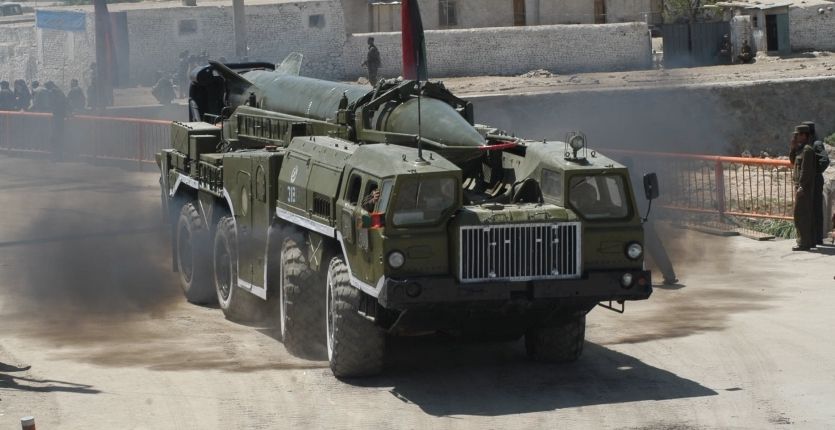
Export Variant of North Korean Hwasong-5
One of Syria’s leading military scientists responsible for overseeing much of the country’s ballistic missile program, Aziz Asbar was assassinated in early August by a car bomb - allegedly planted by an agent of Israel’s Mossad operating in the Arab country. Asbar had worked closely with Syrian defence partners Iran and North Korea, and reportedly had access to the highest levels of the Iranian weapons programs as well as those of his own country. The scientist’s skills had been valued so highly by Damascus that he had long been provided with his own security detail, and his death thus represented a major loss for the country’s arms industry. His assassination took place in Masyaf, a critical weapons development facility for Syria’s military research organisation, where Asbar was leading a secret unit known as Sector 4 at the Syrian Scientific Studies and Research Centre. The scientist has reportedly been working closely with Iranian Major General Qassim Suleimani of the Revolutionary Guards Corps, who had played a leading role in the war against Islamic State, Al Qaeda and other Islamist groups in Iran and Syria. The General has reportedly long been made a high priority target for Israel.
Iranian and Syrian scientists under Asbar’s direction have reportedly collaborated closely collaborated to begin the mass production of precision guided missiles in Syria itself by retrofitting Syrian SM600 Tishreen missiles - a closely related variant of the Iranian solid fuelled Fateh-313 referred to by Israel as an extremely dangerous “game changing weapon.” While Syria and Iran have long cooperated closely on defence, their partnership has deepened since a number of Western and Arab backed islamist insurgent groups began threatening to overthrow the government in Damascus - with Tehran committing its forces to its ally's defence. While Syria has long fielded a considerable ballistic missile arsenal, it has primarily been comprised of older liquid fuelled platforms such as the Soviet Scud B and North Korean Hwasong-6, and its move to acquire solid fuelled missiles is set to be a game changer for its strike capabilities which will considerably reduce its response time to enemy attacks. Having acquired the KN-02 Toksa solid fuelled missile from North Korea in considerable numbers, the country has moved to initiate mass production of a similar solid fuel design domestically under a joint program - likely also with some assistance from Pyongyang which has long provided key technologies for the missile programs of both its Middle Eastern allies.
While Syria formerly fielded one of the most capable air forces in the Middle East, the loss of Soviet patronage meant not only that the generous military aid which Damascus had begun use to acquire a sizeable fleet of advanced MiG-29 twin engine jets was cut off - but the new government in Russia also blocked entirely the sale of new more advanced combat aircraft, namely the cutting edge MiG-31 interceptor, which Syria had sought to use to counter Israeli’s advanced F-15 Eagle fleet. With its aerial warfare capabilities falling considerably behind those of its potential adversaries, namely Israel, the Western Bloc and the Western aligned Arab Gulf States, the importance of Syria’s ballistic missile arsenal as a highly cost effective asymmetric means of countering attacks by its adversaries - including deterring a larger scale Israeli air campaign as tensions between the two longstanding adversaries continue to mount - has grown considerably. With the Western Bloc repeatedly threatening military action against the Syrian government, the country’s ballistic missile arsenal has, alongside its multi layered air defence network and the presence of allied Russian forces in the country, been key to deterring such military action. Ultimately as a result of the importance country’s ballistic missile program, and the threat it poses to Israel and its Western allies, the successful assassination of Aziz Asbar represents a critical victory for those forces hostile to Damascus.
