
U.S.-Norwegian Joint Strike Missile Gives F-35s New Offensive Capability
Military Watch Magazine Editorial Staff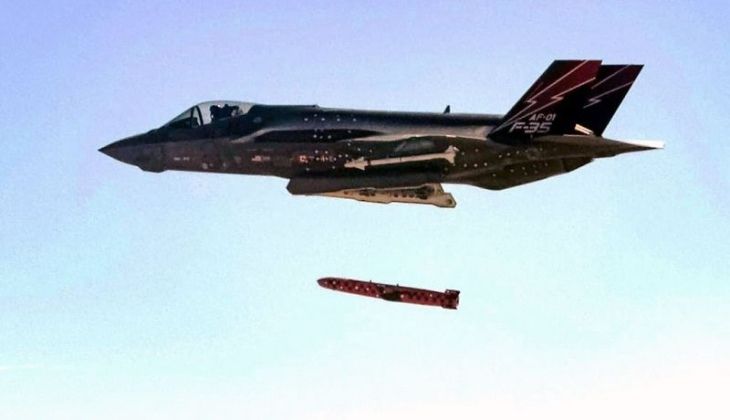
F-35 Drops Joint Strike Missile
The U.S. Air Force has placed its first order for the new U.S.-Norwegian Joint Strike Missile built to equip its F-35 fifth generation fighters. The missiles will give the fighters a much needed beyond visual range anti-ship and air to ground capability, with integration expected to be completed by the end of August 2026. The Air Force previously stated that it intended to purchase 48 missiles, and potentially expand the purchase to 268, meaning they will only equip a very small portion of the fleet. This is likely because not only are the missiles specialised for anti-shipping roles, with air to ground missions being a less optimal secondary capability, but also because an indigenous American missile for the F-35, the larger AGM-158C, is expected to become available for service later in the decade.
The U.S. Air Force’s only other fifth generation fighter the F-22 Raptor notably cannot carry beyond visual range missiles for any mission other than air to air combat, with the F-35’s deeper weapons facilitating the integration of a much wider range of munition types. Beyond the United States, the Chinese J-20 fifth generation fighter has been widely reported to have had an air to surface missile developed, with the aircraft confirmed in exercises to have carried out strike missions for which such weapons would be optimal. Little remains known regarding their designs or specifications however. The Russian Su-57, fielded in much smaller numbers, is the only fighter of its generation to have engaged in high intensity combat, and has used beyond visual range air to surface missiles from its internal weapons bays extensively for strikes on Ukrainian target from early 2022, most notably the Kh-59MK2.
