
Joint Russian-Turkish Production of Su-57 Fighters Under Consideration; Considerable Implications of Ankara’s Potential Participation in the Next Generation Project
Military Watch Magazine Editorial Staff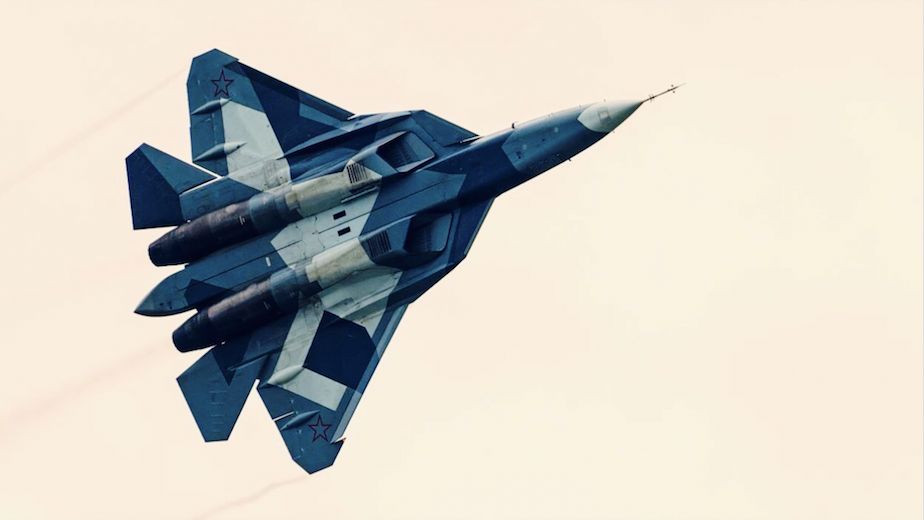
Russian Su-57 Next Generation Fighter
As Turkey’s relations with the Western Bloc, and with Washington in particular, have continued to deteriorate, Ankara has increasingly sought to cement its cooperation with Russia in a number of fields including trade and defence. Relations between Turkey and other Western states notably deteriorated following a failed military coup attempt in 2016, in which not only NATO member states failed to offer their support to the government in Ankara, but a number of Western aligned states in the Middle East were found to have been directly involved in supporting and aiding in the organisation of the attempt to overthrow the government. This led to suspicions that a number of Western powers may well have been involved in or at the very least known of the coup and failed to warn Turkey, leading the Turkish government to strengthen defence ties with what it viewed as more reliable partners - foremost of which was Russia. As the United States has threatened Turkey with further economic pressure and harsh sanctions, also moving to freeze sales of F-35 stealth fighters already paid for by Ankara, the Asian state has according to a number of sources considered acquiring Russian made Su-57 next generation combat jets in their stead.
Su-57 fighters would not only provide Turkey with an effective complement to its advanced Russian made S-400 surface to air missile systems, a weapons platform which the United States has exerted much pressure on Ankara not to acquire, but they are also far more capable than the F-35 in most of their combat capabilities, often by a considerable margin, including speed, operational altitude, manoeuvrability, range, payload and sensors - with the only major advantage enjoyed by the lighter U.S. platform being its lower radar cross section and possibly a marginally more powerful radar. Early production variants of the Su-57 will provide an analogue to the American F-22 Raptor, a heavy air superiority fighter designed as a far more costly complement to the F-35 with far superiority capabilities in air to air combat, and it is these early variants which Russia is likely to export to Turkey should Ankara seek these fighters. With a comparable acquisition cost to the F-35, a fraction of that of the F-22, the Su-57 will also reportedly be considerably cheaper to operate and maintain - providing Turkey with its first air superiority capable fighter since it acquired the Vietnam War era F-4 Phantom during the Cold War - with the lightweight F-16 and F-35 both being unspecialised multirole jets poorly suited to air superiority roles.
In a major recent development regarding Turkish interest in the Su-57, Russian defence exporter Rostec’s International Cooperation and Regional Policy Department director Viktor Kladov noted that joint manufacture of the weapons platform was under consideration. “Though it might be a ‘serious’ decision, I am convinced that the two countries are capable of implementing such a project,” Kladov said. With negotiations with India regarding joint production under the FGFA program ongoing, a second joint production agreement would go a long way towards cementing defence ties between the two central asian states - with considerable interests both for the fighter program and for the two countries. With China’s military industrial base having developed considerably since the development of the Su-57’s fourth generation predecessor the Su-27, which was partly manufactured in the East Asian country, exports of the aircraft to this longstanding Russian defence client - particularly in the early production phases when the country retains only fifth generation capabilities comparable to those manufactured by China itself, remain unlikely. Turkish acquisitions are thus likely to provide a boost to the program, which without foreign interest is unlikely to see mass production until the late 2020s - with Russia itself having little need for a fifth generation fighter and instead planning to mass producing the jet once research of sixth generation technologies is complete. This date may well be brought forward considerably.
Should Turkey acquire the Su-57, it may well face greater reprisals from NATO and possibly a complete collapse of relations between the alliance and its easternmost member. Ankara will likely benefit however from a considerable boost to its military aviation industry, and many of the technologies of the Su-57 could well be integrated onto its TF-X stealth fighter to serve as a lighter counterpart to the elite Russian jets. With Turkey set to receive downgraded variants of the F-35, partly due partly to an Israeli request to ensure its continued technological advantage in the Middle Eastern region, these jets may well surpass the American made fighters in their combat effectiveness. Russia for its part would benefit not only from a stronger partnership with Turkey, drawing Ankara out of the Western sphere of influence, but it could also see more sales of the fighter as Turkish acquisition increase foreign clients’ faith in the program. With Russia retaining an effective monopoly on the export of fifth generation air superiority jets, this could lead other Middle Eastern states such as Iran, Saudi Arabia and Iraq to similarly seek to acquire the fighters to retain parity with the Turkish fleet.
