
Japan Prepares to Commission the World’s Largest Destroyer to Counter China’s Type 055 Class Ships
Military Watch Magazine Editorial Staff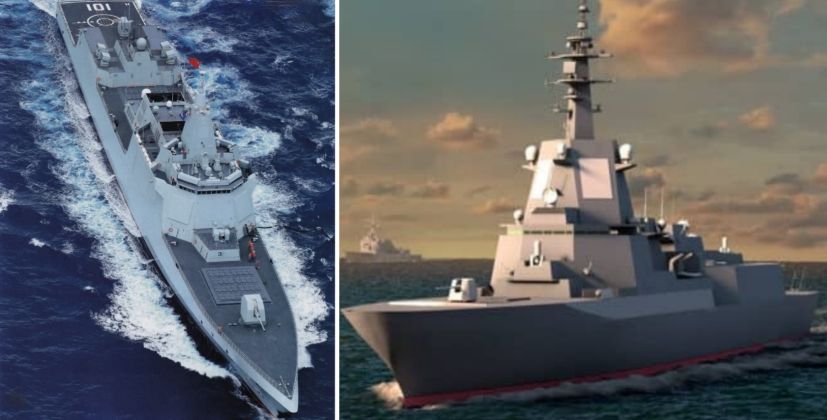
Chinese Type 055 (left) and Japanese Aegis System Equipped Vessel (ASEV) Destroyers - Artwork
The Japan Maritime Self Defense Force is scheduled to commission the world’s most heavily armed destroyer into service in 2027, which will be the first of two ships built under the Aegis System Equipped Vessel (ASEV) program. While original plans for the called for a 20,000 ton ship, this was later revised to 14,000 tons, with a planned 190 metre length and 25 metre beam giving the ships larger dimensions than any other destroyers in the world. The decision to develop such a large surface combatant reflects Japan’s changing security environment, and has been widely interpreted as a response to the service entry of Chinese Type 055 class destroyers, of which ten are currently in service. The Chinese ships are currently widely considered the world’s most capable destroyers, and displace 13,000 tons each.
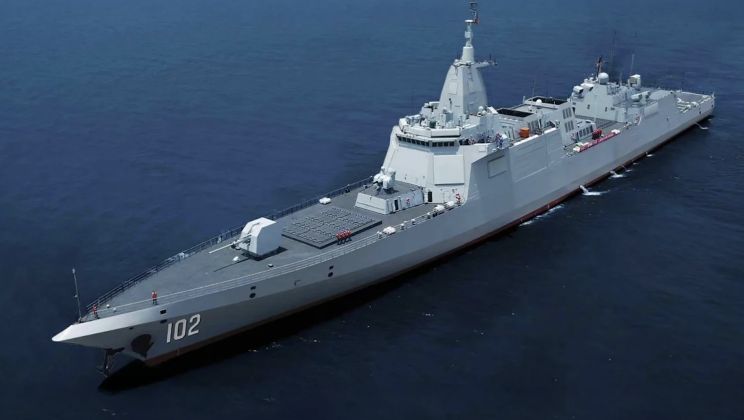
The ASEV ships were designed to strengthen anti-missile capabilities and cruise missile strike capabilities for a major war in East Asia. At the heart of the design will be the Aegis Combat System, although unlike Japan’s existing Kongo class, Atago class and Maya class vessels, the new ships will replace the older AN/SPY-1 phased array radar with the significantly more advanced AN/SPY-7 active electronically scanned array (AESA) radar. This is derived from the radar developed for the U.S. Long Range Discrimination Radar (LRDR) program, and offers improved detection, tracking and discrimination capabilities against advanced ballistic missile threats. Compared with the AN/SPY-1, the AN/SPY-7 provides greater sensitivity, improved electronic resistance and enhanced ability to track multiple complex targets simultaneously.
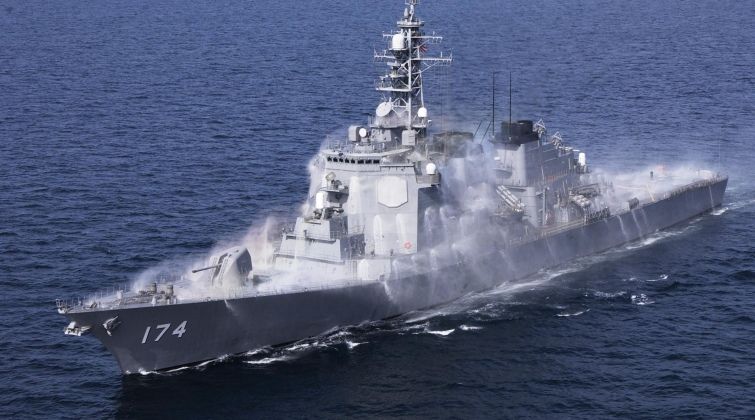
One of the most distinctive features of the ASEV will be the placement of its large Aegis radar arrays above the bridge, providing better line-of-sight detection against low-altitude threats and improve performance against sea-skimming anti-ship missiles. The ship’s size is intended to accommodate not only a large sensor suite, but also the greatest firepower of any destroyer in the world with 128 Mk 41 vertical launch cells. This will allow it to accommodate 16 more long range missiles than Chinese Type 055 class destroyers. The ship’s large missile capacity will allow the vessel to simultaneously conduct ballistic missile defence, air defence, anti-surface warfare and land-attack missions.
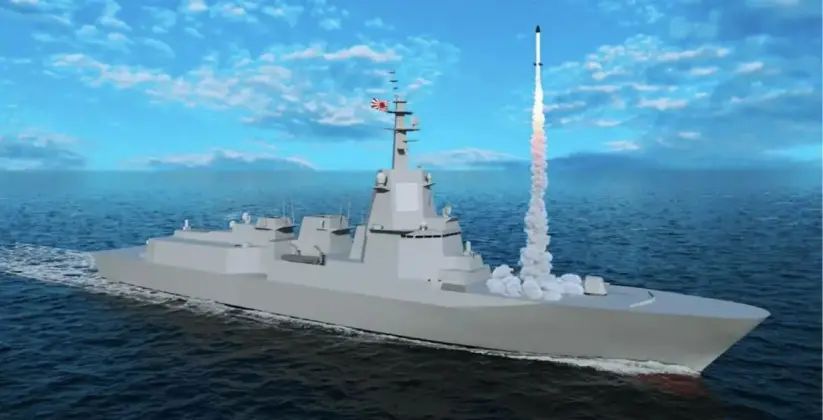
The ASEV is expected to carry a combination of advanced Standard Missile interceptors, including future SM-5 variants, alongside Tomahawk cruise missiles. The integration of Tomahawk will provide Japan with a long-range precision strike capability, representing a major shift from its traditional exclusively defensive posture. The vessel is also expected to eventually deploy Glide Phase Interceptors (GPI), a next-generation weapon being developed by the United States and Japan to defeat hypersonic glide vehicles during the vulnerable midcourse phase of flight. As China, North Korea and Russia continue developing hypersonic missile systems, the ability to intercept manoeuvrable high-speed weapons has become a priority for Japan due to its close alignment with the Western Bloc against these countries.
The ASEV will also feature a sophisticated suite of additional sensors and electronic warfare systems. Three AN/SPG-62 illumination radars will continue to support semi-active radar-guided missile engagements, providing terminal guidance for certain air defence missiles. Although newer active radar-guided interceptors reduce dependence on illumination radars, they remain an important component of layered air defence. For detecting low-flying threats, the vessel will carry the AN/SPQ-9B horizon-search radar, a system designed to automatically detect and track sea-skimming anti-ship missiles, aircraft, helicopters, drones and surface contacts. This capability will be particularly important as modern naval warfare increasingly involves large numbers of low-cost unmanned systems and saturation attacks. The ship may also be the first outside the United States to integrate the AN/SLQ-32(V)6 electronic warfare system and the related HGHS antenna dome for further electronic support.
