
Japan's Dire Need for a Domestic Fifth Generation Air Superiority Fighter; Causes and Implications of the Indigenous Fighter Program - Part One
Military Watch Magazine Editorial Staff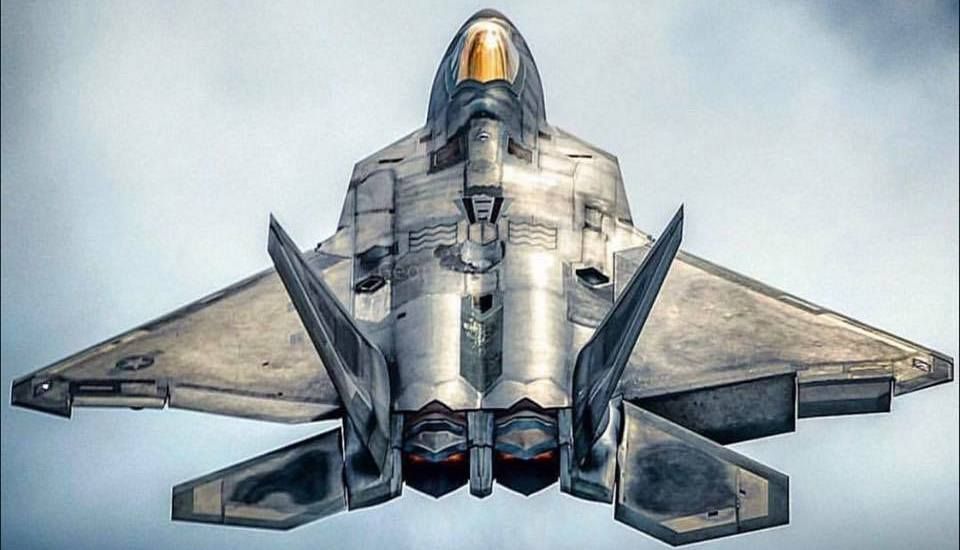
F-22 Fifth Generation Air Superiority Fighter
Emerging as the Western Bloc's prime regional partner following the defeat of the U.S. aligned Guomindang government in China in 1949, Japan was encouraged to purchase high end military hardware including the most modern American fighters to guaranteed aerial supremacy over all its neighbours - with sole the exception of the Soviet Union. While lower tier U.S. allies such as Thailand and the Philippines were provided with lighter second generation F-5 fighters light fighters, Japan was provided with large numbers of the heavier and more capable F-4 Phantom and was even permitted to co-produce the jets. Japan went on to become an early operator of the fourth generation F-15 Eagle, one of only three U.S. allies ever sold advanced air superiority variants of the fighter alongside Israel and Saudi Arabia where most U.S. allies were forced to make do with the lighter and less capable F-16. Japan's air fleet was from the beginning of the 1980s one of the most advanced in the world - while neighbouring China was forced to rely on early Vietnam War era fighters with negligible capabilities in comparison. Acquiring the F-15J made Japan's Air Force one of the most capable in the world alongside the United States and the Soviet Union - the latter which introduced the elite MiG-31 interceptor in 1981 and the Su-27 heavy air superiority fighter in 1985 as its first fourth generation platforms. Japan has since the 1980s seen its advantage gradually eroded, and over 35 years later its continued reliance on the F-15J as its foremost air superiority fighter has meant that the once prime military power is now increasingly falling behind the capabilities of its neighbours.
In 1991, ten years after Japan received its first F-15J, its neighbour China received its first Soviet built Su-27 air superiority fighters. These platforms changed the balance of power in the Asia-Pacific religion in a way no fighter had since the MiG-15 was sold to China and North Korea in during the Korean War. While Japan made few advances to its air superiority capabilities, China's economic rise facilitated the acquisition of over 400 Su-27 and more advanced Su-30 air superiority fighters, including the acquisition of related technologies and the development of the domestically manufactured J-11 air superiority fighter. With these fighters' capabilities equal to and in many ways exceeding those of the F-15J, while significantly outnumbering Japan's fleet, Japan had by 2000 lost its technological advantage in the air.
To regain its advantage it was essential for Japan, particularly in light of China's economic rise and the rapid military modernisation it was facilitating, to acquire a next generation air superiority fighter capable of outperforming the J-11 and Su-30. With the United States' F-22 Raptor air superiority fighter entering service in December 2005, by far the world's most advanced combat jet at the time, Japan alongside Israel were the prime foreign clients showing interest in the fighter. The two had been the first recipients of the F-15 and had a special places as top tier American military partners, and both expected to acquire the Raptor to update their capabilities. While in Israel's case it faced no near peer air superiority capabilities among neighbouring states - other than those of Saudi Arabia which were heavily reliant on the U.S. for maintenance and posed little threat, Japan faced a more pressing need for more modern fighters in light of the development of the weapons programs of its neighbours. The United States however took the unprecedented step of refusing to export the F-22 to either party, expecting few challenges to its position as the global hegemonic power or to the security of its allies in the post Cold War era - while also cautious of Israel's propensity to provide third parties with sensitive U.S. military technology and of Japan's tendency to reverse engineer U.S. technologies for its own industries. The result was however that Japan has been left reliant on the increasingly dated F-15J fighter to this day.
Continued in Part Two
