
Israeli Bombing of Palestinian Hospital Shocks World Opinion: Over 500 Civilians Killed
Military Watch Magazine Editorial Staff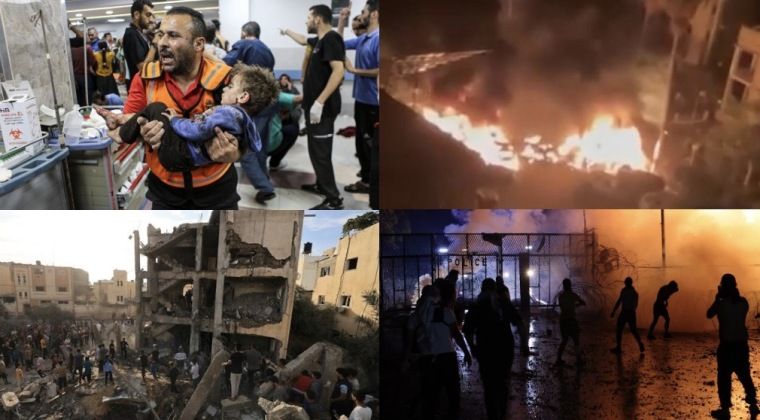
Aftermath of Israeli Strike on Al Ahli Arab Hospital
In the latest of multiple rounds of escalation since the Gaza-based militia Hamas launched offensives against Israeli positions on October 7, the Israeli Air Force on October 17 bombed the Al Ahli Arab Hospital in the Gaza Strip killing over 500 civilians at a conservative estimate - with some estimates placing the casualty count at over 1000. Overall Palestinian casualties from Israeli strikes over the past 11 days have reached well over 16,000, although the nature of the target of the latest attack has sparked particularly harsh condemnation globally even from parties which previously took neutral positions in the conflict. Russian President Vladimir Putin, for one, described a “tragedy” and a “terrible incident,” emphasising: “Hundreds of dead and wounded, of course, this is a catastrophe... especially in a humanitarian place. I expect this to be a signal that this conflict should end as soon as possible. In any case, it should lead to the start of some kind of contacts and negotiations.” Despite having expressed support for Israel, Indian Prime Minister Narendra Modi stated that he was “deeply shocked” by the incident, offered his “heartfelt condolences” to the families of the victims, and prayers for the “speedy recovery” for the injured. “Civilian casualties in the ongoing conflict are a matter of serious and continuing concern,” he stated, stressing that “those involved should be held responsible.”
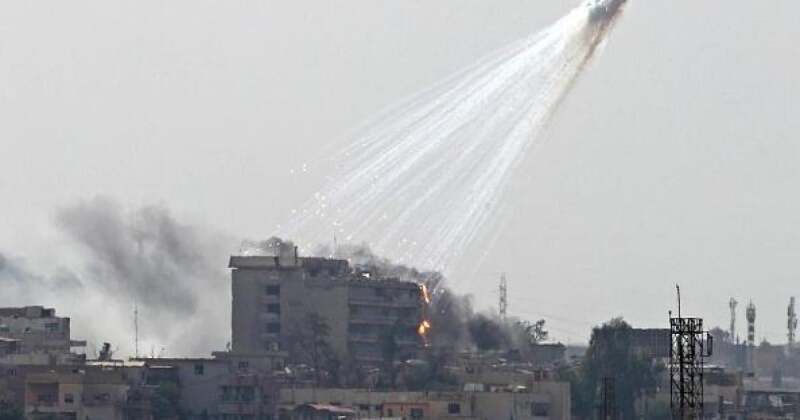
Israeli heavy bombardment of Gaza’s civilian population has sparked widespread condemnation from across the non-Western world, with even the leader of one NATO member state, Croatian President Zoran Milanovic, having stated on October 14 that Tel Aviv had “wasted” the sympathy it had gained for its “vengeance and killing civilians” when bombarding Palestinian territories. Israel’s use of illegal white phosphorous weapons against civilian areas has also been confirmed by multiple third parties and furthered international condemnation. Continued solidarity with Israel from across the Western Bloc has notably soured ties with even many of the more closely Western aligned Arab states, with leaders from Egypt, Jordan and the Palestinian Authority cancelling a planned meeting with U.S. President Joe Biden in the aftermath of the attack. Although extreme, however, Israeli strikes are far from unprecedented when compared to attacks carried out by NATO members in recent years, a notable example being neighbouring Turkey’s extensive use of white phosphorous against Syrian targets as part of its military intervention to support jihadist groups in the country. In October 2015 a similar attack to that on Al Ahli Arab Hospital by the United States Air Force saw an AC-130U gunship attack the Kunduz Trauma Centre in Afghanistan operated by Médecins Sans Frontières, during which patients were reported to have burned to death in their beds. The strike gained significantly less global publicity, however, and Washington faced negligible international criticism. The most significant consequence of Israel’s strike on the Palestinian hospital is expected to be a widening of the rift between NATO member states and formerly Western-aligned Arab states such as Saudi Arabia due Washington and its European allies’ apparent endorsement of Israeli military actions.
