
Israeli Air Defences Down Syrian Su-22 Strike Fighter Amid Escalating Tensions; Did Patriot Missile Batteries Redeem Themselves?
Military Watch Magazine Editorial Staff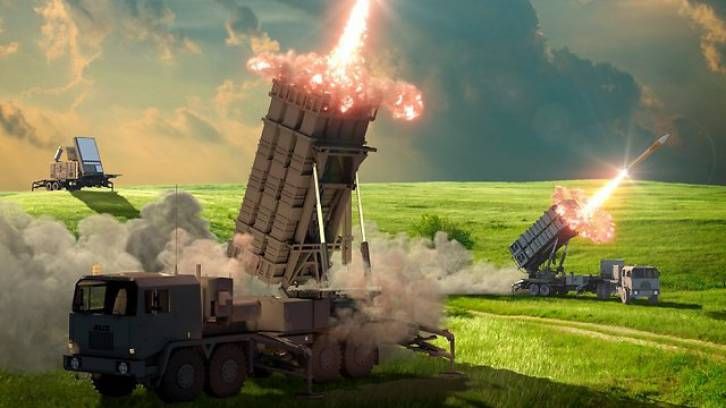
Patriot Missile Batteries - Artwork
Amid regular exchanges of fire on the Syrian-Israeli border, and with the Syrian military increasingly prevailing against a number of Western supported Islamist groups which had previously maintained a considerable presence in the area, tensions between Tel Aviv and Damascus have continued to escalate. On July 24th Israeli air defence batteries reportedly successfully targeted a Syrian Su-22M4 strike fighter near its border - which Israel claimed briefly entered its airspace and was later downed over Syrian territory. The incident occurred shortly after reports emerged that Israel had evacuated members of the White Helmets, a Western funded organisation wanted for war crimes by the Syrian government which has reportedly worked closely with Islamist terror groups such as the Al Nusra Front within the country. The downing of a Syrian jet represents the second time Israel has successful targeted Damascus' combat aircraft since 2011 - previously downing a strike fighter in 2014 which was also operating against Al Qaeda linked forces near the Israeli border - and the latest in a series of hostile incidents between two Middle Eastern states.
Approximately two dozen Su-22 jets are fielded by the Syrian Air Force, and the relatively light and low maintenance platforms have been relied on heavily for conducting strikes on Islamist targets since the outbreak of war in the country in 2011. First entering service in 1966, the strike fighter was heavily based on the Su-7 which had entered service seven years prior - adding variable swept wings and new avionics to the original design. With a low speed of Mach 1.5 and a service ceiling of little over 14km, the aircraft’s survivability is relatively poor on today’s battlefields - and while it has been more than capable of striking Islamic State, Al Qaeda and other Islamist targets threatening Damascus, against the Israeli Air Force and even its somewhat unreliable ground based anti aircraft batteries the Su-22 remains highly vulnerable.
The successful downing of the Su-22 has somewhat redeemed the Patriot missile system, the most advanced U.S. made anti aircraft capable long range air defence system ever produced, which has faced a series of embarrassing failures against makeshift Yemeni ballistic missiles in Saudi hands and against Iranian reconnaissance drones when operated by Israel - as well as the failure of early variants of the system to intercept very basic Iraqi ballistic missiles during Operation Desert Storm. The strike fighter is nevertheless the least survivable aircraft in the Syrian inventory, and whether the Patriot could be relied on to counter more advanced, faster and higher flying aircraft remains to be seen. The fact that the Syrian Su-22 did not expect to come into conflict with Israeli forces, and was caught entirely by surprise in the attack, served to make it considerably more vulnerable. The short range at which the missile batteries targeted the aircraft is also very likely to have played a considerable part in their success, and whether Patriots will be able to counter aircraft at longer ranges remains to be seen.
The Su-22 is notably fielded in large numbers by the Iranian Air Force, which deploys over 40 of the strike fighters as one of the few offensive assets of its air force. The success of Israeli air defences in countering the Su-22 may well provide some reassurance against this adversary as tensions between Tel Aviv and Tehran remain high, though Iran has reportedly equipped its strike fighters with state of the art standoff munitions allowing them to engage Israeli targets from far greater distances at which the Patriot may struggle to target them - namely the Kh-58 anti radiation missiles with a 120km standoff range and a formidable speed of Mach 3.5. Despite their age, Su-22 strike fighters are set to remain active in the Middle East for many years to come - and assuming no drastic increases in the defence budgets of either Syria or Iran they are likely to remain key to the strike capabilities of both of Tel Aviv’s major regional adversaries.
