
Iranian Stealth Drones Conduct Precision Strikes on Jihadist Targets; Strike Capabilities Continue to Evolve Rapidly
Military Watch Magazine Editorial Staff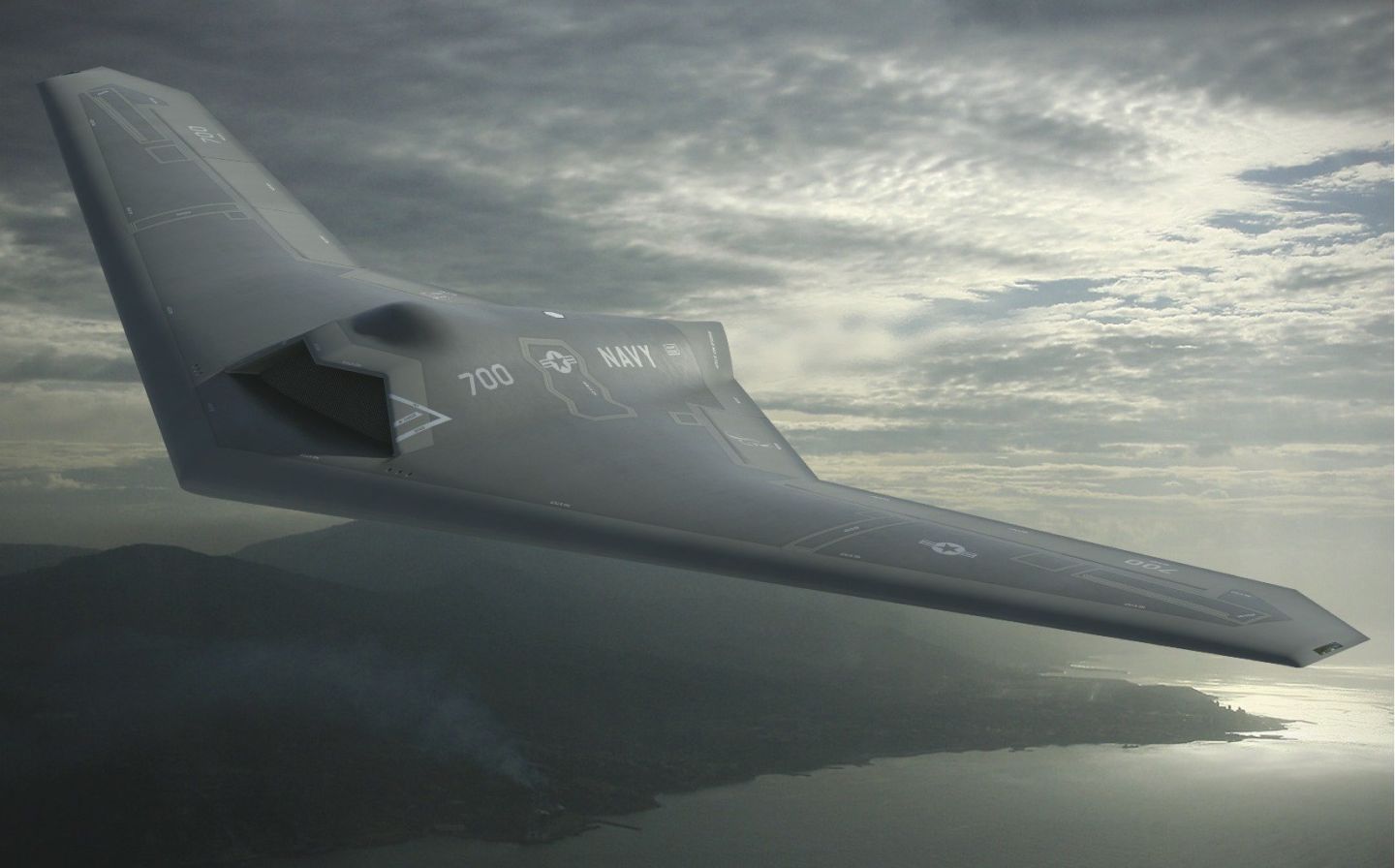
RQ-170 Stealth Drone - artwork
Allegedly conducted in response to September 22nd terror attacks on an Iranian military parade in Ahvaz, southwestern Iran, the Iranian Islamic Revolutionary Guards Corps (IRGC) conducted a sizeable strike on jihadist targets in eastern Syria. The attack was reportedly carried out by seven IRGC drones and six precision guided ballistic missiles, spearheaded by Saeqeh stealth drones (not to be confused with the Air Force’s Saeqeh twin engine light fighter) and struck the command center of Islamic State jihadists. The attack fulfilled a valuable propaganda purpose as well as a military one, with Iran’s Fars News agency publicising the video through online publication - a way for Tehran to demonstrate its ability to respond to threats to its security both to its people and to its adversaries.
The Saeqeh is heavily based on the U.S. RQ-170 stealth drone, which Iran hijacked over its territory and landed intact in December 2011. A number of Iranian unmanned platforms have since been developed using technologies reverse engineered from the American aircraft. The platform is reportedly capable of simultaneously striking four targets with smart missiles at standoff ranges, while its radar evading capabilities serve to considerably enhance its survivability. Different variants of the design are reportedly specialised in reconnaissance and combat roles, with the former having reportedly been deployed to Israeli airspace earlier in the year. Despite fielding the most capable Western made anti aircraft missile systems, the Patriot, Israeli air defences were reportedly unable to successfully target the stealth drone - which was eventually downed from the air by an attack helicopter. Former head of Mossad Danny Yatom stated regarding the incident: “It was a sophisticated operation. The UAV was almost an exact replica of the U.S. drone that fell in their territory. If it had exploded somewhere in Israel, it may not have been possible to identify it as an Iranian manufactured drone.”
Iran’s missile and drone strike on jihadist targets reportedly took place within three miles of U.S. military positions in Syria, and comes amid escalating tensions between the two particularly surrounding the Syrian theatre. Washington has repeatedly demanded that Iranian assets should leave Syria, though Syria’s own government has made no such requests and has instead called for U.S. and allied French and Turkish forces to withdraw their assets. Iran’s new stealth drones have recently emerged as one of its potent assets for power projection alongside its ballistic missile arsenal, and mass produced at a relatively low cost they continue to pose a considerable threat to the country’s adversaries. With the United States itself moving quickly to acquire counter stealth technologies, in light of the recent loss of its monopoly on stealth systems, how the balance of power in the Middle East will evolve remains to be seen. Iran’s defence sector has, with considerable Chinese and North Korean support, consistently performed above and beyond the expectations of the Western Bloc and its allies - and the country’s armed forces represent a considerable challenge to the formerly strongly Western dominated regional order.
