
Iran Threatens U.S. AI Data Centres and Undersea Cables as America Considers Escalated Attacks
Military Watch Magazine Editorial Staff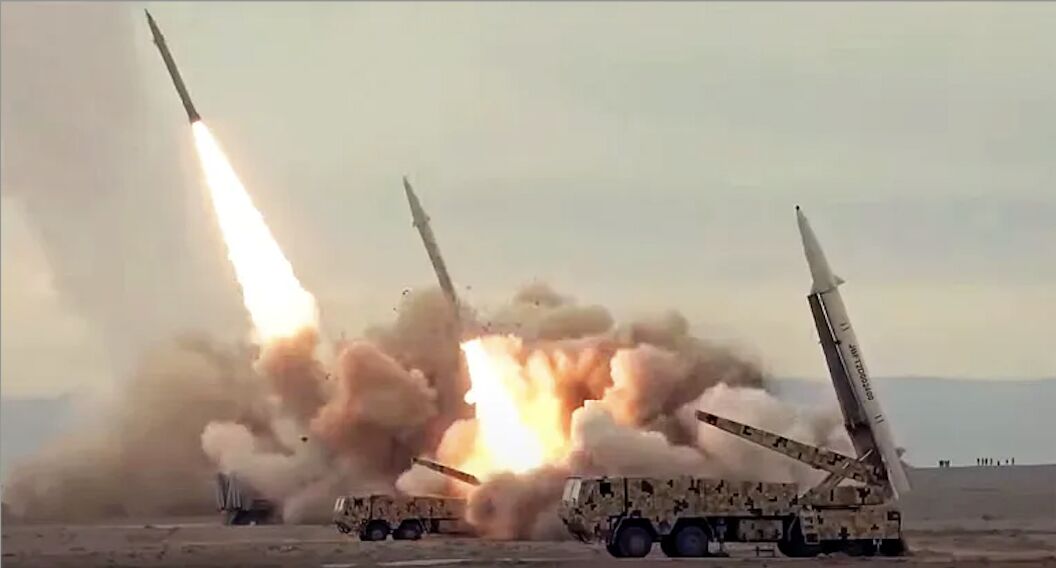
Launches of Iranian Fateh-110 Low Cost Short Range Solid Fuelled Ballistic Missiles
Iran has warned that U.S.-linked data centres, artificial intelligence facilities and undersea communications cables across the Gulf region could become targets if the United States launches another attack against the country. Mohsen Rezaei, secretary of Iran’s Supreme National Security Council, warned that these assets could be destroyed in a renewed conflict, claiming that American interests in the region included infrastructure worth more than $2 trillion. Rezaei stressed that Iran had not yet designated these facilities and cables as targets, but indicated that Tehran could expand its response beyond conventional military installations and energy infrastructure.
The warning comes as American technology companies invest billions of dollars in developing the Gulf into a major global hub for cloud computing and artificial intelligence. Microsoft has committed to spending $15.2 billion in the United Arab Emirates between 2023 and the end of 2029, including investment in advanced AI and cloud data centres and its partnership with Emirati technology company G42. Amazon Web Services (AWS) is investing approximately $5.3 billion in a cloud region in Saudi Arabia, while Google and Saudi Arabia’s Public Investment Fund have announced a $10 billion AI hub. These investments are central to Gulf governments’ efforts to diversify their economies beyond oil and establish a larger role in the global technology industry.
Much of this infrastructure is already operational. AWS operates cloud regions in both the UAE and Bahrain, while Microsoft, Google and Oracle maintain data-centre and cloud-computing operations across several Gulf markets. These facilities provide computing capacity for businesses, government agencies and financial institutions, with AI infrastructure increasingly requiring enormous quantities of electricity, specialised processors, cooling systems and high-capacity communications links. Their concentration in a region exposed to military conflict creates vulnerabilities that extend beyond the technology companies themselves to the wider economies that depend on their services.
The risks became tangible in March 2026, when AWS reported that two of its facilities in the UAE had been directly struck by drones, while a strike near another facility in Bahrain caused physical damage to infrastructure. The incidents caused structural damage, disrupted electricity supplies and resulted in additional water damage during firefighting operations, leaving multiple cloud services unavailable. AWS warned that recovery would be prolonged because the damage involved physical facilities and supporting systems rather than a conventional software failure. The disruption also affected customers dependent on the cloud infrastructure, including financial institutions, demonstrating how attacks on individual data centres can generate consequences across multiple sectors.
