
Iran Launches First Ever Hypersonic Glide Vehicle Strike: New Fattah-2 Missile Revolutionises Arsenal’s Potential
Military Watch Magazine Editorial Staff
Alleged Fattah-2 Launch and Hypersonic Glide Vehicle in Flight (artwork)
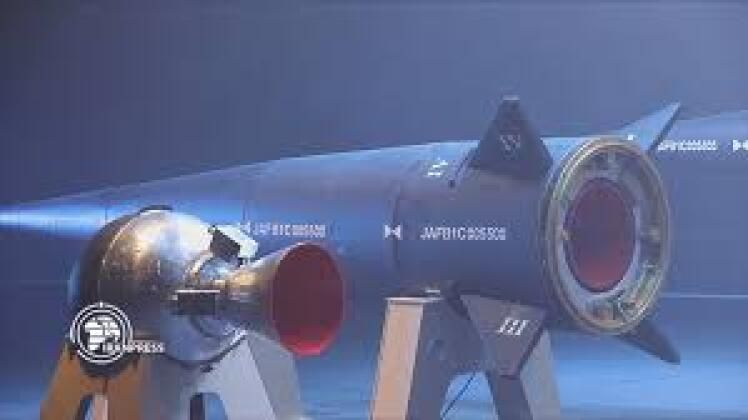
Iranian sources on February 28 released footage of the launch of the Fattah ballistic missile, which integrates a next generation manoeuvring re-entry vehicle to effectively evade missile defences. This was followed by the reported first ever launch of the Fattah-2, a heavily enhanced successor to the missile, on March 1. The Fattah-2 missile uses a hypersonic glide vehicle rather than a usual ballistic missile reentry vehicle, allowing it to manoeuvre in both pitch and yaw, to maintain far higher reentry speeds, and to approach targets from unexpected directions. Such missiles can sustain atmospheric skip-glide or shallow glide flight at hypersonic speeds. The missiles were launched following the initiation of coordinated large-scale military assault against Iran by the United States and Israel, which has seen multiple high value targets including key leadership figures targeted, and the country’s Supreme Leader Ali Khamenei killed.
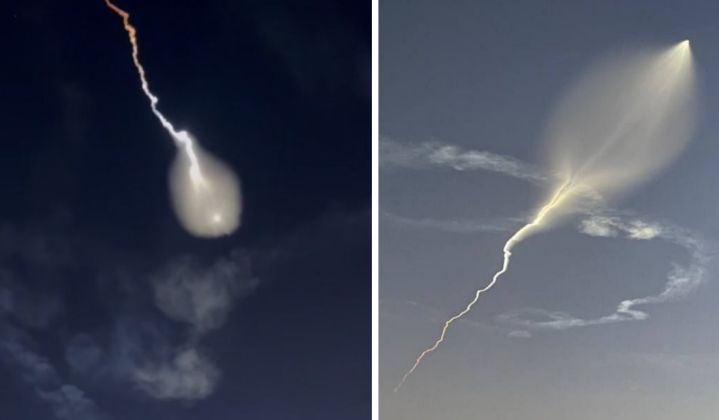
While the large majority of ballistic missiles launched are reported by Iranian sources to have been lower value missile types, which may be intended to depleted hostile missile defences in the conflict’s earlier stages, higher value missiles like the Fattah and Fattah-2 may have been launched to neutralise high value targets that it is seen as important to destroy early on, such as the missile defence radar destroyed in Qatar. Their use may also serve as an important show of force regarding the room the Islamic Revolutionary Guard Corps retains for escalation. While the U.S. has suffered from severe shortages of anti-ballistic missiles for its Patriot and THAAD missile defence systems, however, it remains highly uncertain in what quantities the Fattah and Fattah-2 have been brought into service, with the latter in particular estimated to cost several times as much as older ballistic missile types such as the Khorramshahr.
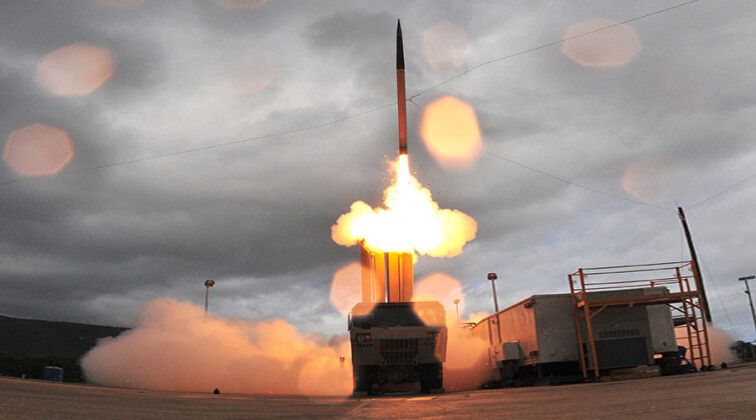
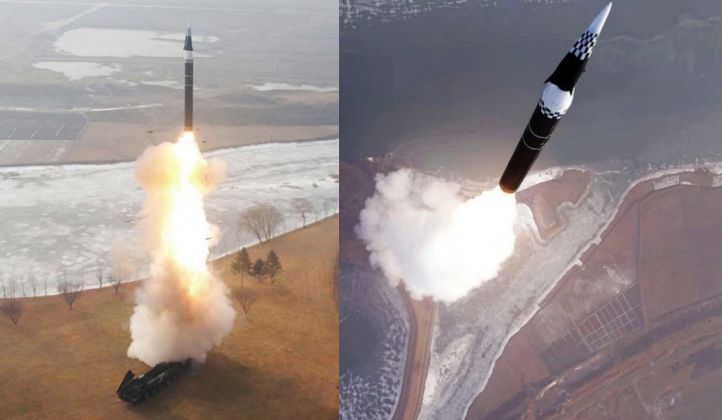
Iran was reported to have first obtained manoeuvrable reentry vehicle technologies from North Korea in the 1990s, with such vehicles having also been sold to Syria that decade for its Hwasong-9 ballistic missiles, providing countermeasures against interception by Israel’s newly supplied Patriot air defence systems. North Korea began flight testing of hypersonic glide vehicles in September 2021, and reached a landmark in 2024 with the service entry of the Hwasong-16B intermediate range ballistic missile which integrates such vehicles. It has been speculated that Iran may have either jointly developed these technologies, or purchased them from North Korea. Although adversary missile defences, most notably the Patriot system, have proven to be far from reliable, the much improved penetrative capabilities of the Fattah and Fattah-2 are nevertheless game changers for Iran’s offensive potential.
Although the more complex Fattah-2 was never reported to have been used in combat before March 1, 2026, the Fattah was reported by the Islamic Revolutionary Guards Corps on June 18, 2025, to have been used to engage Israeli targets in the early hours of the day. The Corps reported that the missile proved capable of penetrating Israel’s multi-layered missile defence network, and was fired as part of the eleventh wave of strikes under Operation True Promise III, in response to sustained Israeli air attacks on the country. The Revolutionary Guard stated that employment of the Fattah marked “the beginning of the end” for Israel’s “mythical” missile defences. “The powerful and highly manoeuvrable Fattah missiles repeatedly shook the shelters of the cowardly Zionists tonight, sending a clear message of Iran’s strength to Tel Aviv’s warmongering ally, which continues to dwell in delusions and false assumptions,” the Corps claimed, adding that the new missile left Israel defenceless against its precision strikes.
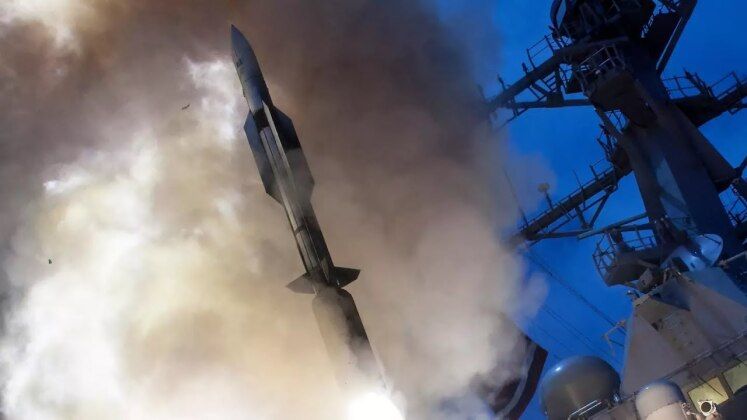
The Fattah’s ability to maintain controlled manoeuvrability inside the atmosphere seriously complicates possible interception efforts using systems such as the Israeli Arrow and U.S. Army THAAD. The missile has a reported 1,400 kilometre range, and according to Iranian sources uses a hypersonic glide vehicle to achieve a terminal speed of Mach 13 to Mach 15. Its combination of speed and manoeuvrability make it nearly impossible to intercept. Leading technological challenges in moving from manoeuvrable reentry vehicles to hypersonic glide vehicles include enduring skin temperatures exceeding 2,000 degrees celsius, avoiding the extreme cracking of composite materials, and maintaining stable control despite ablative erosion. Extremely accurate inertial systems, and pre-loaded terrain and trajectory shaping, are also vital. Both the Fattah and the Fattah-2 have been assessed to have significantly complicated Western and Israeli missile defence planning.
Vice President of the leading Israeli missile defence system developer Rafael Advanced Defence Systems, Yuval Baseski, in August 2025 highlighted that Iran’s development of hypersonic missiles had forced the firm and the Israel Defence Forces to rethink their approach to missile defence. “Hypersonic missiles open a new era in air defence,” Baseski observed, warning that traditional approaches to missile defence could not be relied on against such targets. “Every air defence system today is based on flying faster than the target. But this principle does not apply to hypersonic missiles. To intercept an object moving at Mach 10, one would need a defence moving at Mach 30, which is impossible in the atmosphere due to friction,” he stated. Drawing an analogy to basketball, he observed: “One interceptor missile tracking one hypersonic missile is like defending LeBron James with a single player. You may keep chasing him, but you won’t stop him from scoring.” He instead suggested a “zone defence” model, under which multiple interceptors covered defined areas and engaged threats as they entered. As Israel has yet to show signs of being able to implement this, it is likely that Iran’s Fattah-2 arsenal will be able to penetrate Israeli defences with impunity.
