
Interviewing China’s Yangjie Tech Firm Vice Chairman After EU Imposed Sanctions For Alleged Support For Russia’s War
Military Watch Magazine Editorial Staff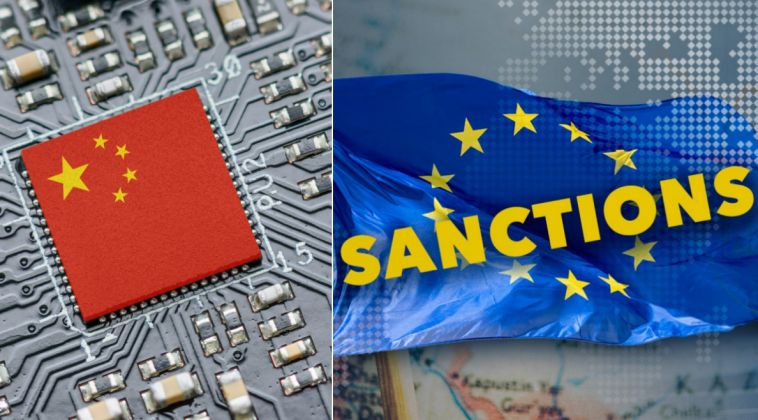
On April 23 the European Union imposed economic sanctions on the firm Yangzhou Yangjie Electronic Technology, known more commonly as Yangjie Technology, as part of a regime of secondary sanctions targeting Russian trading partners. These sanctions have been imposed as part of the EU’s 20th sanctions package, with the targeting of the Chinese firm initiated the basis that it had allegedly sent dual use electronics to support the Russian Armed Forces and defence sector, including making over 200 shipments of dual use semiconductor components since 2022 which were used in drones and armaments. In light of the considerable controversy that the imposition of secondary sanctions has caused, Military Watch Magazine reached out to Yangjie Technology to inquire as to the veracity of European allegations.
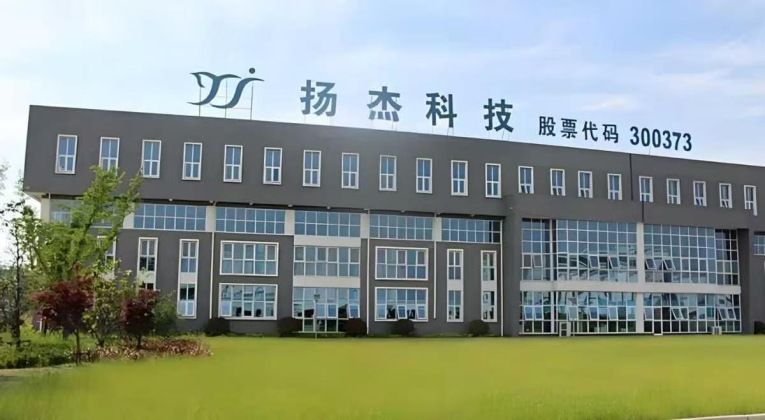
Responding to Military Watch, Vice Chairman of Yangjie Technology Liang Yao replied when asked about his firm’s alleged involvement in supporting the Russian war effort as follows:
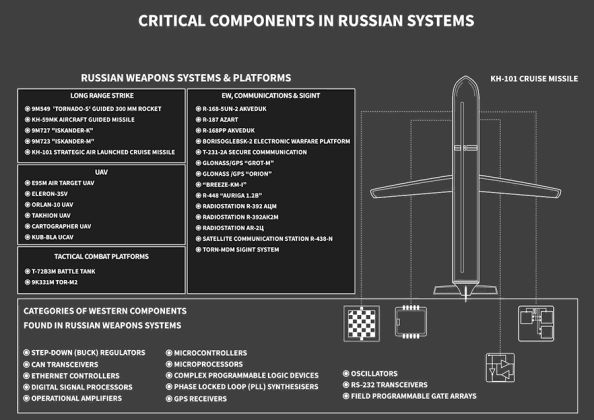
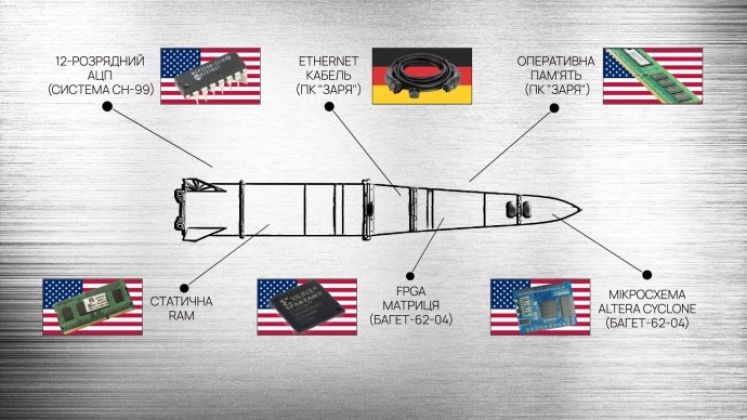
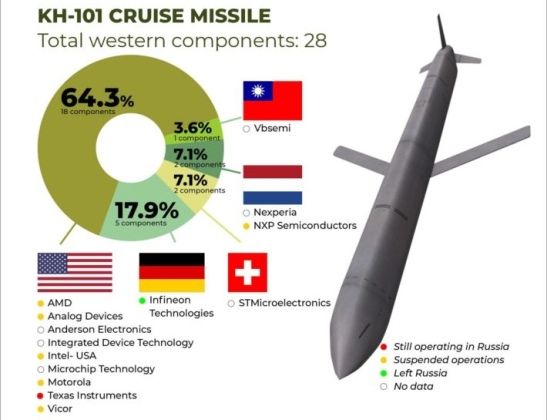
“According to the logic of the European Union and based on the data listed on the Ukrainian government's website, electronic components from Germany firms Infineon and Bosch, the Netherlands firm Philips, the U.S. firms Infineon and Anson have all appeared in the database. As general components, why hasn’t the EU accused them? This is purely an accidental injury to Yangjie Electronics Company. Yangjie Technology is an IDM enterprise with power semiconductors as its core. Its products cover rectifier devices, MOSFETs, IGBTs, power modules, SiC devices, and more. Compared to highly sensitive devices such as computing power chips and RF chips, these products are closer to the basic components in the electronics industry: they have wide applications, large quantities, low unit prices, and strong circulation. They are widely used in automotive electronics, new energy, industrial control, power supplies, home appliances, lighting, communication, and consumer electronics.”
Questioning Vice Chairman Liang regarding the rationale behind European sanctions, he replied as follows:
“The logic of sanctions is certainly to ‘restrict cutting-edge technology,’ but the boundary that needs to be clarified is whether the manufacturer naturally bears military supply chain responsibility as long as a civilian component appears in weapon debris. In fact, the more basic, universal, and standardised the components in the industry, the easier they are to be redistributed by the market. Based on this, has the EU misinterpreted the circulation results of a global electronic supply chain as subjective military supply by enterprises? The official documents of the European Union attach heavy labels to Yangjie Technology, including so-called dual-use technology, products appearing in Russian drones and ammunition, and supplying to Russian related enterprises.”
Asking the vice chairman how he assessed one would best discern whether a semiconductor firm was contributing to a war effort, he observed:
“But from an industry perspective, judging whether a semiconductor company serves the military industry cannot only rely on where the components are ultimately dismantled, but also on three levels: product attributes, sales paths, and usage control capabilities. Yangjie Technology's core product is power semiconductor basic devices, widely used in power supplies, home appliances, lighting, consumer electronics, industrial control, automotive electronics, new energy and other scenarios. The value of such products lies not in computing power or “intelligence capabilities,” but in rectification, protection, switching, voltage regulation, and energy conversion. In other words, they are not the brains of weapon systems, but more like basic components in circuits. A diode appearing in a drone cannot be directly equated with a screw, a wire harness, or a capacitor appearing in a drone in terms of supply chain responsibility.”
When questioned on the role of global supply chains in supporting the Russian war effort, and whether Chinese firms held any special responsibility, Vice Chairman Liang responded:
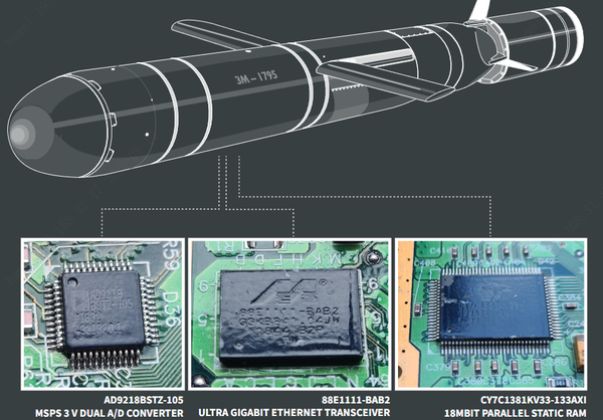
“The Ukrainian War&Sanctions public database provides a horizontal observation. This database records foreign manufactured components discovered on the Russia Ukraine battlefield, covering a large number of European, American, Japanese, Korean, and Chinese manufacturers. According to the data provided by users, there are 59 products of Infineon in Germany, 76 products of Infineon in the United States, 10 products of Qiangmao in Taiwan, China, 5 products of Philips in the Netherlands, 7 products of Bosch in Germany, and only 4 products registered by Yanjie Technology. This comparison illustrates a fundamental fact: the battlefield dismantling database essentially reflects the result of global civilian electronic components being absorbed, resold, and misappropriated by the Russian system, rather than a natural list of military suppliers. If we follow the logic of ‘appearing is guilty,’ a large number of top semiconductor manufacturers, automotive electronics manufacturers, and industrial device manufacturers around the world will be involved in the same narrative. Reality obviously cannot be so rough. The more basic the device, the more difficult it is to continuously control the end use after leaving the factory. The more globalised the distribution system, the more prone it is to unclear inventory penetration, traders changing hands, and third-party re exports. Compliance is certainly important, but compliance responsibility should also be established within the controllable boundaries of the industry chain, rather than pushing all downstream illegal re circulation onto the original manufacturers.
Therefore, the key to the Yangjie Technology incident is not whether there are any components present, but whether the EU can prove that the company has actively, continuously, and knowingly supplied for military use. From the current publicly available industry information, this chain is not sufficient. The reason why the Yangjie Technology incident is sensitive is that it is in a more realistic position: at the intersection of global power semiconductor domestic substitution, automotive electronics supply chain restructuring, and European car companies’ component safety anxiety. Chinese manufacturers have been facing two changes in recent years: one is the explosive demand for new energy and automotive electronics, pushing power devices from traditional discrete devices to higher value vehicle specifications SiC, Modular direction; The second is the increasing awareness of global supply chain security, with whole machine manufacturers and Tier1 beginning to seek multi supplier backups. Electric drive, electronic control, and onboard charger in new energy vehicles DC-DC. The inverter and power conversion in photovoltaic energy storage, as well as the server power supply and high-voltage DC power supply in AI data centres, all rely on power devices. That's why power semiconductors are entering the long-term supply system of whole machine manufacturers, Tier 1 and energy equipment manufacturers.
The Ukrainian War&Sanctions database itself also shows that the real difficulty is not identifying a particular component, but tracking how it passes through the distribution, transit, and inventory chains and ultimately enters the weapon system. For the original factory, they can directly control primary customers, contract terms, export control codes, end-user statements, and abnormal order screening, but identifying secondary resale, cross-border re export, and inventory flow is difficult. That is to say, the emergence of universal devices on the battlefield first exposes the challenge of penetrating the global distribution chain.”
Military Watch concluded by asking Vice Chairman Liang whether he believed his firm bore any responsibility for supporting the Russian war effort as the European Union had alleged, to which he replied:
“Yangjie Technology Company has not participated in the research and development, design, and production of any military products, has not provided any military specification products, and has terminated its Russian related business since 2023. It has established export control compliance clauses and required customers to sign end-user and usage statements. These actions indicate that the company has sufficient compliance awareness. But this incident also proves that future power semiconductor companies need to establish stronger ‘provable compliance’ capabilities.
Yangjie Technology has been included in the EU sanctions list this time, and there is a judgment paradigm worth being wary of: as long as general civilian devices appear on the battlefield, they may be politicised. If this paradigm is infinitely expanded, the global electronics industry will be engulfed in uncertainty. Because a large number of electronic components in modern weapon systems originally come from civilian industrial systems, and the characteristics of civilian industrial systems are standardisation, scale, substitutability, and circulation.
From the publicly available information, Yangjie Technology seems more like a company that has been mistakenly injured by the liquidity of global basic components. Its industry portrait is a Chinese sample in the domestic substitution of power semiconductors, upgrading of automotive regulations, and global production capacity layout. What it truly needs to be tested is whether the compliance system can withstand more stringent international scrutiny, rather than being simply classified as part of the military technology supply chain.”
