
Indian Government Commits to Acquiring New Variant of the Domestic Hal Tejas Light Fighter
Military Watch Magazine Editorial Staff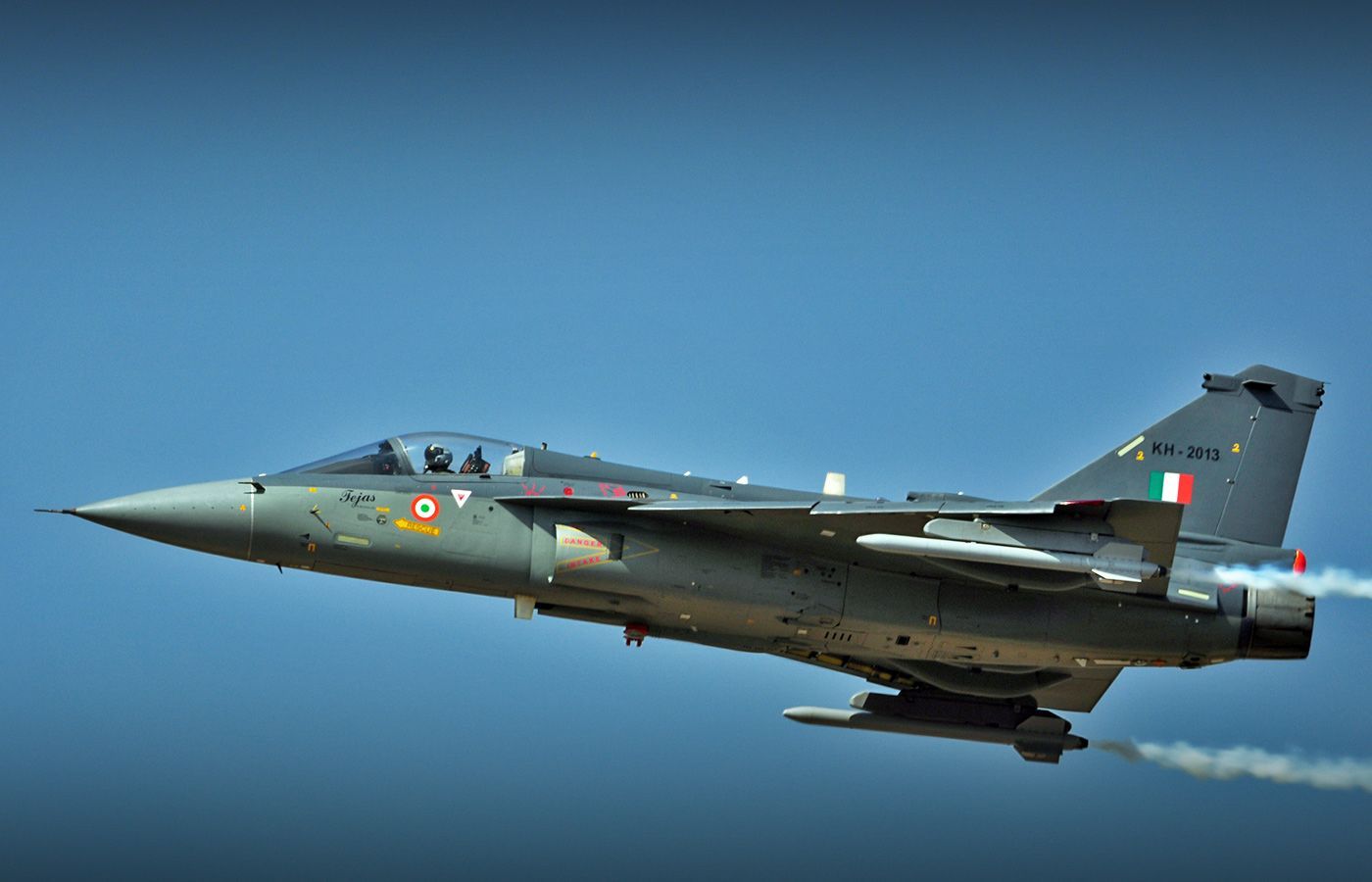
HAL Tejas Light Fighter
Despite repeated performance failures and delays in its domestic fighter program, India's Air Force is set to purchase 83 domestically manufactured HAL Tejas fourth generation light fighters and is likely to place subsequent orders following the first deliveries. While the country previous indicated that it would instead seek to acquire single engine light fighters from a Western source, with the U.S. F-16 and Swedish Gripen being leading contenders, the high costs of even relatively basic Western fighters are likely to have been a significant factor leading Delhi to instead work on its own fighter program. Defence Minister Nirmala Sitharaman stated that the government had decided to invest in a heavily upgraded and revised variant of the Tejas light fighter - in a move widely speculated to be the end of the U.S. and Sweden's opportunity to export their own light fighters. According to Minister Sitharaman, the enhanced variant of the Tejas would be as capable as the Gripen and F-16 once the necessary modifications were carried out.
Minister Sitharaman stated regarding the annual output of Tejas fighters: "We want them to produce much more." Hindustan Aeronautics is currently able to produce only six fighters per year, though in light of growing demand the corporation is looking to open a second production line while outsourcing components of the fighter to private manufacturers to increase annual output. While the Tejas was originally designed with the intention of developing a naval variant for the country's first catapult equipped aircraft carrier, INS Vishal, the platform's gross underperformance led the Indian Navy to reject it entirely. The Navy today is likely set to acquire the U.S. F-18E Block 3 in its stead. Minister Sitharaman indicated however that investments would continue to be made in developing a viable naval variant of the fighter, possibly for use in a complementary role alongside the heavier U.S. platform. The Minister also stated that India hope to be able to export the Tejas in future, though how viable such prospects would be considering the intense competition to export fourth generation light fighters from far larger and more established producers remain to be seen.
Further investments in the Tejas program, despite its shortcomings, could well prove a far better choice for India's defence for a number of reasons when compared to acquiring Western fighters. The prestige of developing a domestic fourth generation fighter, a feat few other states have managed to achieve, would be a significant step towards India's vision to become a 21st century superpower with a more self reliant defence industry - rather than the world's largest importer of arms it is today. Procurement of Western fighters meanwhile would require the country to regularly import spare parts and replacement weapons systems, particularly at wartime operational levels when the country would be vulnerable to arms embargoes from its Western suppliers - a dangerous position for a non aligned nation. India would be able not only to produce parts and weapons systems indigenously, but would also be able to upgrade them domestically at a far lower cost than upgrading a Western made platform, and fighters could thus be far more easily be adapted to meet emerging threats. Focusing on the Tejas would also go a long way towards strengthening Delhi's military industrial base, which is at present sorely lacking even when compared to its smaller neighbour Pakistan.
The cause of India's sudden renewed faith in their fighter program remains unknown, but it could well stem from technological breakthroughs or even foreign assistance. Russia and Israel could well have provided some key technical assistance to India's program, with the former in particular having a strong incentive to see India succeed in its Tejas program, serving to undermine the proliferation of arms from its Western rivals to its longstanding South Asian ally, while posing little threat to Russia's own exports due to the country's lack of an equivalent single engine platform. This as of yet remains speculation however, and India remains unlikely to disclose the details of foreign assistance received for its fighter program.
