
Indian and Chinese Forces Peacefully Disengage on Border - Redeploy Troops and Armour to Permanent Bases
Military Watch Magazine Editorial Staff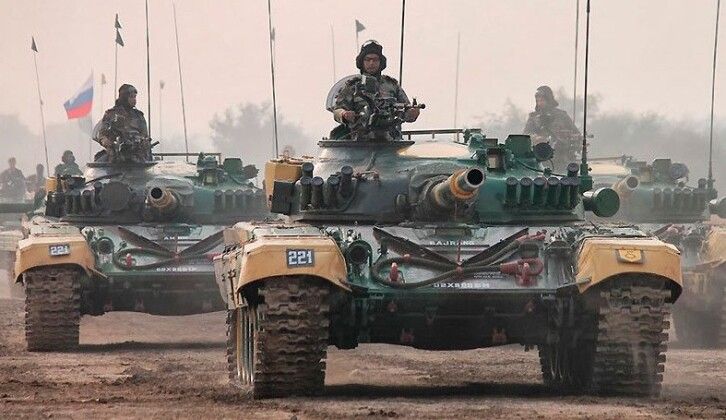
Indian Army T-72 Battle Tanks
Following eight months of high tensions on the Sino-Indian border, the two countries reached an agreement for peaceful disengagement following nine rounds of commander-level talks. The agreement stipulates that forces deployed on the north and south bank of Pangong Lake will cease their forward deployments in a phased, coordinated, and verified manner, which both countries have begun to see through. The Indian Army released images of the disengagement, with a 75 second video showing leaders from the Indian Army and People's Liberation Army (PLA) meeting and shaking hands in the Chusul Sector of the eastern Ladakh region. The clip also shows a PLA Type 99 tank move back from its forward deployment towards its permanent base, and an Indian Army T-72 tank doing the same. The Type 99 is the most capable Chinese battle tank in service - with the newer Type 99A variant considered one of the most advanced in the world. India’s T-72 is one of its older tanks, although it is fielded in much larger numbers than the Type 99, with the Indian Army moving to replace frontline T-72 units with newer T-90 tanks.
The video showed just how close units from the two countries were operating before the agreement - just 100-150 feet apart - with both China and India having gone to considerable lengths to avoid tensions and reduce the possibility of unintended clashes. The United States has notably tried to capitalise on Sino-Indian border tensions to bring Delhi into its sphere of influence and present itself as a protector against China, and improvements in relations between the two Asian powers and a reduction in tensions are likely to undermine American interests in the region.
