
Indian Air Force to Equip Elite Su-30MKI Air Superiority Fighters with British ASRAAM Air to Air Missiles
Military Watch Magazine Editorial Staff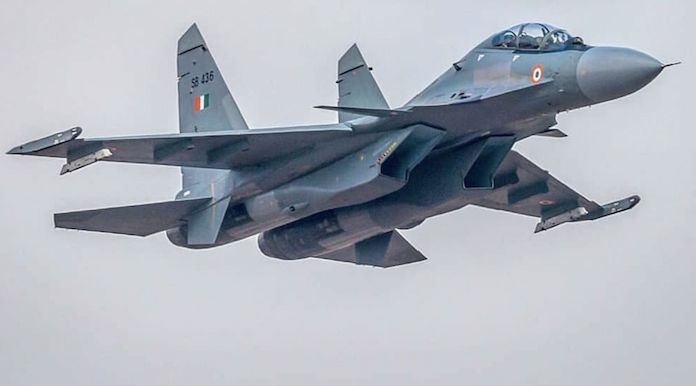
Indian Air Force Su-30MKI Air Superiority Fighter
The Su-30MKI fourth generation twin engine fighter has since the early 2000s formed the mainstay of the Indian Air Force’s combat fleet, with the service planning to deploy well over three hundred of the elite aircraft providing it with one of the most capable air superiority fleets in the world. Su-30MKI jets continue to be manufactured both in Russia and in India under licence, with the design having been updated considerably over time to integrate new avionics and electronic warfare systems. The platforms have also been equipped with more advanced Russian made munitions such as the latest variants of the R-77 long range air to air missile, and more recently the Air Force had indicated that it plans to equip the fighters with European built missiles - namely the British Advanced Short Range Air to Air Missile (ASRAAM).
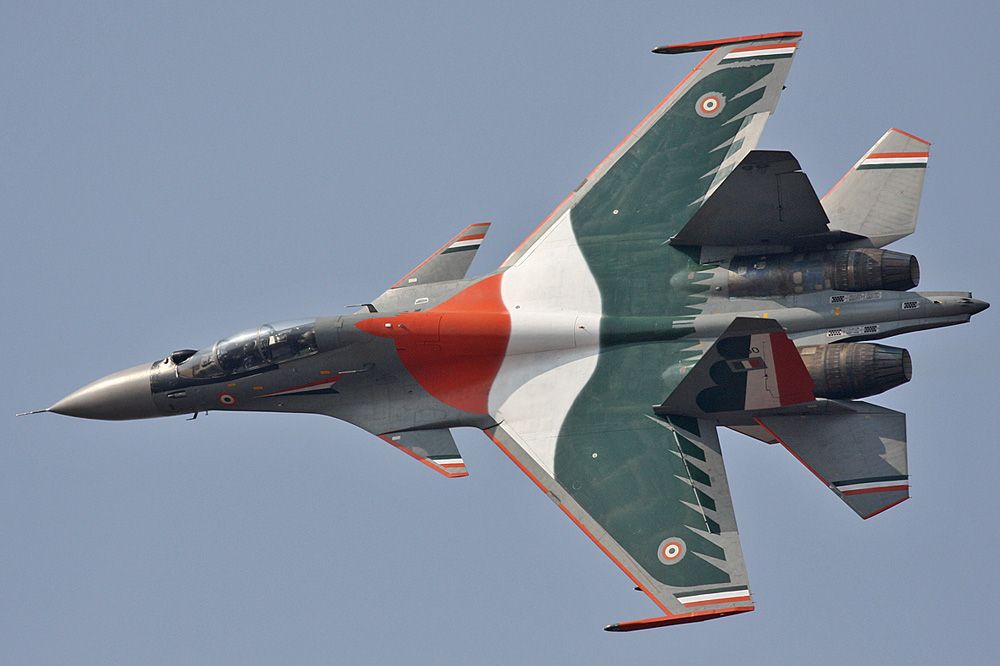
Su-30MKI Fourth Generation Air Superiority Fighter
The ASRAAM is a British equivalent to the AIM-9 sidewinder used by the U.S. Air Force and the Vympel R-73 used by Russia's own combat jets. The missile was designed for short ranged engagements, though its ability to strike targets up to 25km away allows it to outrange many similar munitions produced by rival manufacturers. While formidable, the ASRAAM is costly relative to U.S. or Russian manufactured equivalents, and is arguably considerably inferior to the latest variants of the American AIM-9X which retains extreme degrees of manoeuvrability. This has led to suspicions that India has selected the ASRAAM for political reasons rather than the actual effectiveness of the missile relative to its competitors. The extremely poor performance of British Eurofighter jets in simulated close range engagements with Indian Su-30MKI fighters further gives cause to question India’s decision to acquire the British made munitions.
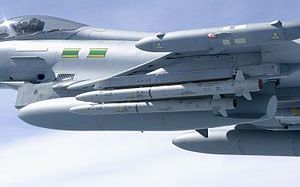
British Eurofighter Typhoon with ASRAAM Short Range Missiles
A pair of Su-30MKI fighters manufactured under licence by Hindustan Aeronautics have reportedly undergone software modifications to deploy the ASRAAM, which comes after Indain manufactured Jaguar attack jets were equipped with the same missiles to modernise their air to air capabilities. India’s National Aerospace Laboratory (NAL) was tasked with assessing the stability of the ASRAAM on the Su-30 airframe at its Bengaluru wind tunnel before the missiles were integrated. India has thus emerged as the second foreign operator of the British made munition after Australia, with the costly munitions having fared relatively poorly on export markets relative to their arguably far more cost effective Russian, Israeli and American manufactured counterparts.
