
How Capable is the U.S. ‘Lighting Carrier’ With New F-35B Stealth Fighters Redeploying From Japan to Fight Iran?
Military Watch Magazine Editorial Staff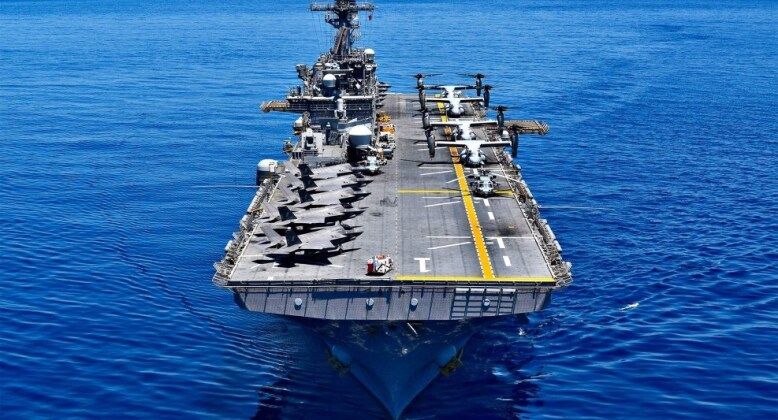
Wasp Class Assault Ship with F-35B and MV-22B Aircraft
The U.S. Department of War has confirmed that Wasp class amphibious assault ship USS Tripoli and its embarked 31st Marine Expeditionary Unit are redeploying from Japan to the Middle East. The 40,000 ton ship will be accompanied by the Tripoli Expeditionary Strike Group, including the Ticonderoga class cruiser USS Robert Smalls, Arleigh Burke class destroyer USS Rafael Peralta, and approximately 2,200 Marines. The Tripoli itself can deploy up to 20 F-35B fifth generation fighters, as well as MV-22B tiltrotor transports. The U.S. Central Command responsible for operations against Iran requested the new force specifically “to have more options for military operations against Iran,” and confirmed the Marine unit will be “able to conduct ground operations if ordered.”
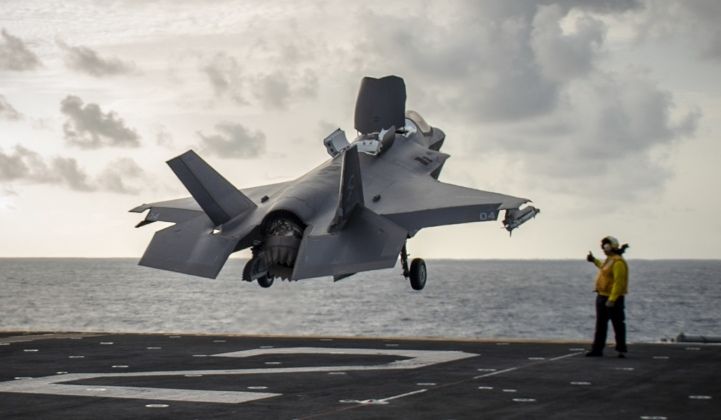
The introduction of a new Wasp class carrier into the theatre will introduce a number of new capabilities, most notably a significantly improved capability to launch assaults against Iranian territories, most notably Kharg Island, using both MV-22 and landing ships launched from the assault ship’s well deck. While Wasp class ships previously had negligible combat aviation capabilities, with their Harrier attack jets having very short ranges, obsolete sensors, and very limited weaponry, the integration of the F-35B has very considerably improved the air wings’ combat potentials. The aircraft can function as elevated sensors to provide targeting support, contribute to air defence efforts, and launch penetration strikes into Iran. U.S. Marine Corps F-35C fighters are already operating in the theatre against Iran as part of the air wing of the supercarrier USS Abraham Lincoln, however, and have significantly longer ranges and higher combat potentials than the F-35B.
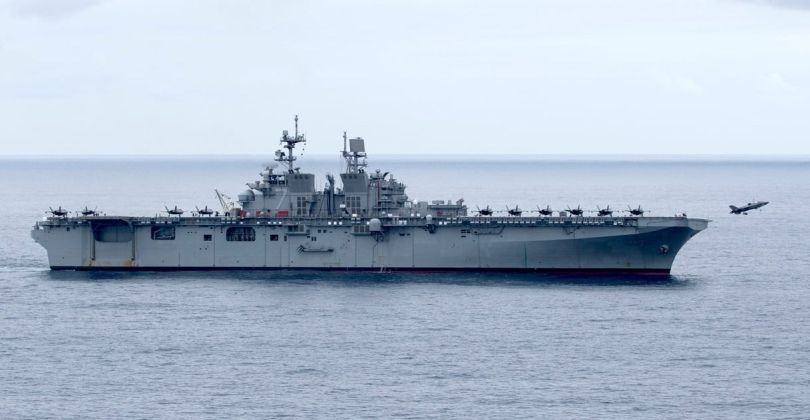
Amphibious assault ships are more versatile than traditional aircraft carriers due to their ability to easily switch roles from supporting offensive amphibious landings to performing a defensive anti-submarine warfare mission, or carrying out airstrikes with fixed wing fighters. Their air wings are nevertheless highly constrained in their capabilities compared to the three supercarriers that have already been deployed in the theatre, not only due to the limitations of the F-35B, but also due to the much lower rates at which aircraft can launch and be recovered, and the lack of support aircraft such as EA-18G electronic warfare plans and E-2 AEW&Cs to provide support. The F-35 itself lacks any kind of air-to-ground missiles due to its lack of Block 4 capabilities, which will only be attained in the early 2030s, with the aircraft more likely to be relied on for defensive duties against Iranian missile boats and drones.
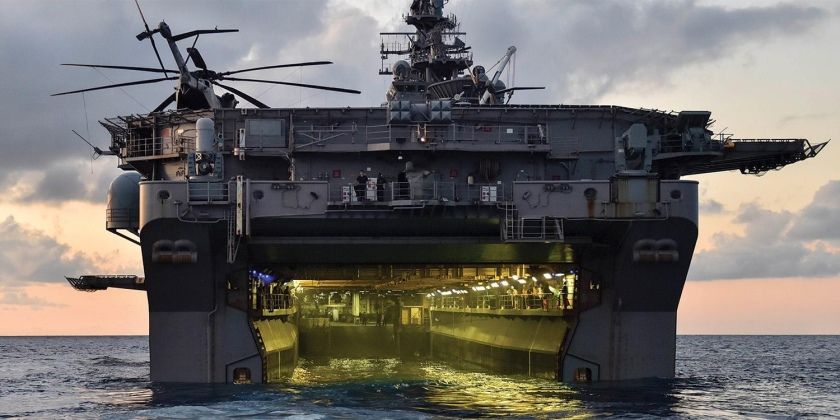
A leading potential benefit of amphibious assault ships is that they require considerably less crew and are far less costly, which could allow them to be deployed for higher risk operations close to Iranian territory. Nevertheless, the advanced ballistic missile and drone capabilities which Iran retains are expected to pose challenges that are wholly unprecedented should an amphibious assault be attempted. With Kharg Island serving as the primary avenue for Iranian energy exports, the fact that the U.S. has refrained from destroying key infrastructure there may indicate either an intention to seize it, or an attempt to avoid further escalation of Iranian attacks on high value strategic targets. U.S. attacks on Iran’s ballistic missile arsenal have been somewhat limited in their successes, with Iran having devastated U.S. and allied missile defence radar networks across the Middle East, while critically depleting their anti-ballistic missile stockpiles, and caused unsustainable damage to major bases and to strategic targets in Israel and across the Gulf region.
