
Germany's Ban on Arms Sales to Saudi Arabia and How Riyadh Could Benefit
Military Watch Magazine Editorial Staff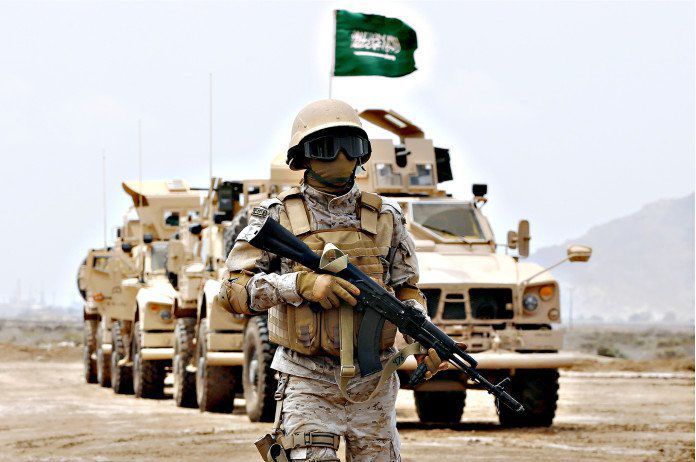
Saudi Arabian Soldier and APCs
In light of continued humanitarian concerns regarding the severe war crimes allegations made against the Saudi military and its allies, Germany has imposed a ban on its corporations from selling arms to the Arab monarchy. Though Saudi Arabia is the Western bloc's longest standing partner in the Middle East, and its war in Yemen is largely facilitated by active U.S. and British support, the Saudi air campaign in and blockade of Yemen have led to a serious humanitarian crisis and sparked protests across the world - including in Germany and other Western countries. Germany is hardly a key arms supplier to Saudi Arabia, and the impact of its export ban other than symbolism and yielding to the demands of popular protests remain primarily symbolic. The export ban does however provide Saudi Arabia with an invaluable opportunity given the nature of the country's planned arms purchases from the European state.
Though paling in comparison to Britain and the United States in its arms sales to Saudi Arabia, one major arms contract set to be signed between Germany and the Arab kingdom has been derailed as a result. The Saudi Arabian government was set to purchase 600-800 Leopard II A7 Main Battle tanks. While the contract was never finalised, and was met with staunch opposition in Germany due to human rights concerns, it would have represented a ludicrous opportunity for German arms providers - by far the largest ever export of the country's most advanced armoured platform. As it is however, Saudi Arabia may well prove to be far better off without the Leopard II contract. The German battle tank, while it is considered the most capable Western platform in service and comes at an extraordinary price tag, has left much to be desired in its field performance. Meant to engage the most advanced battle tanks of near peer adversaries in major wars, the Leopard II has when battle tested by Turkish forces in Iraq and Syria proven extremely vulnerable to questionably trained insurgents using extremely basic anti tank weapons. Islamic State in 2017 took a heavy toll on Turkish Leopard II tanks, while Kurdish YPG forces defending Syria's Afrin from a Turkish assault had similar success against the German built platform.
Given that Turkey, a longstanding client for German arms, has itself turned to South Korean battle tanks and sought to acquire the Korean K2 Black Panther for its ground forces, Saudi Arabia's interests may we'll be better served acquiring the somewhat underachieving Germany battle tank. While the Leopard's supporters have allege that the tank's failures came as a result of it being ill suited to desert warfare for which it was used by Turkey rather than the platform's own inherent shortcomings, given Saudi Arabia's geography this would if anything affect the country more than it did the Turkish military. With the U.S. made Abrams, a battle tested platform with similar capabilities, already in service in large numbers the Arab state has little need for the German platform. Should it seek to enhance its capabilities further it could potentially seek a fourth generation battle tank as Turkey has. With only three countries having manufactured such advanced battle tanks, options include the South Korean K2, the Japanese Type 10 and the Russian T-14 Armata. While the former two cost more than the German Leopard II, the discrepancy in their capabilities more than makes up for this difference in cost and they would provide Saudi ground forces with capabilities far beyond anything they already possess - or anything currently fielded by any of its potential adversaries. Indeed, should Saudi Arabia follow the Turkish example and acquire the K2 instead of the Leopard II, Germany's export ban may well turn out to have been a significant favour in the interests of the Arab monarchy's defence capabilities. With the country already looking to new sources of arms and reducing its former longstanding reliance on Western manufacturers, Russia, China and Israel being among the country's new suppliers, purchasing battle tanks from South Korea or Japan could well occur in the near future and seriously enhance the capabilities of the Saudi armed forces.
