
German Tornado Jets Near Complete Obsolescence - Defence Ministry
Military Watch Magazine Editorial Staff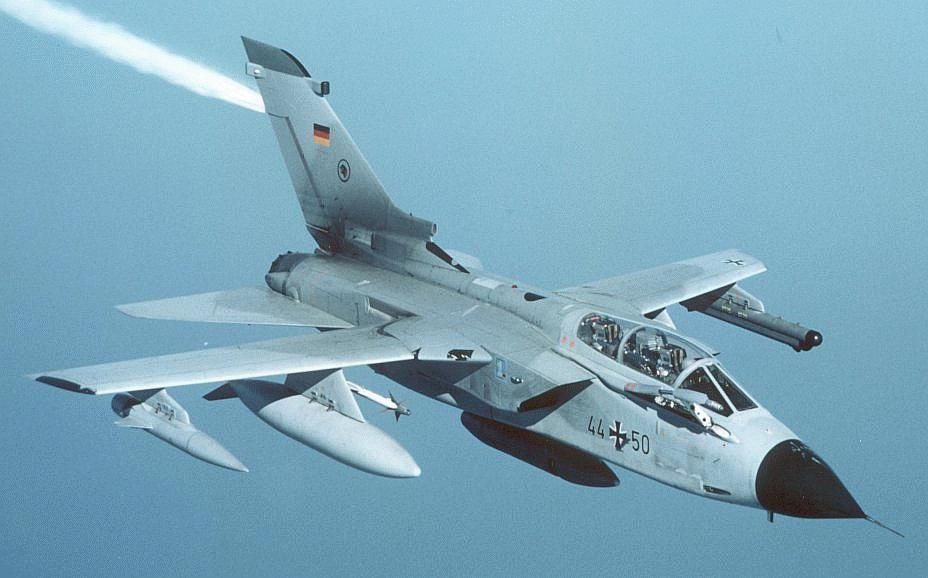
German Tornado Jet
Pintrest
In service since 1979, the Panavia Tornado was one of the world's earliest fourth generation combat jets and was developed jointly by Britain, West Germany and Italy to modernise their aerial warfare capabilities. The three developer countries all continue to operate the fighter, while Saudi Arabia also received 120 aircraft of which over two thirds remains in active service. The Tornado was developed as a twin engined attack platform excelling at low level penetration of enemy defences, designed to deliver ordinance to Warsaw Pact targets at low altitudes. With poor manoeuvrability and a very limited defensive air to air combat capacity, the jets were highly specialised for an attack role. Though it never saw combat service in a major European War, the Tornado was deployed by European powers against both Iraqi and Serbian targets during the 1990s and is today relied on by the Royal Saudi Air Force to infiltrate Iranian air defences and neutralise targets such as airbases and surface to air missile batteries. The fighter has also been deployed in a limited capacity during Western interventions in Syria, Afghanistan and Libya and the Saudi intervention in Yemen.
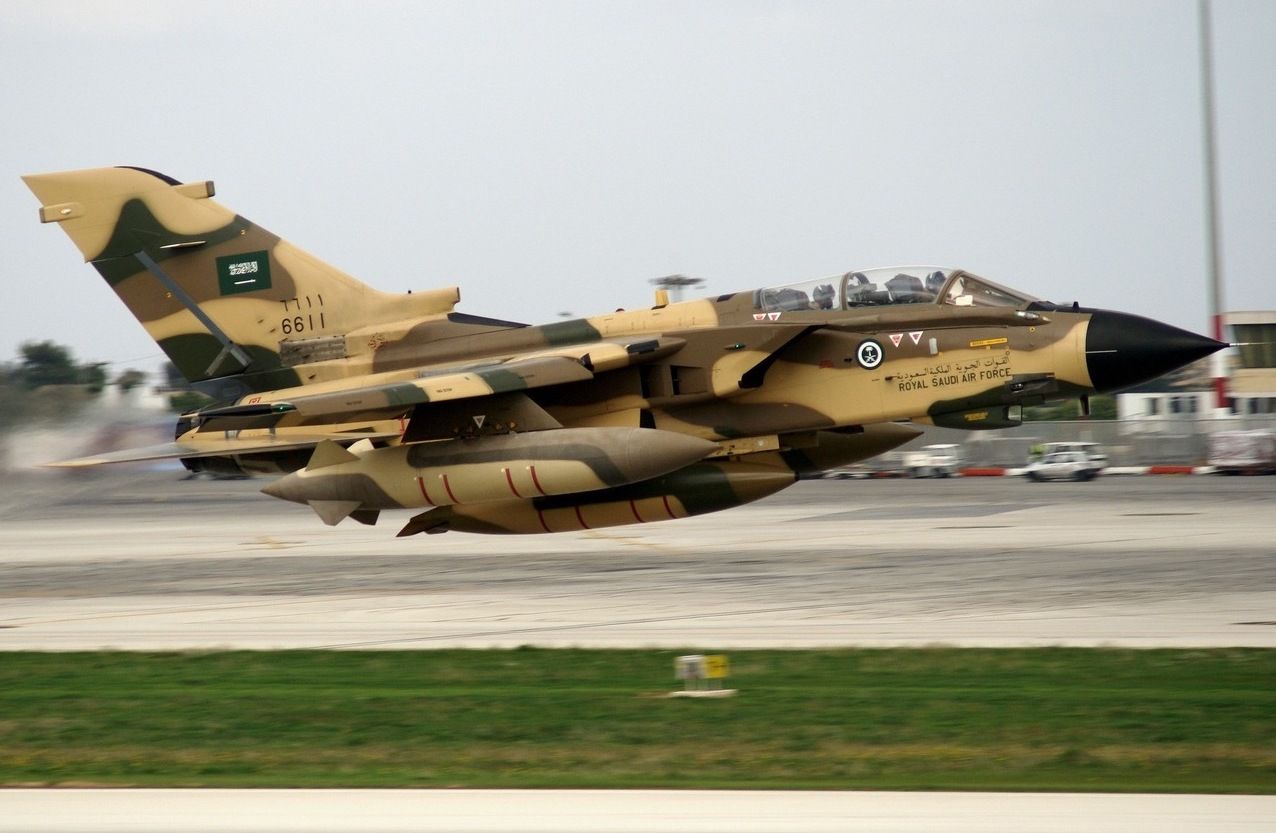
The Tornado is today nearing the end of its service life, and according to a recent report by the German Defence Ministry the condition of remaining aircraft leave much to be desired. The report stated that the Tornado fleet was incapable of fulfilling basic operational needs, and were no longer capable of carrying out tasks within NATO due to outdated equipment. An example was the aircrafts' electronics, installed in the 1980s which are today completely outdated and leave the jets highly vulnerable during combat against competent adversaries. The Tornadoes' lack encrypted communication systems leave them highly vulnerable to electronic warfare attacks.
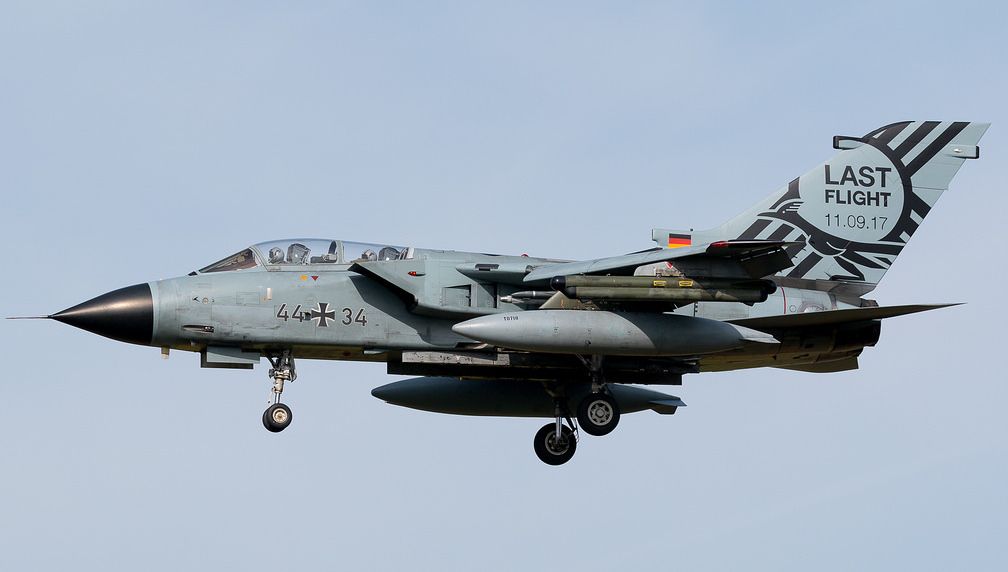
Germany's Air Force retains 68 IDS and 20 ECR variants of the Tornado in service, the former fielded in larger numbers as an attack platform and the latter having since been developed as a reconnaissance and electronic warfare variant with a role in many ways comparable to the U.S. Navy's EA-18G Growler. These aircraft comprise three of the Air Force's six combat squadrons - alongside there squadrons of the newer Eurofighter Typhoon multirole fighter jets. According to the Defence Ministry, the German Tornado fleet can "no longer participate in any NATO operation," and these reports have strengthened calls for a modernisation program to keep the aircraft viable until at least 2035. A replacement for the aircraft is already being sought out by the military, though no similarly specialised aircraft are currently in production either in Europe or the United States - with the Tornado's American analogue the A-10 Warthog also potentially facing retirement. Due to Germany's strong preference for a European made platform, additional Eurofighter Typhoons are likely to be chose to replace the Tornado. The Eurofighter notably lacks the low flying swept wing jet's specialised attack capabilities, as does the American F-35A which has also been highlighted as a possible replacement, but given evolution of standoff munitions since the Tornado's development and of stealth capabilities which are integrated onto the F-35, the need for a low flying fighter to penetrate enemy air defences under the radar is somewhat reduced.
