
U.S. Faces Further Delays to Modernisation of 60 Year Old Primary Bomber Class: Cost Overruns Remain High
Military Watch Magazine Editorial Staff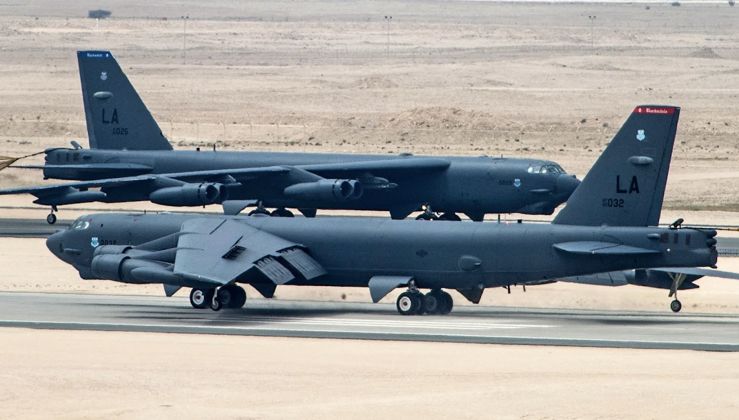
B-52 Strategic Bombers
A June 18 report from the Government Accountability Office U.S. congressional watchdog has confirmed that modernisation of the Vietnam War era B-52H strategic bomber fleet to the B-52J standard will not provide aircraft with even a limited initial operational capability until the year 2033. “The program noted that there have been program delays in part due to funding shortfalls to complete the detailed design, but that it has worked with the contractors and submitted budget requests to support critical design review in August 2025 and initial operational capability in mid-fiscal year 2033,” the report observed, highlighting that delays “are a result of underestimating the level of funding needed to complete the detailed design activities. Specifically, as the B-52 prototyping effort was extended from preliminary design to critical design, program officials received a proposal for the detailed design work.” At the core of the new upgrade remains the replacement of the aircraft’s ageing Pratt & Whitney TF33 with Rolls-Royce F130s, providing lower maintenance requirements and a longer range. Significant changes to avionics and other parts of the aircraft’s structure are also required.
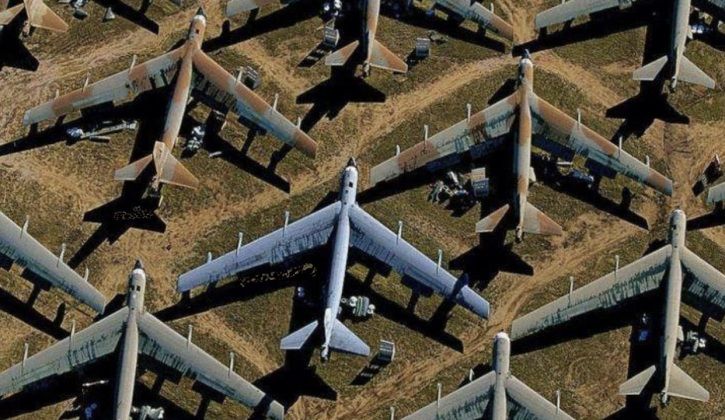
The U.S. Air Force has allocated $48.6 billion to modernise its fleet of 72 B-52H bombers, which represent more than half the country’s fleet of intercontinental range strategic aircraft. The aircraft will require 576 new engines between them, excluding spares. The program is intended to extend their use until 2060. Audits have previously highlighted that the B-52 fleet has suffered from an extreme reliance on cannibalising other planes for spare parts, due largely to industry’s inability to provide new parts in a timely manner, seriously cutting its availability rates. As part of a growing trend towards a contraction in the American defence industrial base, a growing number of firms have ended production of parts for the B-52, meaning that new supplies have often not been available at all. This has the potential to seriously jeopardise plans to keep the aircraft in service for 36 more years.
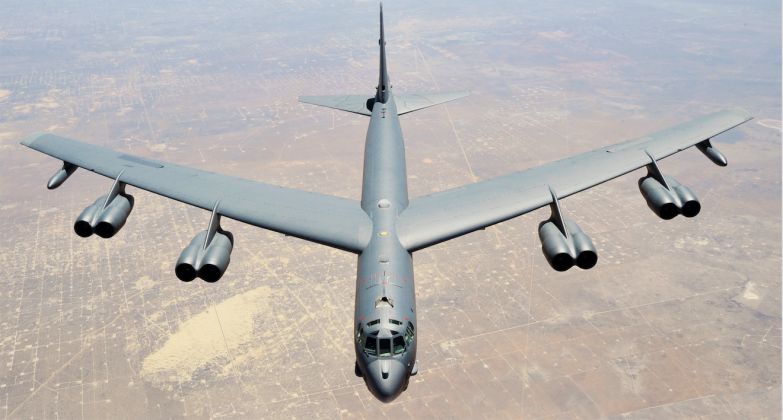
Pressure on the bomber fleet has continued to grow, as the fighter fleet has not only contracted to around a third of its size at the end of the Cold War, but has also seen availability rates drop significantly as fourth generation fighters age while the newer fifth generation F-22 and F-35 fighters have proven highly problematic and difficult to maintain. The result has been a growing reliance on strategic bombers, and the B-52 in particular, for roles such as missile strikes and at times even for close air support. Although fielded in much smaller numbers than fighters, a bomber can carry firepower comparable to that of an entire fighter squadron, and can operate over much longer ranges without reliance on aerial refuelling. Cost overruns have nevertheless been used to argue for making cuts to the B-52J program, with cost projections having grown by 12.6 percent since 2021, and expected to increase significantly further.
A notable example of cost overruns was the B-52 Radar Modernisation Program, which declared a cost breach in September 2023 due to issues with lab testing. That aspect of the B-52J program is intended to replace the ageing AN/APQ-166 mechanically scanned array radar, considered underpowered and highly vulnerable to jamming today, with a derivative of the F-18 fighter’s AN/APG-79 radar. Officials have cited issues from “delays with the display and sensor processor are the primary cause,” and that “the processor’s fibre optic converter - which provides communication between processors - did not work in testing.”
