
French President Indicates Willingness to Intervene More Directly in the Middle East; Could France's Military Impact the Regional Balance of Power?
Military Watch Magazine Editorial Staff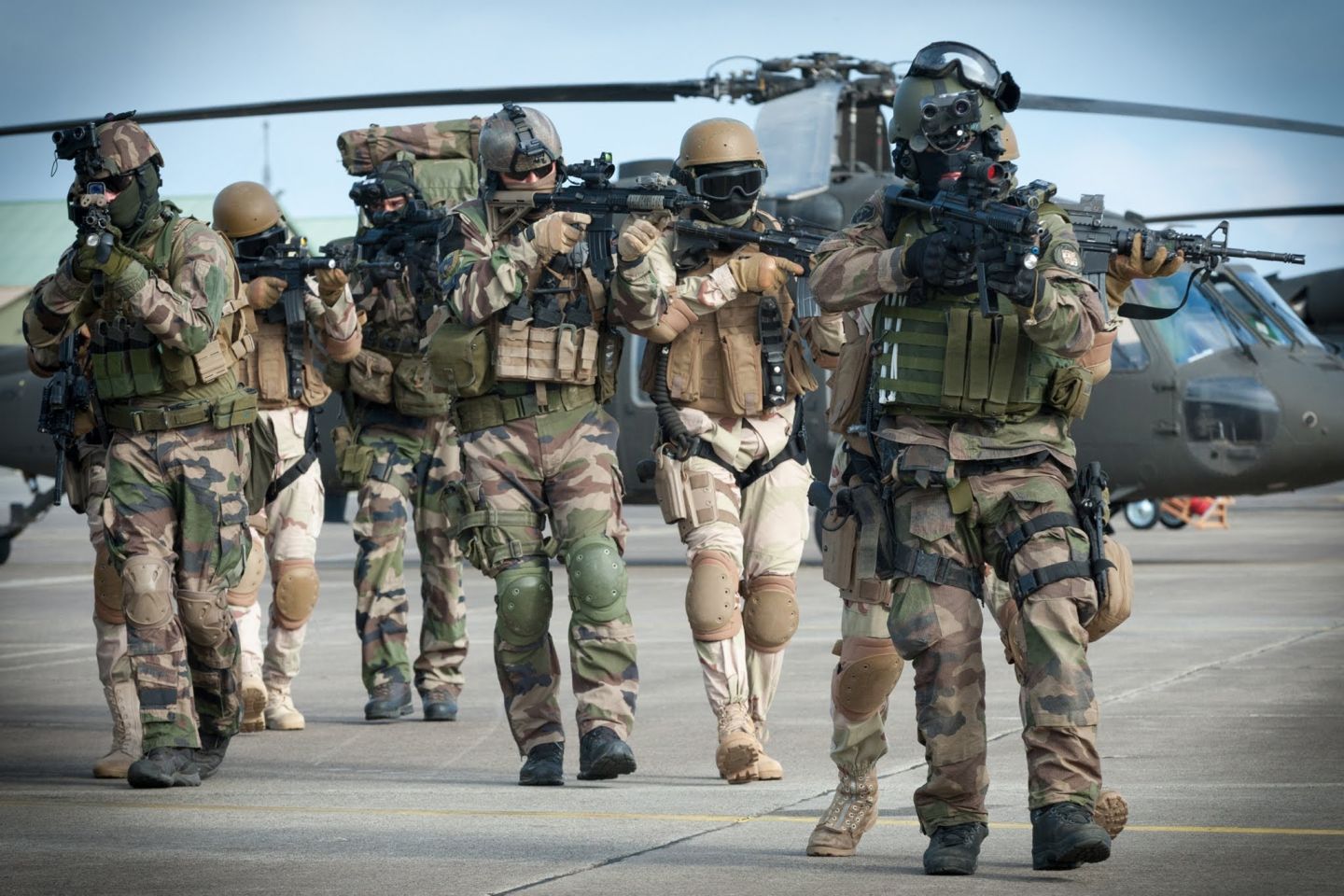
French Military Ground Forces
French President Emmanuel Macron has since coming to power repeatedly indicated that his government seeks to more actively involve itself in conflicts in the Middle East. This has come at a time when the Western bloc's position in the region continues to decline, with Western aligned forces suffering numerous defeats in both Yemen and Syria and the facing an increasingly unfavourable balance of power due to both Iran and Hezbollah's growing missile capabilities and the proliferation of advanced Russian arms to Western adversaries. President Macron has as a result threatened both direct military intervention against the Syrian government as well as increased action to counter the Iranian development of its missile program. Having previously threatened sanctions on Iran should it continue to develop its missile program, the country's key means of countering the conventional superiority of its Western aligned Arab and Israeli adversaries, the French President has called for more direct measures to punish the country. While France was a signatory to the JCPOA deal signed to limit Iran's development of nuclear weapons, the Western bloc has undertake extensive measures to attempt to stall the country's development of ballistic missiles and thus ensure a more favourable balance of forces in the region. While the United States has already applied stringent sanctions in response to Iran's missile development, the French President reiterated his willingness to follow suite, stating that Europe needed “to put Iran under surveillance over its ballistic missiles. It’s indispensable for the security of the region and so we need a mechanism of sanctions and control adapted to that."
Regarding Syria, the French President stated that his country was ready to launch strikes in Syrian military targets should French intelligence discover any evidence of chemical weapons use. Syria has denied deploying chemical weapons against insurgent groups, and in 2013 dismantled its chemical arsenal under international observation. Both Syria and Russia claim and have presented evidence that chemical weapons deployed in the country were used by insurgent groups such as the Al Qaeda aligned Al Nusra Front, which was intended to frame the Syrian government and provide a pretext for Western military intervention. Ultimately whether or not the Syrian government does deploy chemical weapons, they remain an invaluable pretext for Western nations to intervene to tip the balance of the conflict and oust one of their leading regional adversaries.
French President Macron stated regarding his intention to punish Syria for any chemical weapons use: "We will strike the place where these launches are made or where they are organized. But today our services have not established proof that the prescribed chemical weapons have been used against civilian populations. As soon as such proof is established, I will do what I said." Ultimately the declarations of the French President in regards to Syria are most likely posturing, as while France is capable of and is expected to reinstate sanctions against Iran in the near future its ability to meaningfully intervene militarily in Syria remains highly questionable. The U.S. military itself has been limited in the actions it can carry out in the country due to both Syria's ability to retaliate and Russia's deployment of advanced weapons systems, its most capable air superiority fighters and air defence systems among them, to the country. Anything beyond a symbolic military strike would be countered by both the Russian and Syrian armed forces, and the French military thus lacks the ability to play any significant role. The French Navy today fields only a single modest sized aircraft carrier, while the majority of its Air Force is out of service due to severe maintenance issues. Syria's air defence network meanwhile would prove by far the most formidable France has ever faced, having downed several hostile aircraft including an Israeli F-16 in February 2018. With Israel's fighters fielding far more sophisticated defensive electronic warfare suites than those of France, and with its pilots reportedly trained to far higher standards, French fighters would likely be highly vulnerable even against older Syrian anti aircraft platforms. This goes without mentioning the Russian S-300VM and S-400 systems, which should they intervene to protect Syrian forces would totally deny French aircraft the ability to operate within their range - particularly considering that the French Air Force and naval aviation lack any stealth aircraft whatsoever. While France's allies are currently heavily in need of assistance in light of an increasingly unfavourable security situation in the Middle East, the country's ability to intervene in anything more than a supporting role remains highly limited.
