
French Navy Brings New Barracuda Class Nuclear Powered Attack Submarine Into Service
Military Watch Magazine Editorial Staff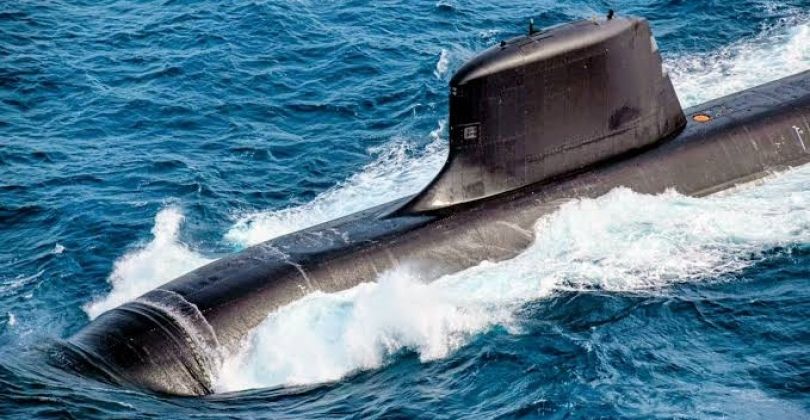
French Navy Barracuda Class Submarine
The French Navy has formally accepted the Suffren class nuclear-powered attack submarine De Grasse into service, marking a major milestone in the service’s long-term efforts to transform its offensive combat capabilities and replace its aging Rubis class attack submarines. Better known informally as the Barracuda class, the design offers substantial improvements over its predecessor the Rubis class, in particular in its stealth, endurance, sensors, and firepower, including pump-jet propulsion, a reduced acoustic signature, a modern sonar suite, modern electronic warfare systems, and a new-generation combat management system. The De Grasse is the fourth ship of its class, and is optimised for special operations, and can embark up to 15 commandos and deploy them using a removable dry deck shelter and swimmer delivery vehicle, enabling covert reconnaissance, sabotage, hostage rescue, and other special missions in contested environments.
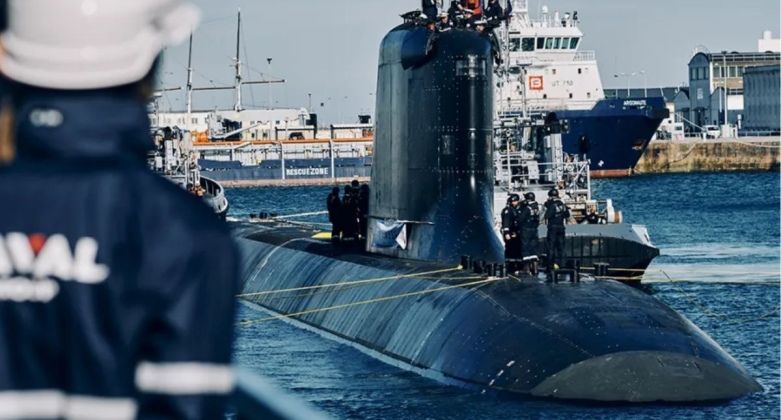
The most outstanding feature of the Barracuda class is its use of pump-jet propulsion, extensive vibration isolation, and advanced quieting technologies derived from France's Triomphant class ballistic missile submarines, which make the ships significantly quieter than their predecessors while improving underwater detection performance. A major enhancement over previous French attack submarines is its multi-role weapons suite, with the class integrating F21 heavyweight torpedoes for anti-submarine and anti-ship warfare, SM39 Exocet anti-ship missiles, and the MdCN naval cruise missile, which provides a conventional land-attack capability against targets more than 1,000 kilometres away. All weapons are launched through four 533 mm torpedo tubes, in contrast to U.S., Russian and Chinese submarines which use vertical cells. This armaments suite is far from exceptional by international standards, but is still an important improvement for the French Navy.
The competitiveness of French nuclear submarines is limited by the much more limited scale of the country’s industrial base and its research and development than those of the China and the U.S., and moreso that of Russia. The U.S. and China have reportedly made much more rapid advances in reactor technologies, sonar systems, combat management software, quieting techniques, unmanned underwater vehicles, while France is limited to a much smaller budget and has far fewer production programs to distribute development costs. Its much slower pace of production means specialised workforces and production facilities are utilised less intensively, and industry lacks economies of scale, resulting in French submarines being considered far less cost effective and often being more costly despite more limited capabilities.
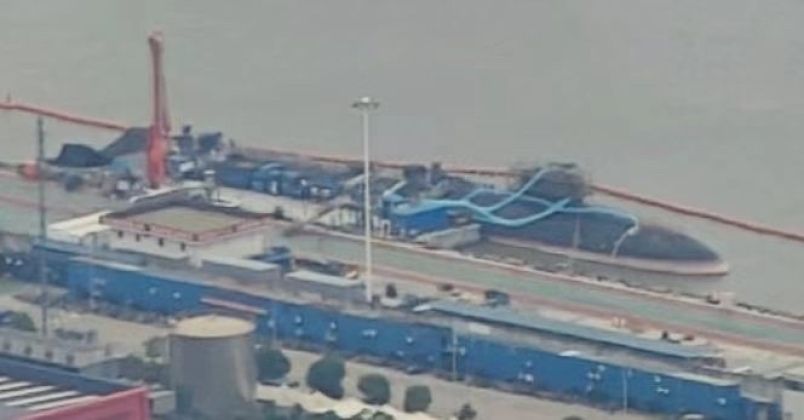
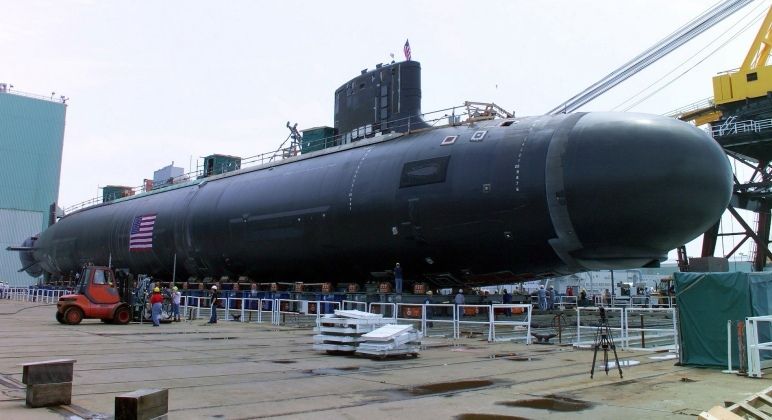
One of the principal limitations of the Barracuda class is its size, as at approximately 5,300 tons it is around half the size of the U.S. Virginia class submarine and well under half the size of the Russian Yasen, which limits the amount of weapons, sensors, and its future growth margin. Its armaments suite is only around half the size of those of U.S. and Russian attack submarines. The ships are also much more limited in their ability to operate under ice. The French ship’s shortcomings are particularly outstanding when compared to the Chinese Type 095 class, which is currently considered the most advanced in the world, with the Chinese ships not only carrying hypersonic missiles like the YJ-21 which the French ships lack, but also doing so in larger numbers. More significantly, the Type 095 is currently considered the world’s quietest nuclear submarine class, using magnetic drive technologies and Rim Driven Propellers to achieve a vastly superior performance.
