
France Tries to Market Rafale Fighters to Vietnam: Can They Compete Against Russia’s Su-57?
Military Watch Magazine Editorial Staff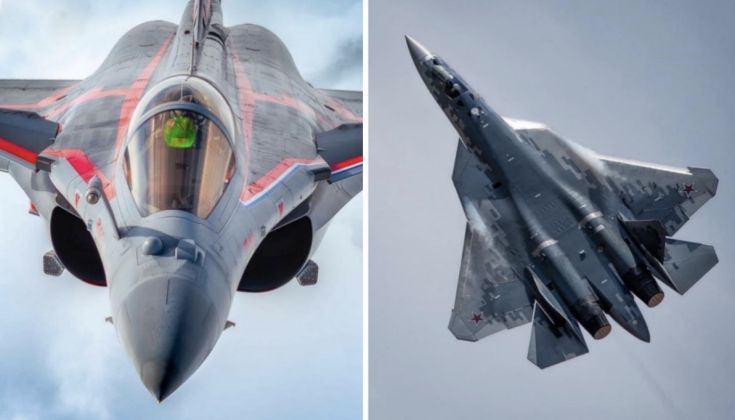
Rafale (left) and Su-57 Fighters
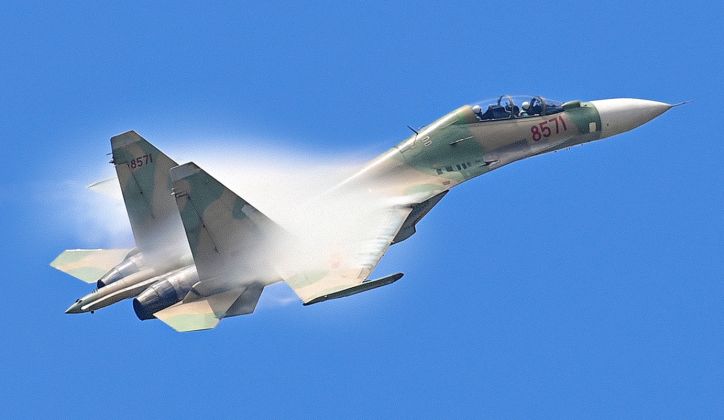
The French government has reportedly made concerted efforts to market the Rafale ‘4+ generation’ fighter aircraft to Vietnam, in an attempt to break into a new market that has long been dominated by Russian military equipment, according to local media reports. French media outlets have claimed the discussions have reached an advanced stage, reportedly including providing a Vietnamese pilot an opportunity to fly the Rafale. This follows sustained efforts by the United States to market its F-16 Block 70/72 fighter to Vietnam, as both NATO members seek to reduce Russia’s market share in a country which exclusively fields Russian origin fighters. Su-30MK2 fighters developed in the early 2000s currently form the backbone of the Vietnamese Air Force’s combat fleet, alongside smaller numbers of Su-27 air superiority fighters procured in the 1990s, and older Soviet Su-22M4 strike fighters.
The F-16 was previously considered to have appeal due to Hanoi’s trade relations with the United States, which is by far the largest client for Vietnamese imports, and has sought to increase reliance on Vietnamese products to diversify away from its reliance on China. Acquiring the F-16 was seen as a way of potentially strengthening trade ties and ensuring low entry barriers for exports for Vietnamese products, thus further stimulating export-led economic growth. France, by contrast, is not a major market or a leading investor in Vietnam, meaning there would be fewer economic benefits. The Rafale nevertheless has the advantage of much grater levels of autonomy, since the United States very strictly controls how its fighters can be utilised and provides no significant access to source codes, which may not be acceptable for a country that has tried to maintain a neutral status.
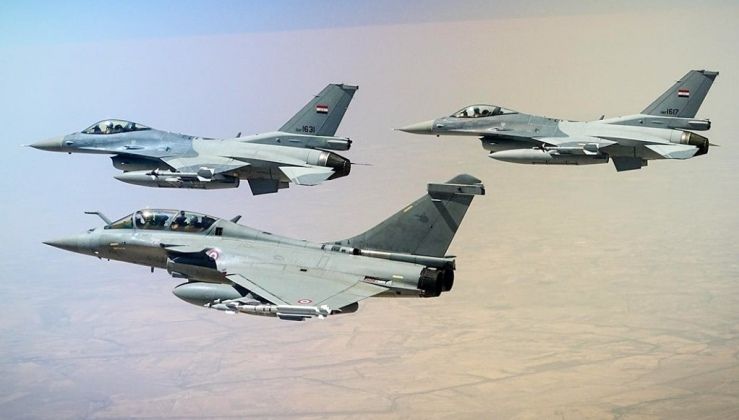
The Rafale has completed in multiple tenders with the F-16, F-15 and F-35, and consistently lost. Notable losses to the F-16 were incurred in both Morocco and the United Arab Emirates. In some of the few markets which have considered the Rafale against non-Western fighters, namely Algeria, Kazakhstan and Ethiopia, the French fighter has also consistently failed to gain contracts, with all three countries favouring the Russian Su-30. All variants of the Su-30 not only has far longer ranges close to double those of the Rafale, but also integrate far more powerful radars than are over triple the size of the Rafale’s, while having far higher weapons carrying capacities, and enjoying far superior flight performances including higher altitude ceilings, speeds, and manoeuvrability levels. These advantages are more pronounced for more advanced variants such as the Su-30MKI and Su-30SM2, which are also compatible with much longer ranged air-to-air missile types than those the Rafale can integrate, and have demonstrated strong performances in both the Ukrainian theatre and in Indian-Pakistani conflicts.
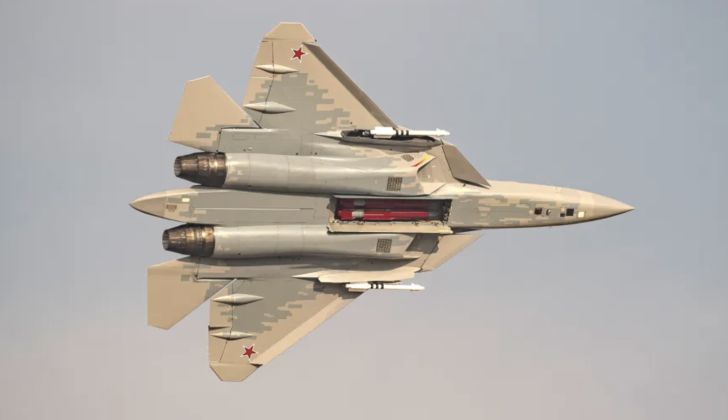
The Vietnamese Air Force has for years been expected to procure the Russian Su-57 fifth generation fighter to replace its current generation of aircraft, with multiple local sources having reported from the late 2010s that orders are planned for the late 2020s or early 2030s when the fighter program has further matured. There remains an overwhelming discrepancy in capabilities between the Su-57 and the Rafale favouring the former, despite the French fighter being considerably more costly to procure. Nevertheless, Vietnam may consider procuring the Rafale to replace its Su-22M4 strike fighters for air-to-ground operations with the aim of operating a mixed fleet, and later procuring the Su-57 to replace its Su-27 and Su-30 fighters. This may be done for political reasons to signal to the United States and the Western Bloc more broadly that it is not fully aligned with Russia, which may be linked to certain trade benefits.
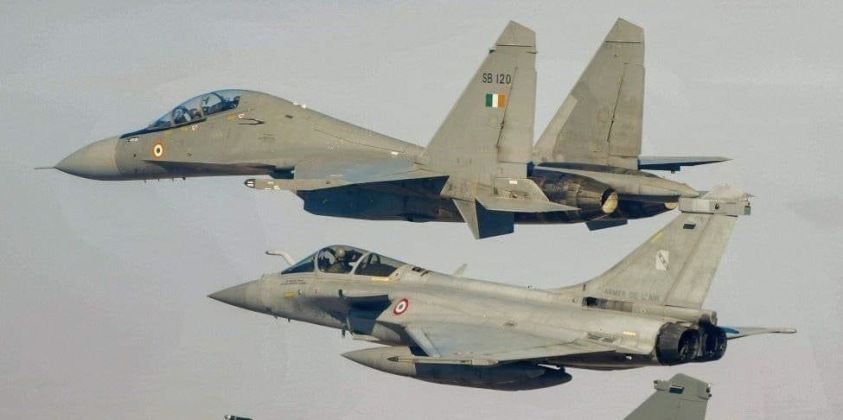
The Rafale saw its first high intensity combat in early May 2025, when the Indian Air Force operated it in a number of engagements against Pakistani forces, resulting in the losses down of between one and four of the aircraft to Pakistan’s Chinese-supplied J-10Cs. This caused pubic relations disaster for both Indian Defence Ministry and the fighter program. Procurements under an $8.7 billion deal for 36 fighters had been highly controversial from the outset, pricing the aircraft at over $241 million each. The Rafale’s underperformance was widely assessed by analysts to have been a primary factor leading the Indian Defence Ministry to accelerate talks for large scale procurements of the Su-57 fighter under a license production deal, which was confirmed in January 2026 to have reached advanced stages. The fact that Russia has offered India unprecedented access to the Su-57’s source code, and is expected to offer high levels of operational autonomy and customisation to Vietnam, are expected to further the aircraft’s appeal over the older French fighter, providing opportunities for the local defence sector to make contributions to the aircraft’s modernisation in ways that are not possible for the Rafale.
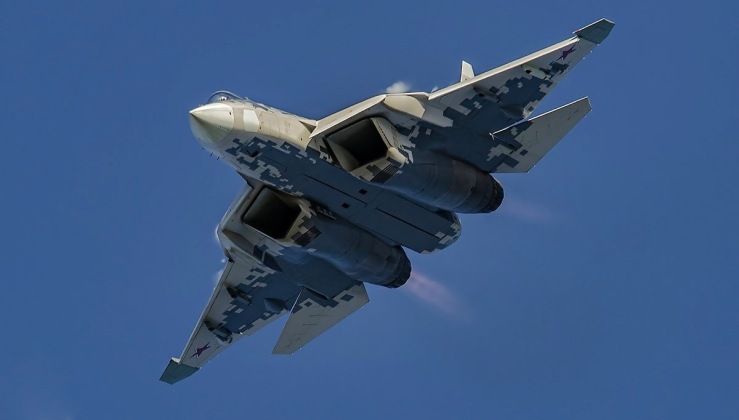
The Su-57 has seen far greater high intensity combat testing than the Rafale, including air defence suppression, air-to-air combat, and operations in heavily defended enemy airspace in the Ukrainian theatre. It is also highly compatible with Vietnam’s ground-based air defence network built around the S-300PMU-2 long range system, with a pairing of the two asset types providing potentially the most effective means of tackling U.S. F-35s or Chinese fifth generation fighters. As China and the United States are both poised to begin fielding sixth generation fighters in the early and mid 2030s respectively, it is likely that continued reliance on ‘4+ generation’ fighters like the Rafale and Su-30 will not be seen as viable, and that acquiring a fifth generation fighter, particularly one with potential to be upgraded to a ‘5+ generation’ standard, will be seen as a minimum requirement. Thus while there remains a possibility that the Rafale will be procured for political reasons, it is highly unlikely to displace the Su-57 in the Vietnamese Air Force’s modernisation plans.
