
France Signs Contract to Supply 100 Rafale Fighters to Ukraine: Can They Take on Russia’s Air Force?
Military Watch Magazine Editorial Staff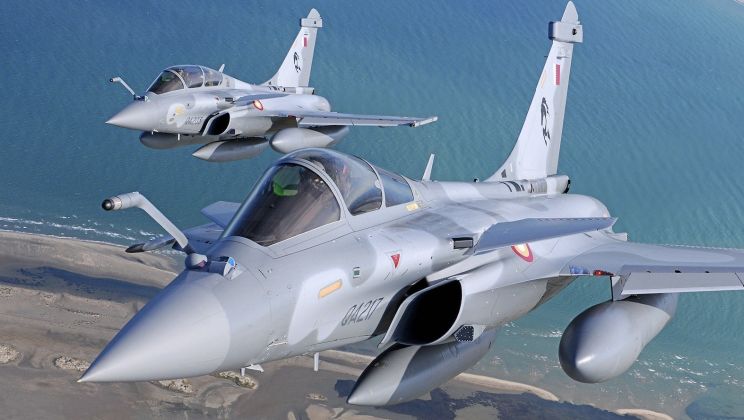
Rafale Fighters
French President Emmanuel Macron on November 17 signed a joint declaration with his Ukrainian counterpart Volodymyr Zelensky for the potential sale of up to 100 Rafale F4 fighter aircraft by 2035. This landmark deal was signed just weeks after an agreement was also reportedly reached to supply Ukraine with 120 to 150 Swedish Gripen E/F lightweight fighters. Although Ukraine remains tens of billions of dollars in debt, and is currently overwhelmingly reliant on Western financing to sustain government functions, plans for European states to appropriate frozen Russian funds could play a key role in financing both post-war reconstruction, and large scale arms purchases. Steps to seize Russian funds have faced widespread opposition from much of the international community, as well as within Europe, with the legality of such a move remaining questionable. The potential benefits such funding could provide for European states’ defence sectors, however, remains considerable.
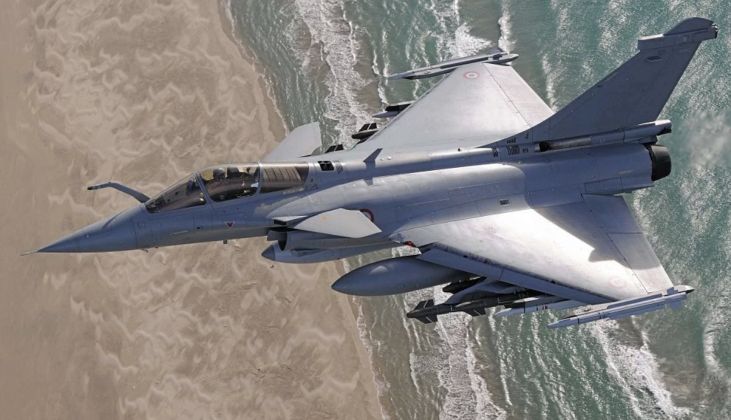
The sale of Rafale fighters would provide France with a greater stake in ensuring Ukraine’s continued existence as a Western-aligned state, with a deal for 100 Rafale F4 fighters potentially yielding revenues of approximately $22 billion. The Rafale is the second of two fourth generation fighter types developed in France, with its predecessor the Mirage 2000s having begun deliveries to Ukraine in early February. Significant commonality in weaponry and maintenance infrastructure between the two aircraft could potentially allow the Ukrainain Air Force to operationalise the Rafale more quickly. The Ukrainain Air Force currently operates five fighter types including the heavyweight Su-27 air superiority fighter and Su-24M strike fighter, the medium weight MiG-29A/UB, and lightweight F-16s and Mirage 2000s recently donated by NATO members. President Zelensky in late August confirmed that talks are underway with France to procure the Rafale, which would accelerate the country’s transition to a NATO standard fleet.
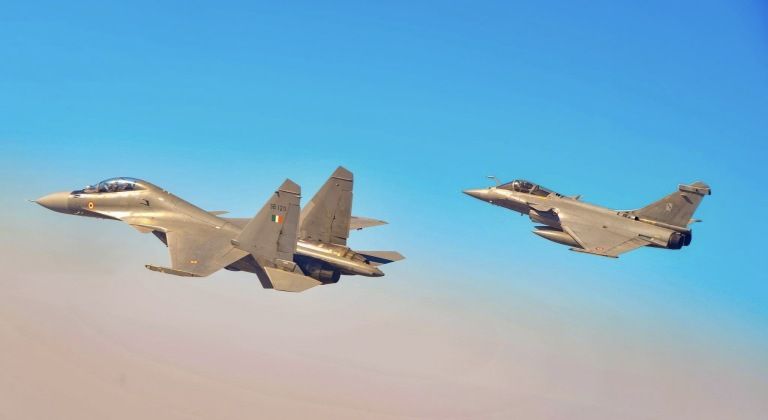
Despite a poor performance on export markets for close to two decades from the turn of the century, the Rafale has recent secured a wide range of clients due to effective marketing. Although the aircraft has lost every tender in which it has competed against the American F-35 fifth generation fighter, which operates in an entirely different league while having a comparable cost, France has targeted countries which for political reasons are able to consider neither the F-35, nor non-Western alternatives, such as Indonesia and Egypt. When considered by Algeria, Kazakhstan, and Ethiopia against a second tier Russian fighter, the Su-30, the Rafale has consistently been overlooked, with its capabilities remaining limited compared to higher end Russian combat jets such as the MiG-31BM and Su-57. The Rafale’s export prospects were further undermined in May after its first high intensity combat test, during which between one and four of the aircraft flown by the Indian Air Force were neutralised during engagements with Pakistan Air Force’s Chinese-supplied J-10C ‘4+ generation’ fighters, which are among China’s lower end fighters in production today. The fighter’s ability to significantly affect the balance of power in the Ukrainian theatre is expected to remain limited.
