
Footage Shows Russia’s Rarest Tank in Frontline Service: Why Are T-64s Almost Absent From Service
Military Watch Magazine Editorial Staff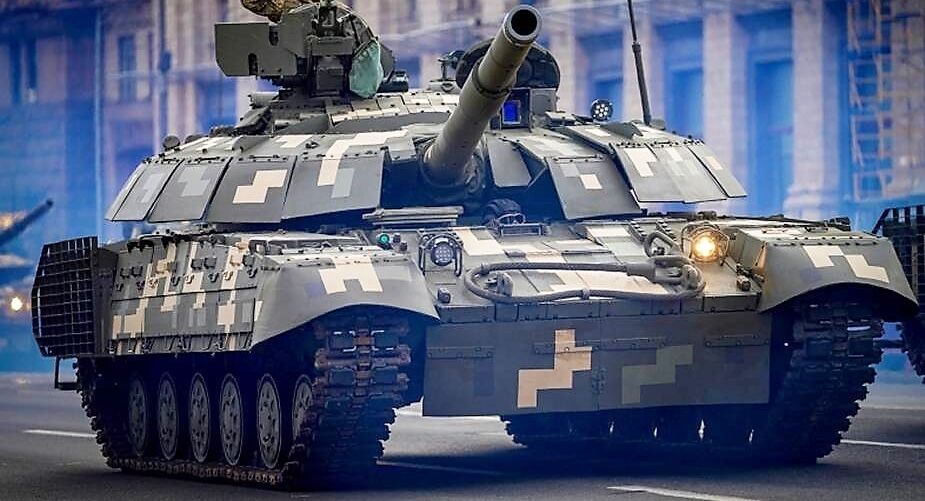
Ukrainian Army T-64BM2 Tank
Footage from the frontlines in the Ukrainian theatre has shown a rare T-64 main battle tank in Russian Army service, which is one of the most scarcely used types in service. The T-64’s design was used as a basis for developing the T-72/90 and the T-80 which currently form almost the entire Russian tank fleet. While the three types were produced in parallel in the Soviet Union, with the T-64 having many significant advantages over the T-72/90 particularly in terms of mobility, Russia’ rapidly retired T-64s from service after the USSR disintegrated to standardise its fleet around the T-72 and T-80. The decision to scrap the large majority of T-64s in storage in the 2000s and 2010s, in order to avoid the high costs of sustaining them, has meant that there were very few available to be brought into service at a time when the Army has faced increasingly serious shortages.
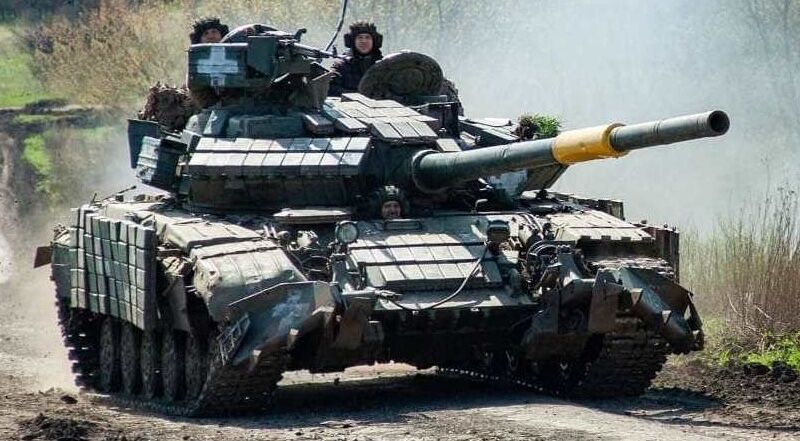
Russian storage and repair bases continued to hold limited numbers of T-64s alongside older T-55s, T-62s and other legacy vehicles, with one documented Russian reserve tank base at Kozulka in Krasnoyarsk Territory specifically holding T-64s. A number of T-64s in storage were reportedly transferred to paramilitary groups in the self-proclaimed Donetsk and Lugansk People’s Republics in Eastern Ukraine in the mid-2010s. In contrast to the Russian Army, the Ukrainain Army relied on inherited T-64s to form the backbone of its pre-war fleet, although rapid wartime attrition, recommissioning of T-72s from storage, and mass donations of T-72s from across Eastern Europe and from Morocco, have made the T-72 more prominent in service.
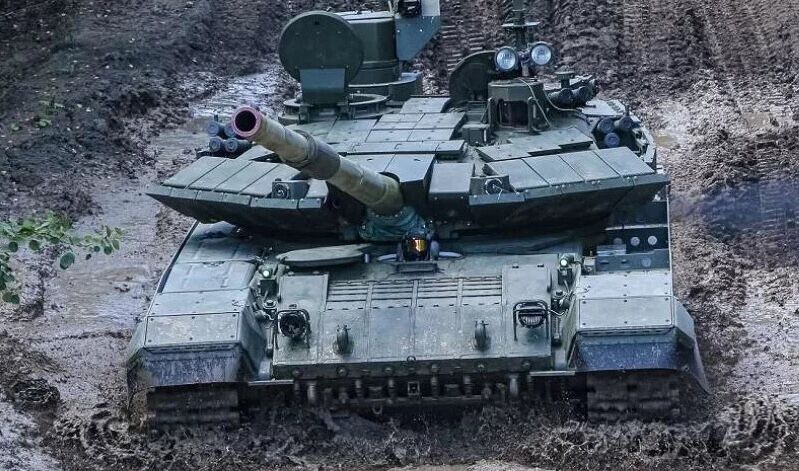
The T-64 seen in Russian service may have been captured from Ukrainian forces, or been one of the few remaining tanks in storage in Russia that was later made operational for frontline use. he T-64’s distinctive 5TDF opposed-piston diesel engine is particularly problematic from the standpoint of Russian logistics, but provides significant advantages over the T-72/90 in terms of mobility including allowing for a significantly greater reverse speed. The future of the Russian and Ukrainian tank fleets both remain highly uncertain, with NATO members having come close to exhausting supplies of surplus tanks to donate to Ukraine, while Russia’s own Soviet era stockpiles have been severely depleted. Efforts in Russia to surge production of the T-90M tank, however, are gradually bearing fruit, with production rates expected to reach over 1,000 tanks per year near the end of the decade, which could allow for T-64s and other outlying tank types to be retired from frontline use.
