
Footage Shows Iranian Missile Strikes on the Central Hub of Israel’s Nuclear Weapons Program as Local Defences Fail
Military Watch Magazine Editorial Staff
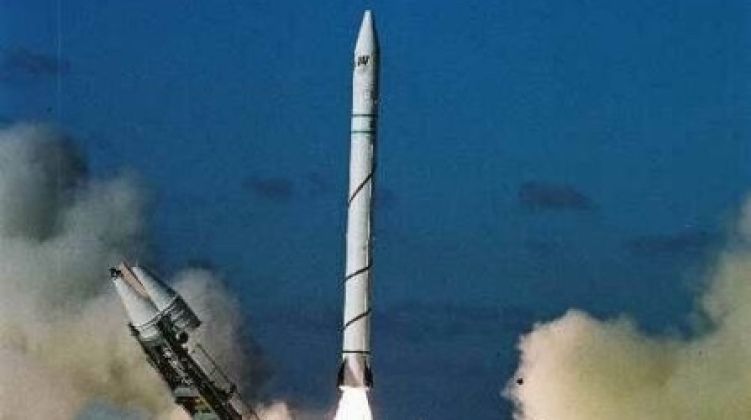
Iranian Shahab-3 Launch and Missile Arriving at Dimona
Footage released from inside Israel has shown the impacts of multiple ballistic missiles launched by Iran against targets in the southern city of Dimona, striking near the country’s most sensitive nuclear site the Negev Nuclear Research Centre. Although Israel does not rely on nuclear power, the facility produces significant quantities of plutonium for a nuclear arsenal estimated at 80-400 warheads. Footage has shown Israeli anti-missile systems consistently failing to hit Iranian ballistic missiles, with strikes reported by Israeli sources to have caused over 100 casualties. Iranian sources have explicitly framed the strike as retaliation for U.S.–Israeli attacks on its nuclear infrastructure, in particular the Natanz enrichment facility.
It remains uncertain to what extent the Iranian strikes have affected the Israeli nuclear weapons program, with the possibility having been raised by analysts that the missiles targeted personnel in nearby housing that worked on developing and producing nuclear warheads. It has also been speculated that the strike was intended as a warning to highlight Iran’s ability to strike nuclear facilities should Israel and the United States further escalate their own campaign. With the Dimona facility having been considered among the most heavily protected sites in Israel, the failure of local air defences has presented a considerable show of force.
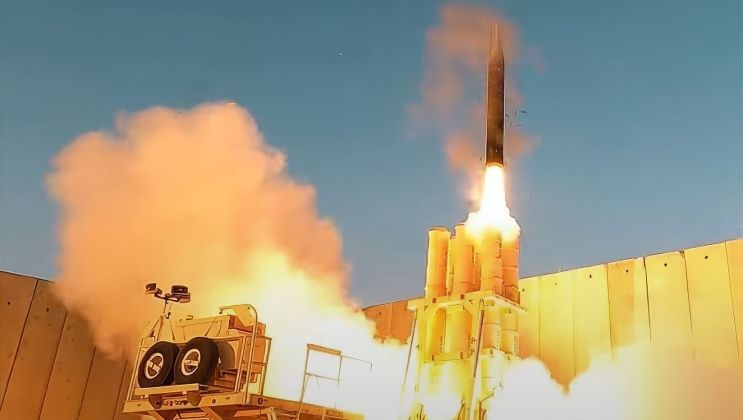
Footage from Israel has shown Iranian ballistic missiles, including missiles integrating hypersonic glide vehicles, impacted fortified and heavily defended targets in the past, often evading multiple anti-ballistic missile salvos when doing so. During hostilities in June 2025 Iran used the Fattah ballistic missile integrating an advanced manoeuvring reentry vehicle, and in early March escalated attacks to launch its first hypersonic glide vehicle strike using the more sophisticated Fattah-2 missile. The demonstration of hypersonic strike capabilities that can destroy even well fortified targets with high precision, while evading even very dense hostile air defences, from an early stage fuelled speculation that the Negev Nuclear Research Centre could be a primary target in future.

While Iran has relied on less advanced missile types to deplete Israel’s ballistic missile interceptor arsenal, the ability of hypersonic glide vehicles to bypass them entirely has posed an entirely different kind of threat. Vice President of the leading Israeli missile defence system developer Rafael Advanced Defence Systems, Yuval Baseski, in August 2025 highlighted that this had forced the firm and the Israel Defence Forces to develop an entirely new approach to missile defence. “Hypersonic missiles open a new era in air defence,” he stated, observing: “Every air defence system today is based on flying faster than the target. But this principle does not apply to hypersonic missiles. To intercept an object moving at Mach 10, one would need a defence moving at Mach 30, which is impossible in the atmosphere due to friction.” Such a defence is expected to take close to half a decade to implement.
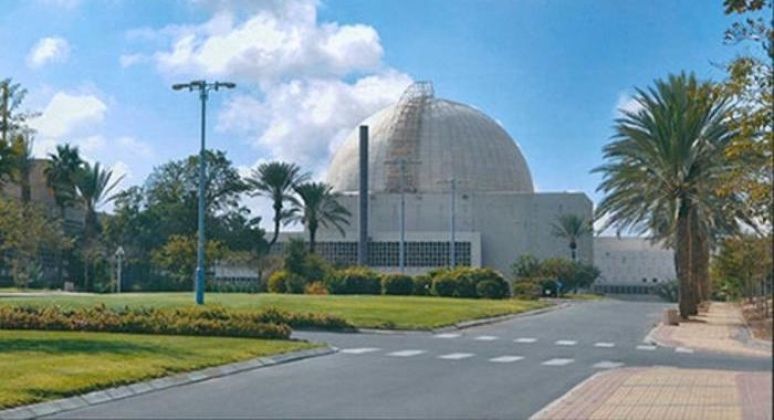
Israel’s reactor at the Negev Nuclear Research Centre was constructed from 1957–1963, with Israeli government sources having claimed at the time that it was a textile plant to conceal its purpose. The thermal reactor is estimated to have a 24–70 megawatt capacity, although it is relied on solely to produce plutonium and not electricity. Weapons-grade plutonium is extracted from spent fuel there. The underground reprocessing plant is key to making the centre a weapons facility, a not just a research reactor. Israel’s early development of nuclear weapons was heavily facilitated by French support, with France having supplied the design for the Dimona reactor design based on its own Marcoule plutonium production reactors, while also providing heavy water needed for plutonium production, as well as technical expertise. Israel’s fielding of a nuclear arsenal from has provided it with an advantage when seeking escalation dominance over adversaries such as Iran, and formerly Syria.
