
Footage Shows China’s Fourth Aircraft Carrier Operating at Sea After First Stealth Aircraft Launches
Military Watch Magazine Editorial Staff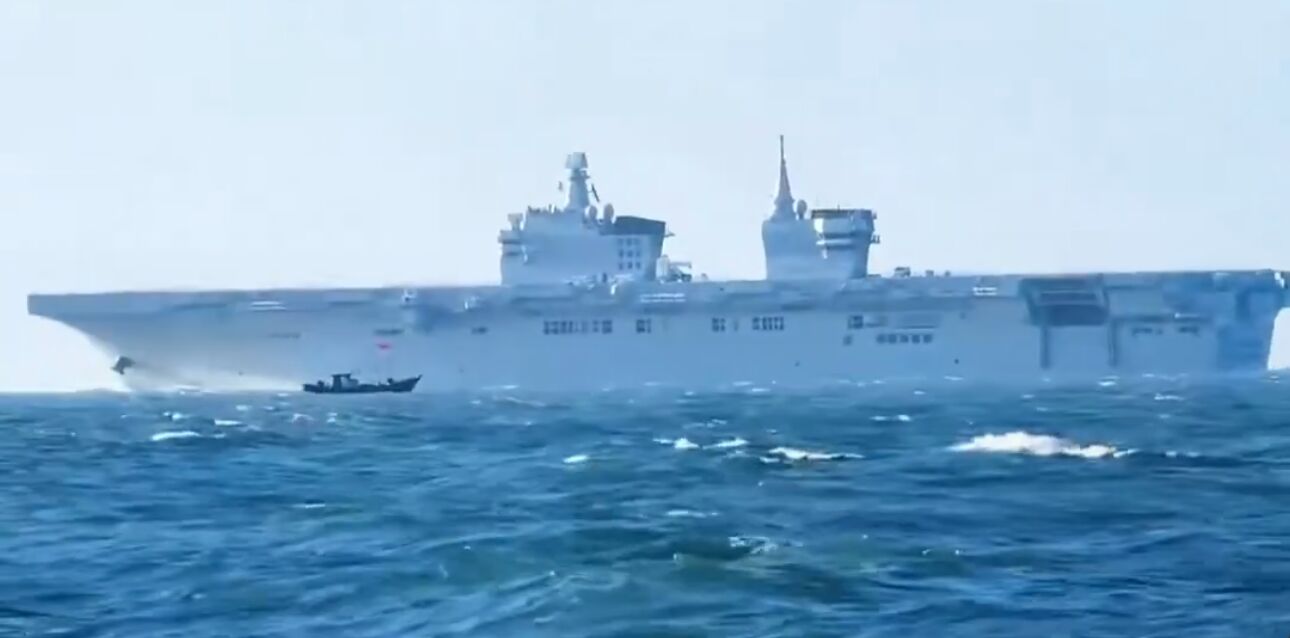
Chinese Aircraft Carrier Sichuan at Sea in November
New footage has shown the Chinese Type 076 aircraft carrier Sichuan operating at sea, following the landmark first launch of a stealth drone from the ship which was reported on October 30. This represented the first publicly reported take-off and landing of a fixed-wing stealth drone aboard the vessel, which is the third in the world equipped with an electromagnetic catapult and arresting gear. The Chinese People’s Liberation Army Navy described the achievement as a breakthrough in its ability to operate fixed-wing unmanned aircraft from large maritime combat platforms, with the GJ-21 unmanned stealth fighter expected to form the backbone of the warship’s air wing. The Sichuan is the fourth warship launched in China capable of accommodating fixed wing combat aircraft.
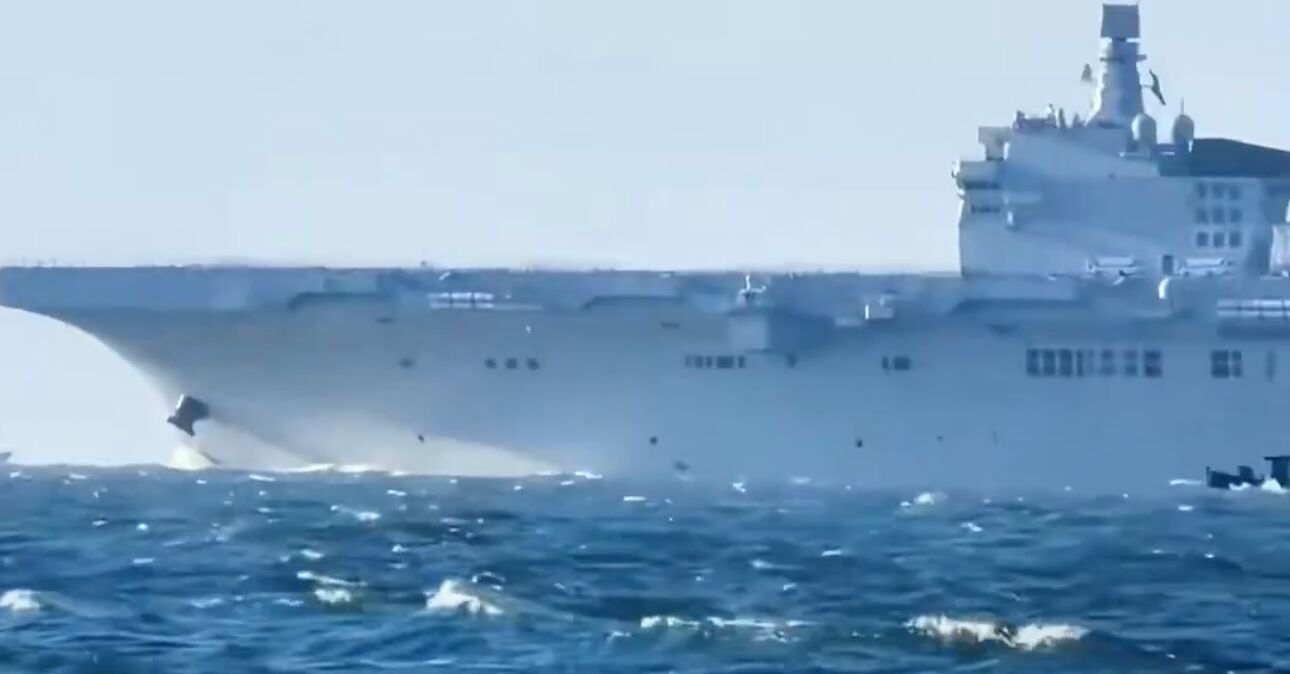
Launched on December 27, 2024, Sichuan is the first vessel of China’s Type 076 class and has a full-load displacement exceeding 40,000 tons, approximately equal in size to Europe’s largest aircraft carrier the nuclear powered ship Charles De Gaulle. Although its full-length flight deck and twin-island superstructure resemble those of an aircraft carrier, the vessel also retains the ability to transport amphibious forces and equipment, including through a stern well deck for landing craft. This combination of aviation and amphibious capabilities makes the Type 076 an entirely unique kind of warship. Operating stealth drones from Sichuan could provide the Chinese Navy with additional reconnaissance and strike options without requiring every mission to be conducted by a crewed fighter. Unmanned aircraft could potentially scout ahead of naval formations, monitor maritime approaches and attack targets using guided weapons, while reducing the risks to pilots during higher risk operations.
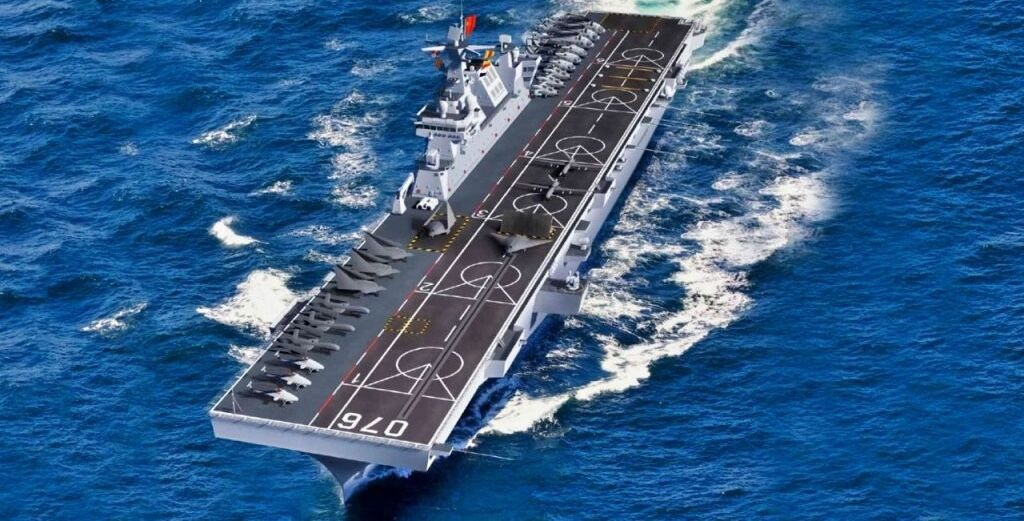
Electromagnetic catapults allow aircraft to be launched across a broader range of weights than is possible with short-deck or ski-jump arrangements, while arrested recovery enables the use of fixed-wing aircraft that cannot land vertically. The Sichuan’s integration of such a system sets it apart from all other ships of its size in the world. The GJ-21 is expected to be the first of multiple types of unmanned aircraft that will operate as part of the ship’s air wing, including both combat and reconnaissance platforms. The aircraft’s suitability for air-to-air combat currently remans unknown, however, although it is thought to be capable of employing a wide range of cruise missile types for anti-shipping and other roles. The aircraft is a close derivative of the land-based GJ-11 which was confirmed to have entered service in the Air Force in 2025. The Sichuan represents an entirely new type of carrier design, with evaluations of its effectiveness expected to inform future carrier procurement plans.
