
First Generation North Korean Ballistic Missile in Iran Destroyed By Israel Before Launch
Military Watch Magazine Editorial Staff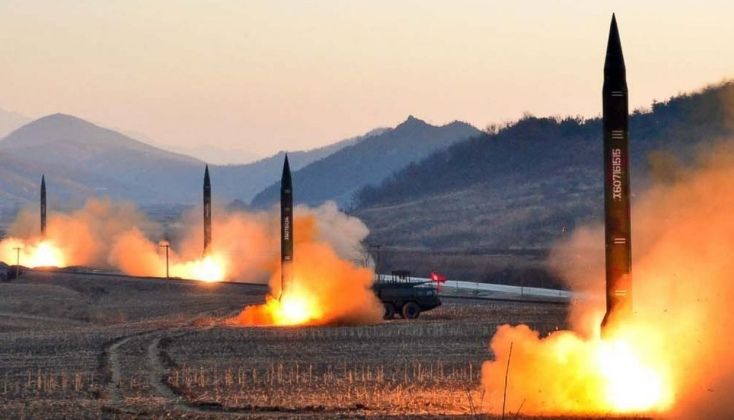
North Korean Hwasong-7 Medium Range Ballistic Missile Launches
A 3D render published by the Israeli Air Force appears to show the destruction of an Iranian Islamic Revolutionary Guard Corps Shahab 3 medium range ballistic missile and its launcher during attacks on Iran, which were initiated by Israel and the Untied States on February 28. On its official account accompanying the render, the Air Force stated that the Israel’s military “continues to strike the missile array and air defence systems of the Iranian terror regime,” adding that its attacks “enhance the freedom of action of the Air Force, and thwart numerous launches and missiles that threatened the citizens of the State of Israel and the Middle East.” The serious limitations of the Israeli and U.S. ballistic missiles defences, both to provide protection against newer generations of ballistic missiles with advanced penetrative capabilities, and to handle large quantities of older missile types, has led both countries’ forces to prioritise destroying ballistic missiles on the ground.
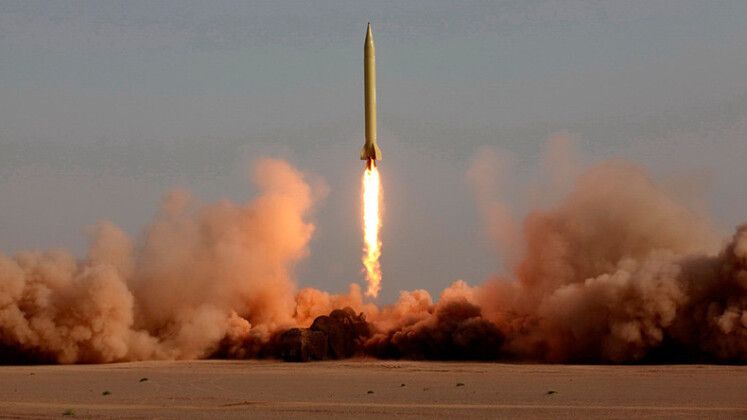
The Shahab 3 is Iran’s oldest type of medium range ballistic missile, and the first in service capable of striking targets in Israel. The missile is a license produced derivative of the North Korean Hwasong-7, which entered service in the mid-1990s, and had been developed to provide a capability to strike U.S. military bases across Japan. It has been widely speculated that Iran may have helped finance the missile’s development to ensure access for its forces. Iran was cut off from Soviet arms supplies in the1990s following the USSR’s disintegration, as post-Soviet Russia proved highly willing to respond to Western and Israeli pressure to limited supplies to their adversaries, which made North Korea particularly valuable as a defence supplier.
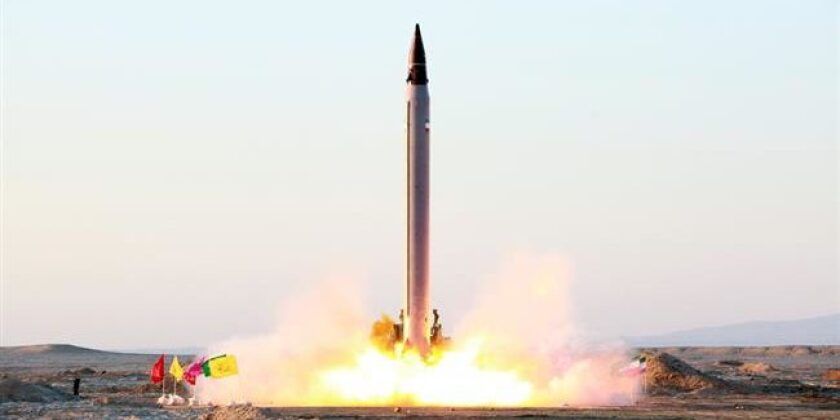
Although the Shahab 3’s ability to penetrate Israeli and U.S. ballistic missile defences remains limited, the extreme shortages of anti-ballistic missiles in both countries means that the launch of interceptors to neutralise it would still represent a victory for Iran, particularly as an interception would likely cost more than an order of magnitude more than the missile itself. The Hwasong-7 has demonstrated high levels of precision in the past, both during testing in North Korea in the 1990s, and in Iran when used to strike Western and Turkish backed jihadist insurgent groups in Iraq. The Shahab 3 is several generations behind the cutting edge of North Korean and Iranian ballistic missile technologies, with its use of liquid fuel composites significantly increasing its launch time, and thus leaving it vulnerable to being targeted on the ground. With North Korea having fitted Syrian Hwasong-9 ballistic missiles with manoeuvring reentry vehicles in the 1990s, however, there has been speculation that similar vehicles were also provided to modernise the Hwasong-7 in Iran.
