
F-22 Raptor Seen in New ‘Stealth Hunter’ Configuration Testing Infrared Sensor
Military Watch Magazine Editorial Staff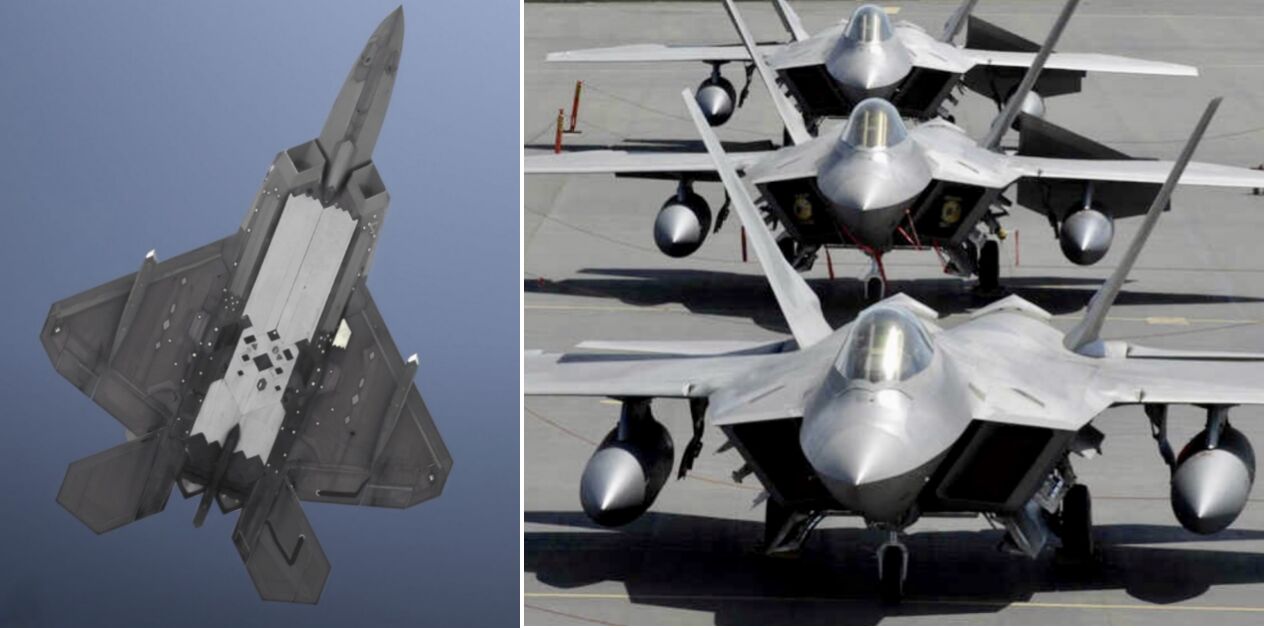
F-22 Testing IRST (left) and F-22s
A U.S. Air Force F-22A Raptor has been photographed carrying an external infrared search and track (IRST) pod beneath its wing, providing further evidence that the service is continuing flight testing of a new passive sensor capability for its oldest fifth generation fighters. The aircraft was also covered with numerous small reference markers, indicating that it remains involved in developmental testing rather than routine operational service. While all other fifth generation fighter types were designed to integrate such sensors, the F-22 is a much older design that first flew in 1990, and saw many subsystems including an expected IRST removed after the Cold War ended due to budget cuts.

IRST systems allow aircraft to detect and track targets passively by sensing their infrared emissions rather than transmitting radar energy. This can be particularly valuable against stealth aircraft, since a passive sensor does not reveal the fighter’s location through radar emissions. The system can also provide an additional source of targeting information alongside the F-22’s AN/APG-77 AESA radar and electronic warfare suite. The Air Force’s testing of the IRST capability has been underway for several years. The service’s F-22 Rapid Prototyping programme conducted six flight demonstrations involving sensor-enhancement hardware during 2024.
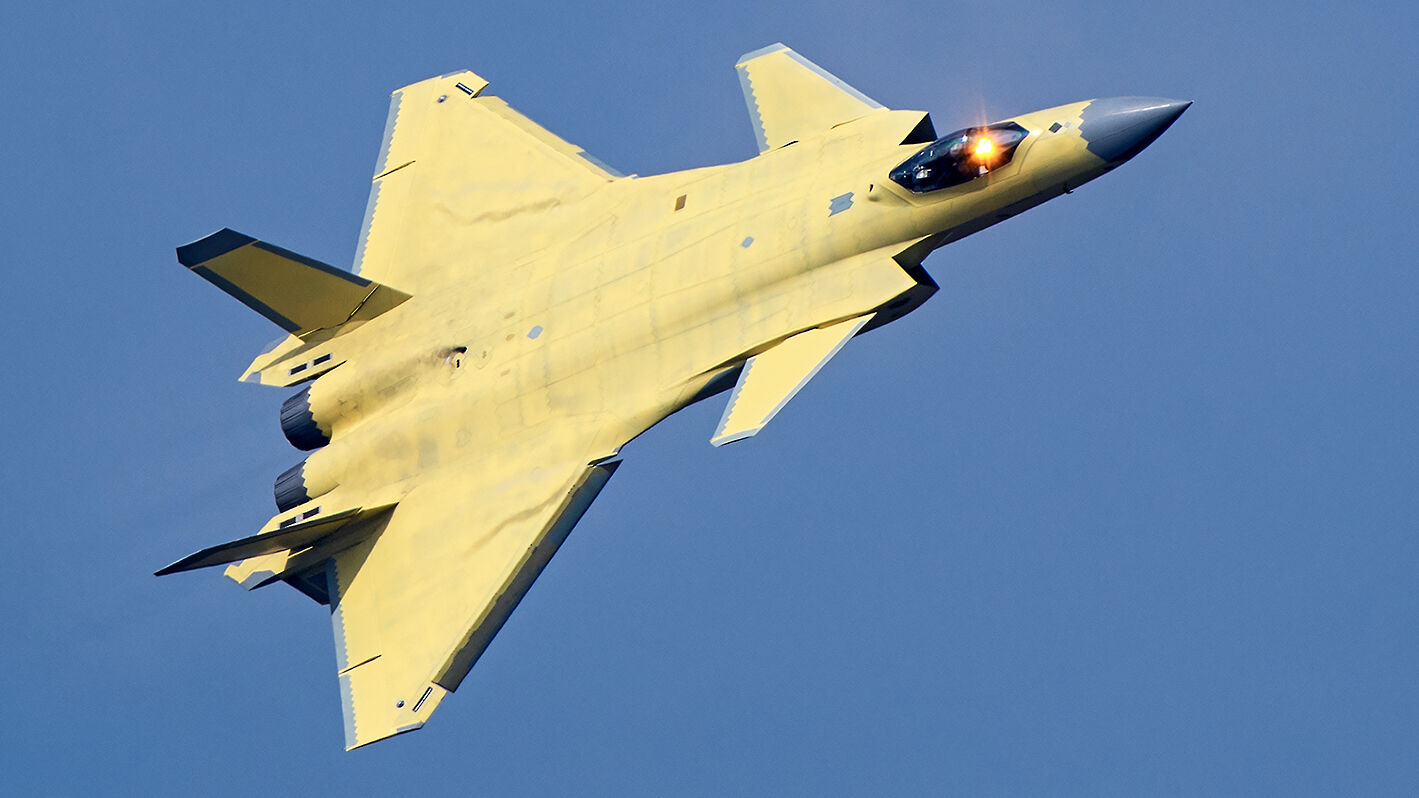
The importance of IRST systems has grown considerably due to China’s procurement of advanced stealth fighters at a far faster rate than any other country. Although stealth aircraft have reduced heat signatures, reductions are less extreme than those made to radar signatures, which makes IRSTs one of the most effective systems for detecting, tracking and targeting them. The systems are nevertheless restricted to much shorter detection ranges than radars. Even with IRST upgrades, however, the viability of the F-22 for conflict in the Pacific remains highly questionable, with its range being the poorest of its generation, its stealth features ageing, and its radar and avionics having fallen three decades behind the cutting edge.
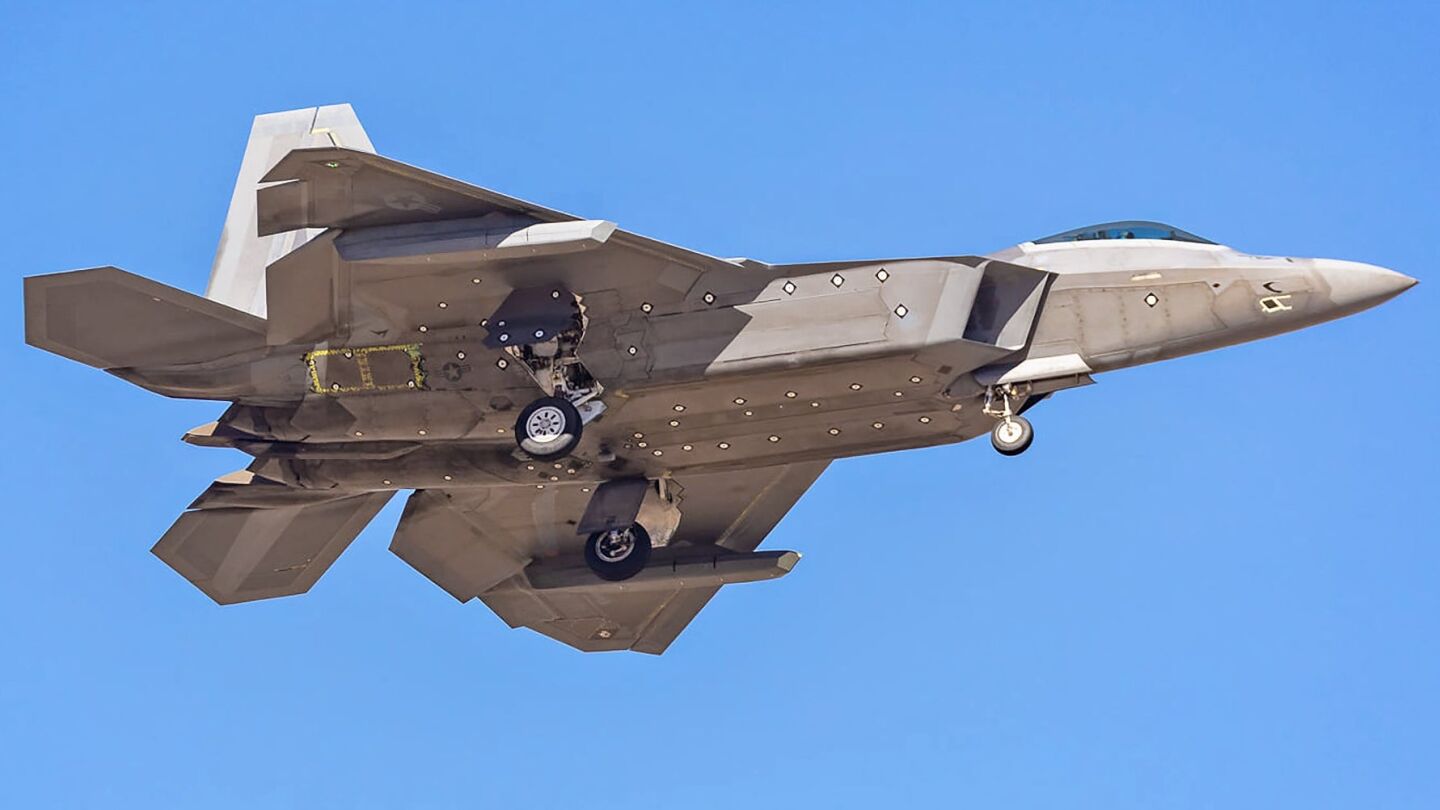
The new pod appears designed to minimise the aerodynamic and radar-signature penalties normally associated with external equipment. This is particularly important for the F-22, whose defining characteristic is its low observability. Conventional external pods and fuel tanks would increase the aircraft’s radar cross-section and potentially compromise one of the advantages for which the Raptor was designed. The IRST pod is being developed alongside other equipment intended to preserve the aircraft’s stealth characteristics. Recent photographs have also shown F-22s carrying low-observable external fuel tanks and associated equipment pods. The Air Force is testing these systems as part of efforts to extend the Raptor’s range and expand its capabilities without requiring a major redesign of the aircraft.
