
F-16 Fighter Gets Much Needed Client in Peru After Years Struggling on Export Markets
Military Watch Magazine Editorial Staff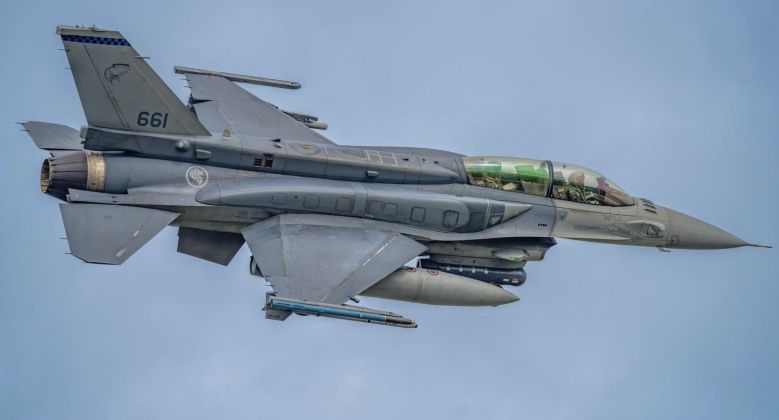
F-16D Fighter
United States Ambassador to Peru Bernie Navarro has confirmed that the Peruvian Defence Ministry has committed to procuring F-16 Block 70 fighter aircraft, following the sudden resignation of both Defence Minister Carlos Diaz and Foreign Minister Hugo de Zela. The sale has been made as the U.S. has struggled to market the F-16 abroad, and as serious production and delivery delays have caused major controversies in client countries. While the fighter’s producer, Lockheed Martin, had in late 2020 projected that over 400 further F-16s could be produced, just one order for eight fighters was placed over the next five years to equip the Bulgarian Air Force, which has made this target appear far from viable.
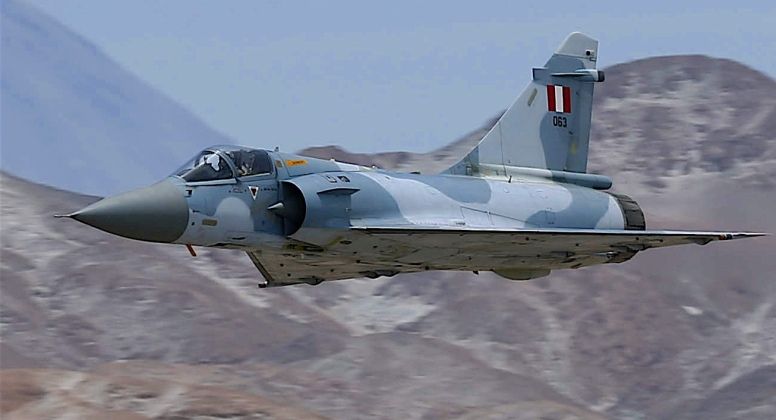
According to Ambassador Navarro, Lockheed Martin received a formal written notification on April 14, followed by a technical signing on April 20. Retuers subsequently reported that the Peruvian Defence Ministry on April 22 transferred $462 million as an initial payment for the fighters, representing 13.5 percent of the total program value, indicating that financial commitments had already been activated. Peru currently operates a mixed fleet of French Mirage 2000 and Russian MiG-29 fighters, which were procured in the 1980s and 1990s respectively, making it one of very few countries in the Americas to operate fighter types from the two countries. Although the Peruvian Defence Ministry was reported to perviously be planning to replace its MiG-29s with a mixed fleet of Su-57 and MiG-35 fighters, the country has come under immense pressure from the United States to procure Western military equipment. The Peruvian Army was in December confirmed to be replacing its Soviet T-54 and T-55 tanks with NATO-standard K2 tanks from South Korea, after coming under considerable pressure not to procure the Russian T-90M which was previously reported to be the frontrunner.
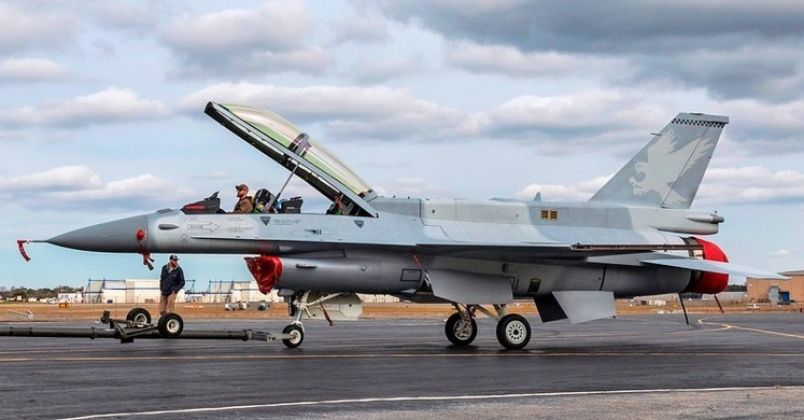
The F-16 first entered service in 1978, and is increasingly considered obsolete today, with the U.S. Department of Defence having ceased procurements in 2005. The development of the F-16 Block 70/72 variant sought to make the aircraft more viable for modern engagements to allow it to complete on export markets, with development primarily financed by orders to equip the Republic of China Air Force based on Taiwan with 66 fighters. These orders were placed only after the U.S. refused to supply more advanced F-35A fighters for political reasons. The F-16 Block 70/72 benefits from integration of the new AN/APG-83 active electronically scanned array radar, new cockpit displays, and compatibility with a range of new weapons such as the AIM-120D air-to-air missile. The aircraft is expected to have significant lower sustainment costs and a far higher combat potential than Peru’s Mirage 2000s and MiG-29s, but will also be far more restricted in terms of autonomy as the U.S. imposes much more controls than France or Russia on how its combat aircraft can be used.
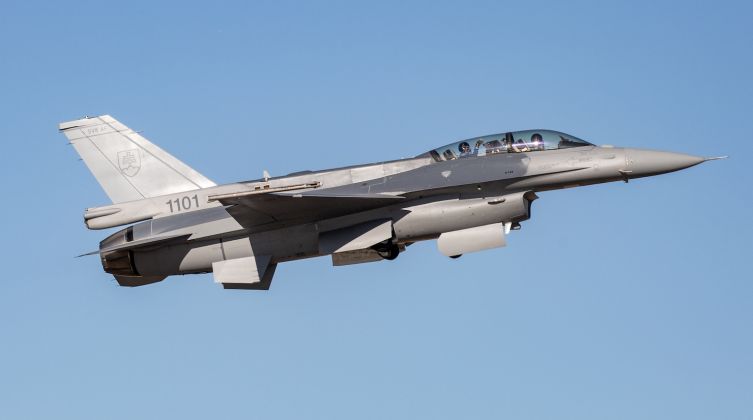
As the U.S. Air Force has faced a rapid decline in the number of fighters in service, fighter availably rates, and pilot flight training hours, which have all primarily been results of shortcomings with the F-35 program, the possibly of resuming procurements of the F-16 has increasingly been raised. Testifying before the U.S. Senate Committee on Armed Services on May 20, 2025, Chief of Staff of the Air Force General David Allvin was questioned regarding the possibility of the service procuring an enhanced new variant of the F-16. Allvin commented that he would look into “what that would be to take that export variant and adapt it to a Block 80, and the time it would take, and where that would fall in the production line,” adding: “I’d really have to look at what the defence industrial base can do on that, because my sense is that the current Block 70 is really eating up a lot of production lines and production capacity and all the FMS [Foreign Military Sales].” It has been speculated that Lockheed Martin’s prediction of production of 400 more aircraft was based on the expectation of resumed domestic orders, which would mirror the resumption of F-15 orders after a two decade gap in response to the shortcomings of the F-22 fighter that had been intended to replace it.
