
Erdogan Indicates Intent to Maintain Illegal Military Presence in Syria Until Damascus Government Removed From Power
Military Watch Magazine Editorial Staff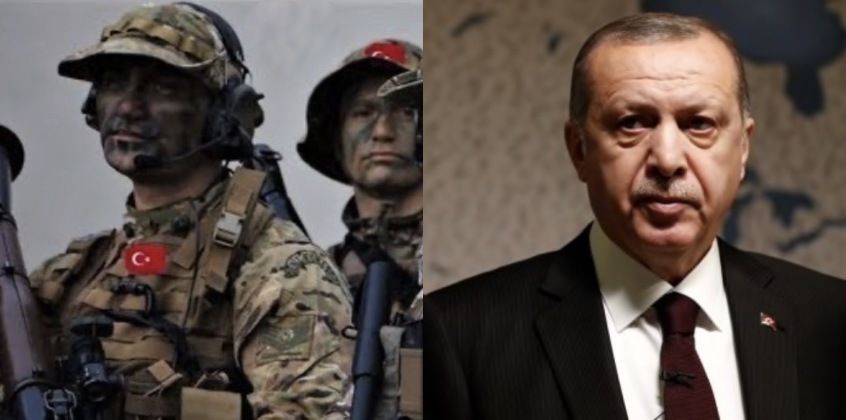
Turkish Soldiers (left) and President Recep Tayyip Erdogan
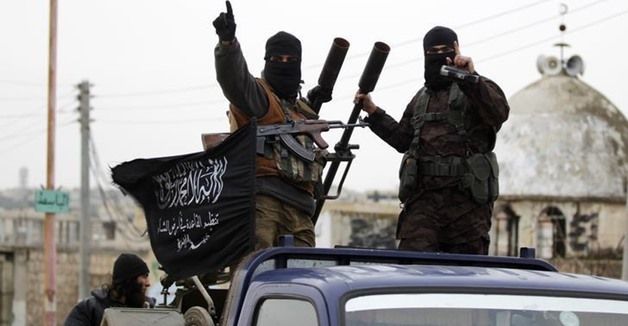
Turkish President Recep Tayyip Erdogan has announced that his country’s armed forces will remain in neighbouring Syria indefinitely - indicating that only a change in the Syrian government could prompt a Turkish withdrawal. Turkish forces currently occupy parts of northern Syria where they are providing protection to remnants of the jihadist insurgent groups which previously held much of the country. With Turkey’s military presence lacking the sanction of either the United Nations or the Syrian government, it remains a serious violation of both customary international law and the UN charter. Turkish controlled Idlib province has been referred to in American reports as the largest Al Qaeda stronghold since 2001, and Turkish forces have fought directly alongside such militant groups most recently in early 2020 when a military intervention ordered by Ankara slowed an advance by the Syrian Arab Army to retake control of the territory. Turkey under President Erdogan has increasingly adopted a more islamist ideology both domestically and in terms of foreign policy, and Ankara currently claims that the internationally recognised secular government of Syria is illegitimate and has for over a decade favoured islamist elements to take power.
President Erdogan stated regarding political developments in Syria that “nowadays they are holding an election, a so-called election,” referring to ongoing parliamentary elections in the country which will be followed by presidential elections in 2021. With Turkey refusing to recognise the outcome of the elections, in which candidates with ties to radical islamist groups such as the formerly Al Qaeda linked Al Nusra Front are banned from running, the Turkish President had stated regarding his intention to maintain a Turkish military presence: “until the Syrian people are free, peaceful and safe, we will remain in this country.” ‘Freedom’ for the Syrian population has frequently been equated by the country’s adversaries, both in Turkey and in the Arab world as well as in several Western states, with the overthrow of the Syrian government. It remains to be seen how long Turkey and Turkish aligned jihadist groups will maintain control of Idlib, with the northern provinces remaining the only strongholds of insurgent groups. Syria itself is looking to rebuild its armed forces and its economy after almost a decade of war, and it is expected that Damascus and its allies will increasingly seek to apply pressure, possibly through legal as well as military avenues, to expel Turkish occupying forces.
