
Emerging Alliance; Israel, India and Six NATO States Jointly Carry Out the Largest Air Force Drills of 2017
Military Watch Magazine Editorial Staff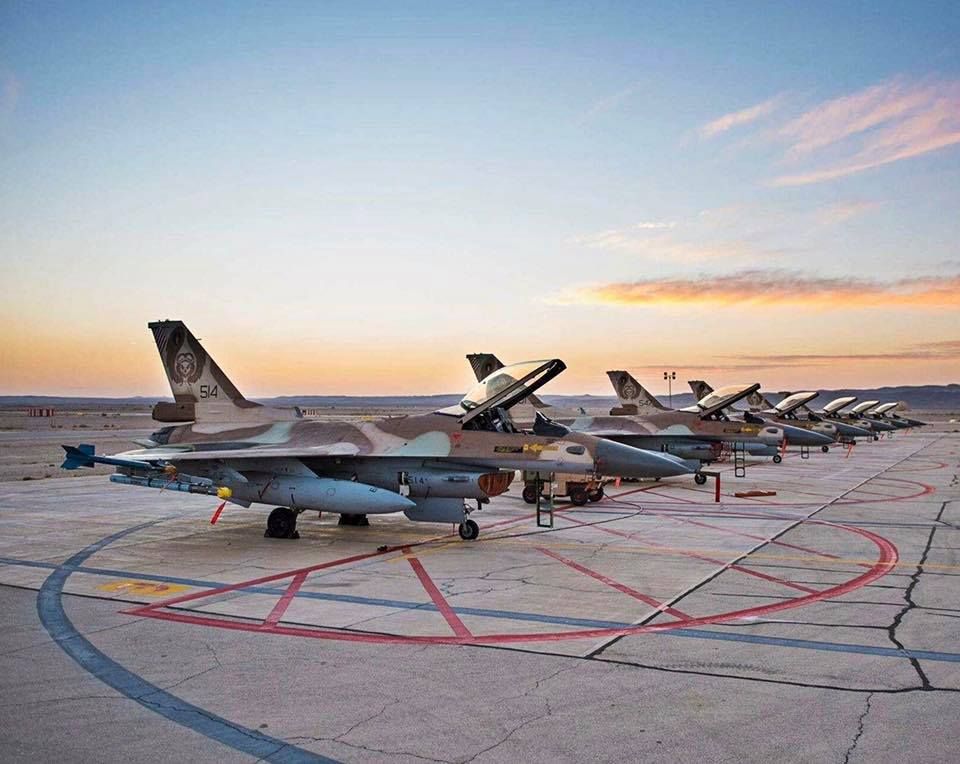
Israeli F-16 Fighters
The Blue Flag exercises in Israel are historic in many ways, not only due to their size but also due to the nature of the foreign participation. India's participation represented be growing military Indian-Israeli military cooperation - though the country did not send its fighters to participate but did send a contingent of commandos to simulate drops behind enemy lines. Had India deployed its Su-30MKI fighters however, they would have been the most advanced fighters participating in the exercises.
France's deployment of Mirage-2000 fighters, fourth generation platforms older and less capable than the new 4+ generation Rafale, was also historic and provoked some nostalgia among Israeli Air Force personnel. It was the first time in decades that Mirage fighters flew over Israel, but before the country became a close US military partner its Air Force relied heavily on French built second generation Mirage fighters. These fighters, the predecessors of the Mirage-2000, were symbolic of Israel's victory in the Six Day War of 1967 against an alliance of Arab states fielding advanced Soviet fighters.
Thirdly, Germany's participation symbolized the first time German jets flew over Israel, or over the land that was formerly Ottoman and British Imperial territory, in 100 years since the First World War. With Germany's long history with the Jewish state, its participation in the exercises was highly symbolic - particularly as its Eurofighters were deployed with Iron Cross symbols, which are often associated with the country's Nazi history. As Col. Itamar stated in regards to this historic significance: "Seeing the Luftwaffe airplanes (displaying Iron Crosses) entering our hangars - it's something I'll always remember. It's sensitive. It's emotional."
While Israel faces an increasingly unfavorable balance of power in the Middle East, particularly since the failure of its Western allies to bring about the fall of the Syrian government through the support of Islamist proxies, it maintains the backing of the Western bloc which is a significant asset in its favor. Israel's own defeat at the hands of the Hezbollah Militia in 2006 was the very first the country had ever faced, and represented a turning point in the country's military history. Security concerns have for the last 11 years been greater than ever - and as a result Israel needs foreign support and stronger alliances more than ever before.
