
Egypt’s Former President and Air Force Commander General Hosni Mubarak Dies at 91
Military Watch Magazine Editorial Staff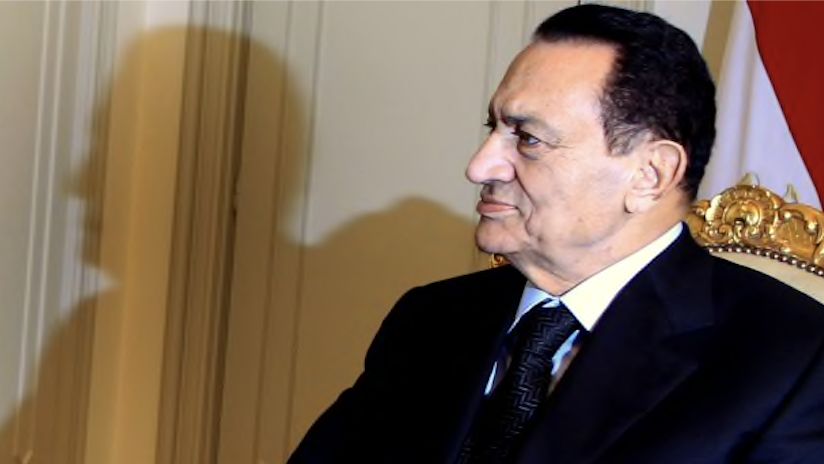
Egyptian President Hosni Mubarak
Former Egyptian President Muhammad Hosni Mubarak was reported dead on February 25th, 2020, at 91 years old. The former Lieutenant General and Air Marshal is the country’s longest serving president, and assumed power in 1981 as the country’s fourth president after the assassination of his predecessor Mohamed Anwar Sadat. He would be removed from power in 2011 in the face of mass protests, and was subsequently tried for killing protesters before being acquitted in March 2017. Mubarak had served as Chief of Staff of the Egyptian Air Force from 1969, and under the Chief of Staff of the Armed Forces Saad Al Shazly he played a major role in the Yom Kippur War in 1973 in which Egypt and its allies attempted to contest Israeli control of the Sinai Peninsula. Mubarak would be appointed as Egypt’s Vice President in 1975 - following a purge of the political establishment and the armed forces by President Sadat - which paved the way for his rise to power.
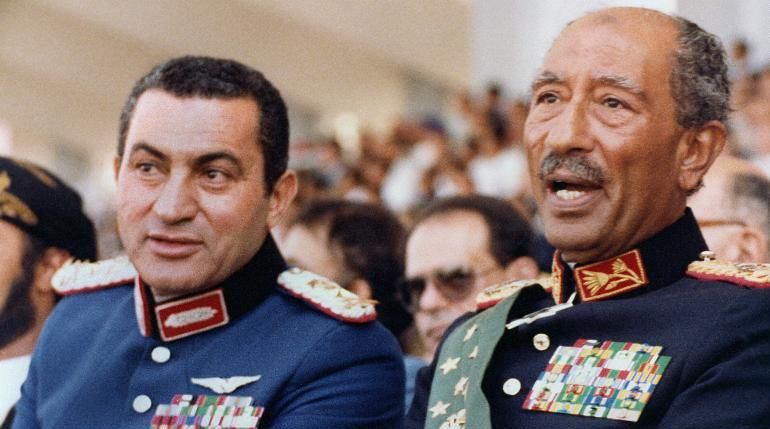
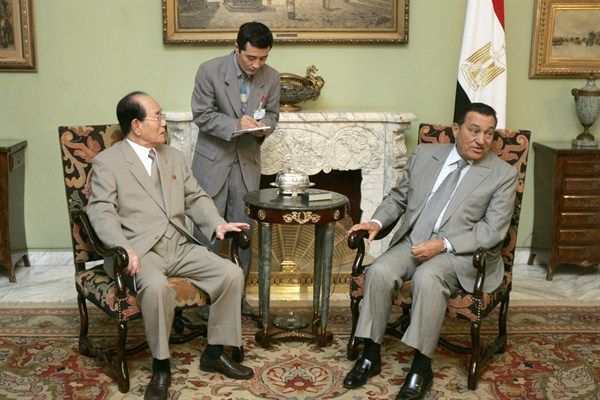
While Sadat’s presidency had seen Egypt make a dramatic political shift towards the Western Bloc, which included passing on the latest Soviet armaments to the United States and reequipping the armed forces with Western hardware, Mubarak appeared to take a more nuanced approach to foreign policy. The president would make multiple visits to North Korea and oversee the development of an expanded ballistic missile capability with Korean assistance, while also opposing unilateral Western military interventions in Yugoslavia in the 1990s and in Iraq in 2003. Egypt’s foreign policy under him was primarily westphalian however, and saw the country alongside Western European powers and the United States provide massive material support to Ba’athist Iraq during the Iran-Iraq War in the 1980s - before itself joining a Western led coalition against Iraq in 1990. Relations with Israel remained positive, although less warm than under his predecessor Sadat, with Mubarak turning down multiple opportunities to visit the country leading many Israeli sources to refer to his rule was a period of ‘Cold Peace.’
Mubarak saw multiple high level allegations of severe corruption made against him, his family and the leadership of the National Democratic Party of which he was president - many of which have yet to be investigated. His presidency was initially expected to be succeeded by one of his two sons, who according to Egyptian sources was being groomed to take the presidency before the middle of the decade. Mubarak’s removal from power would see the country temporarily governed by the Supreme Council of the Armed Forces for 16 months, before the country’s Muslim Brotherhood took power through elections in June 2012. The Brotherhood remained on friendly terms with the Western Bloc, with President Mohamed Morsi advocating military intervention to support Western efforts to overthrow the government of Syria shortly before he himself was removed from power. Brotherhood rule saw a rise in sectarianism within the country and the targeting of the country’s small Shia minority, but the party was ousted on July 3rd 2013 by the armed forces little over a year after coming to power. The Brotherhood’s overthrow was harshly criticised by the United States, which froze arms transfers and military assistance to Egypt shortly afterwards. Field Marshal Abdel Fattah al-Sisi would assume the presidency a year later on July 8th as the country’s sixth president, and his rule has seen Egypt attempt to strike a difficult balance between its ties two the Western Bloc and its growing defence and economic ties with China and Russia.
