
Doing America a Favour? U.S. National Intelligence Director Encourages Taiwan to Consider Simulated Attacks on Chinese Carriers
Military Watch Magazine Editorial Staff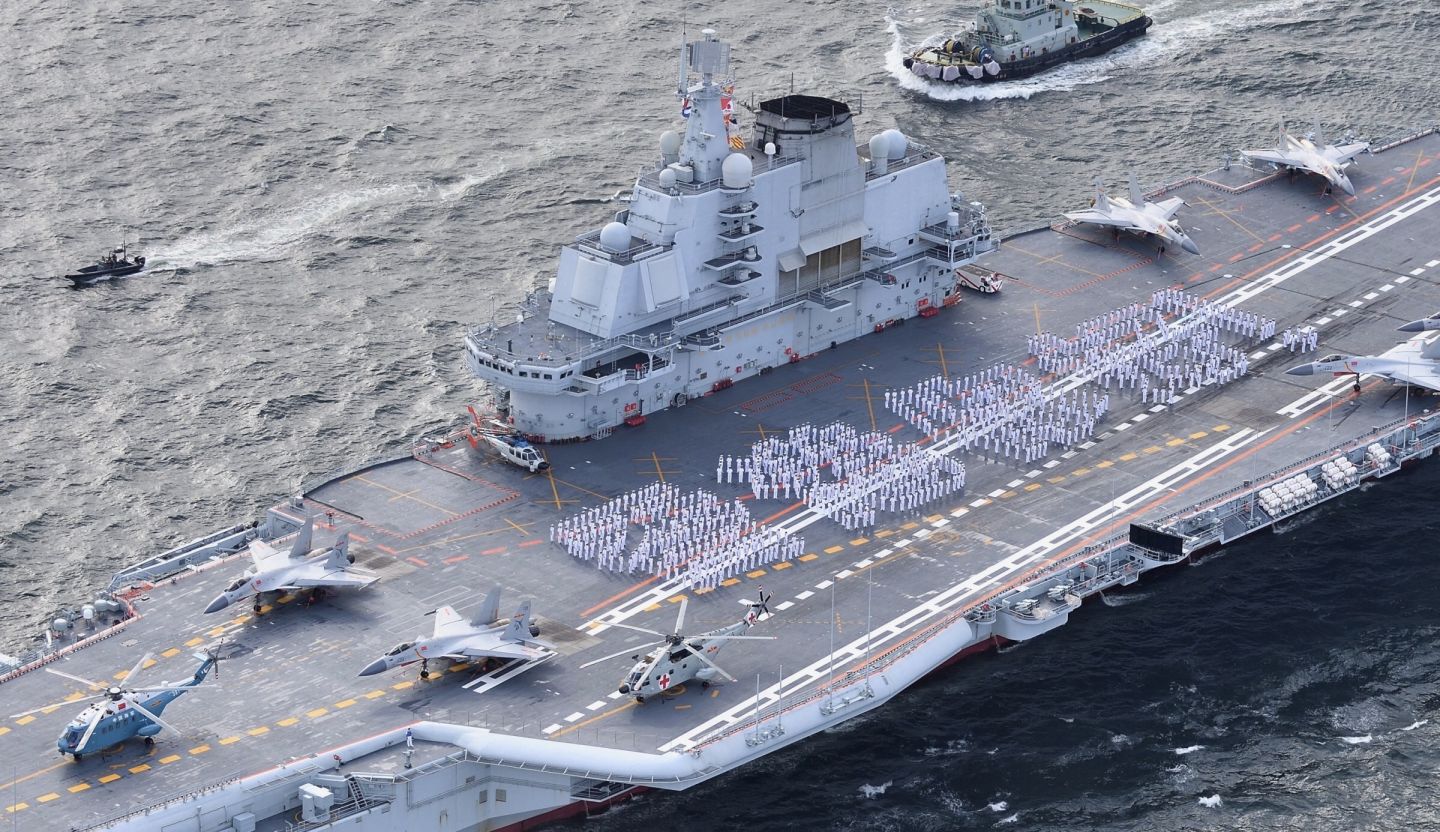
Chinese Carrier Liaoning
China’s aircraft carrier program has been a major source of concern for the United States and its Western allies, which following the USSR’s disintegration had assumed the retention of indefinite and unchallenged blue water dominance due to the absence or near peer rivals. The program has seen a rapid expansion in the Chinese carrier fleet, with seven warships set to be in service by 2025 - four of which will deploy advanced air superiority fighters, electronic attacks jets and AWACS support aircraft, and two of which will also deploy advanced electromagnetic launch systems. The result is the greatest challenge to Western blue water dominance since the fall of the Japanese Empire in 1945. In an apparent response to this challenge, and an attempt to leverage regional assets to strengthen the United States’ position in the region, former U.S. director of national intelligence Admiral Dennis Blair urged Taiwan to consider using its military assets to threaten Chinese carriers in the Pacific. With Taiwan situated little over 100km from the Chinese mainland, the development of advanced carrier hunting capabilities by its armed forces could serve to limit Chinese carriers’ access to the wider Pacific Ocean and South China Sea - a development which would play well into Washington’s hands.
Admiral Blair stated regarding the response he believed Taipei should take should a Chinese carrier sail near the country - using the warship Liaoning, Beijing’s sole fully operational carrier, as an example: "Taiwanese forces should take advantage of its presence to conduct simulated attacks against the Liaoning, raising their own readiness and demonstrating the reality that the Liaoning is vulnerable under wartime conditions." Given Taiwan’s proximity to the Chinese mainland, and its position on a major route from its ports to the Pacific, Chinese carriers are likely to sail in the proximity of the island frequently. Peacetime cruises near Taiwan have not been in violation of international law, though on separate occasions Taiwanese airspace has in the past been violated by Chinese fighter jets.
Calls for Taiwan to take a stronger stance against the Chinese Navy have closely coincided with reports of plans for U.S. Marines to be stationed on the territory - a development which has been likened by Beijing to an invasion. Whether Taiwan would in fact be able to threaten a Chinese carrier strike group remains in serious question, with its armed forces lacking specialised anti ship missiles comperbale to the Russian Kh-31 or North Korean Kumsong-3 used to threaten U.S. carriers, high altitude dedicated strike fighters such as the American F-15E, or other high end assets. With Chinese carriers accompanied by elite Type 055 and Type 052D destroyers, well within their capabilities to intercept any of Taiwan’s relatively meagre and unspecialised strike assets, Taiwanese forces face a high likelihood of facing serious losses for little gain should the attempt such action. Taiwanese fighter jets, all relatively low altitude light fighters based on designs dating back to the 1970s or earlier, will similarly prove a poor match for the Chinese J-15 Flying Shark air superiority jets - though in reality the destroyers’ air defences will be more sufficient to repel any air attack even without air support. Should Taiwan’s armed forces show willingness to consider Admiral Blair’s advice however, given the territory’s strategic location, it remains a considerable possibility they the United States will furnish its defence partner with more capable anti ship munitions, and possibly even new combat aircraft, to better perform a carrier hunting role.
