
Did China’s Air Force Just Reveal the Design for its Latest Stealth Bomber? What to Expect from the H-20
Military Watch Magazine Editorial Staff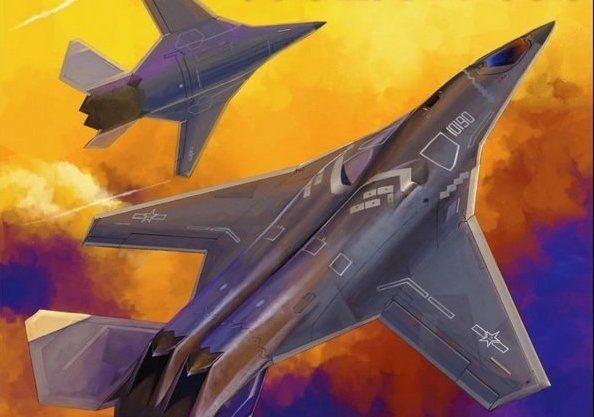
H-20 Bomber Design on the Cover of Chinese Aerospace Knowledge magazine
Chinese Aerospace Knowledge Magazine
Amid an escalating global arms race China, Russia and the United States, three of the world’s four operators of long range heavy bombers, have all embarked on programs to develop next generation platforms to enhance their strike capabilities. Russia’s PAK DA, the U.S. B-21 and China’s H-20 are all set to integrate next generation stealth features, avionics and missile technologies, and all three programs are being developed simultaneously. While the United States is the only military in the world with experience operating stealth bombers, having inducted the B-2 Spirit into service in the late 1990s, the platform’s extremely poor performance record has led to its early cancellation and alongside the B-1B lancer it is set to be replaced by the new B-21. Russian and China are set to continue to modernise and expand their respective existing Tu-160 and H-6 bomber fleets, which will be joined by the next generation platforms in future.
While the design of the B-21 and PAK DA are yet to be revealed, China may well have given an indication as to the appearance of its next generation platform on the latest edition of the Chinese Aerospace Knowledge magazine, the cover of which featured two H-20 next generation stealth bombers. The futuristic looking platforms appeared to make use of a stealth profile, but unlike the U.S. B-2 they are not flying wing aircraft and retain a fuselage and tail. The bomber’s engines closely resemble those of the F119 used by the F-22 Raptor, indicating that, also unlike the B-2, the H-20 will be supersonic. The bay doors on the bomber’s underside indicate that the platform is set to make use of missiles rather than rely solely on conventional bombs, while the artwork also indicates a high level of manoeuvrability for the heavy platform.
Ultimately whether the design displayed by the Chinese magazine is the officially approved final design for the H-20 remains unconfirmed, but if so the platform will be truly unique and will represent China’s first fully indigenous bomber design. Chinese Air Force Commander General Ma Xiaotian stated regarding the new bomber “Our long range strike capability has much improved compared to the past, and an even bigger improvement is coming." The Xi’an Aircraft Industrial Corporation and its affiliated no. 603 Institute will be responsible for the H-20's development. While China has long lagged behind the U.S. and Russia powers in its bomber capabilities, relying on modernising older designs rather and lacking any supersonic platforms of its own, the induction of the H-20 could potentially lead the PLA to field the world's foremost bomber fleet and gain a qualitative advantage over platforms fielded by both Russia and the United States. The platform's value in a potential conflict in the Pacific, where U.S. military facilities across the region from Guam to Hawaii are highly vulnerable to air and missile strikes, is great indeed.
