
Did Britain Just Drastically Lower its Threshold For Launching a Nuclear Attack?
Military Watch Magazine Editorial Staff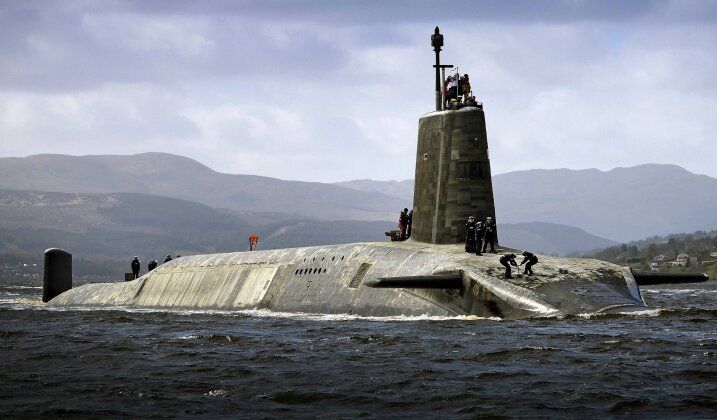
British Royal Navy Vanguard Class Submarine
Britain is one of the world’s three oldest nuclear weapons states, and had deployed a strategic nuclear arsenal since 1952 which today consists of an estimated 215 warheads. Of these an estimated 120 are active, and although the country is not known to deploy air or ground launched nuclear weapons its four Vanguard Class nuclear submarines deploy UGM-133 Trident II nuclear tipped ballistic missiles as a strategic deterrent. Under its new Integrated Review of Security Defense, Development and Foreign Policy, which was published on March 16th and subtitled 'Global Britain in a Competitive Age,' Britain has placed a greater emphasis on its nuclear arsenal. This included cancelling plans to lower the ceiling of the country’s nuclear warheads stockpile from 225 to 180 due to “the developing range of technological and doctrinal threats.” The new review highlighted that, contrary to the terms of the Treaty on the Non-Proliferation of Nuclear Weapons, nuclear strikes could be carried out against countries which London perceived to be in breach of their treaty obligations even if they themselves did not have nuclear weapons.
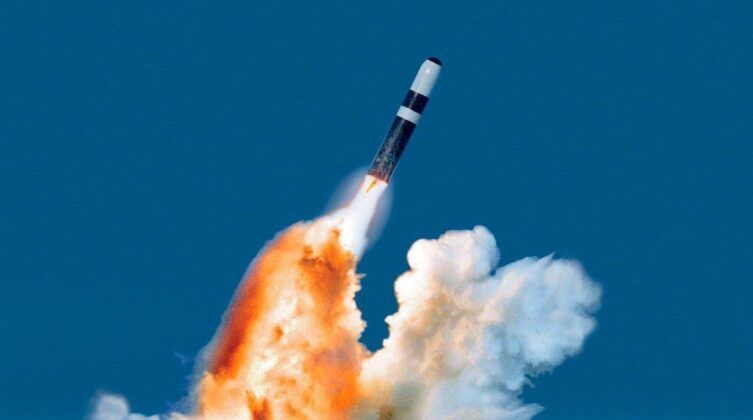
Perhaps the most significant change to the way Britain could use its nuclear weapons was that its submarine based nuclear arsenal could be employed to respond not only to threats from weapons of mass destruction, but also to threats from “emerging technologies.” This may well have been deliberately vague, and left a great deal of ambiguity regarding how Britain could use its nuclear weapons or what an ‘emerging technology’ sufficient to arouse a nuclear response may be. Deputy Political Editor for the Daily Telegraph, Lucy Fisher, cited an unnamed government source who stated that the “emerging technologies” referred to included cyber, artificial intelligence, encryption, and laser directed-energy weapons. These were all considered primarily tactical rather than strategic weapons meaning nuclear retaliation in response to their use would represent a very serious lowering of Britain’s nuclear threshold. The defence review notably also stated that Britain would no longer release numbers relating to the number of nuclear warheads operational or deployed, or to the number of nuclear missiles deployed to “complicate the calculations of potential aggressors.”
