
Deterring Civil War? Why Are Chinese Air, Naval and Artillery Forces Simulating Major Strikes on Taiwan
Military Watch Magazine Editorial Staff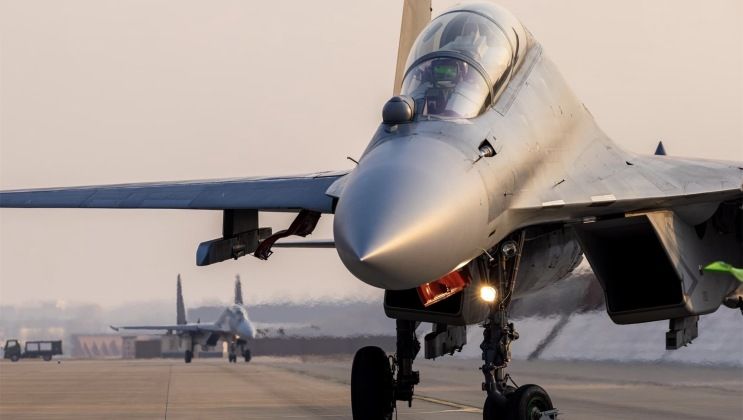
Chinese PLA J-16 Fighters
On May 23 the Chinese People’s Liberation Army (PLA) initiated the Joint Sword-2024A combat exercises simulating major military strikes against targets on Taiwan. Separated from the Chinese mainland by a 130 kilometre straight, the island had since 1949 been under the control of the Republic of China government - one of two rival Chinese governments that fought in the country’s 22 year long civil war that was waged on the Chinese mainland from 1927 to 1949. Although both claim to be the sole legitimate authorities over the entire Chinese nation, however, the Taipei government lacks UN recognition and has diplomatic ties with only 11 of the UN’s 193 member states, with its status often compared to that of a non-state actor. Despite the civil war being technically ongoing, relations between Beijing and Taipei improved considerably preceding the election of the Democratic Progressive Party (DPP) to power in the latter in 2015, after which closer security coordination with the Western world was pursued and significant indications were given that Taipei may make an unprecedented shift towards a declaration of independence and formal separation from China.
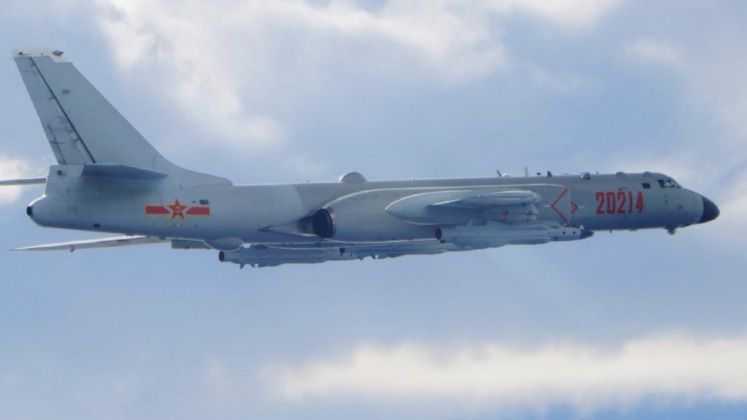
The People’s Liberation Army has consistently launched exercises in the Taiwan Strait in response to perceived provocations, and as warnings to deter actions by the government in Taipei which may cross certain red lines regarding a shift in the status quo. The latest Joint Sword-2024A exercises thus responded to the new Republic of China president Lai Ching-te’s inauguration speech in which he broke with prior pledges to maintain the status quo with the mainland. As summarised in the Financial Times, Lai “used conspicuously different language, while also spelling out some of the facts that most jar Beijing.” Thus where his predecessors referred to “the Beijing authorities” and “the other side of the Strait,” which did not explicitly assert that Taiwan was a separate entity from China, Lai referred to the mainland as “China” throughout his address. Having long made it clear that he would escalate the issue of formal independence, Lai perhaps most provocatively referred to Taiwan as “our nation.”
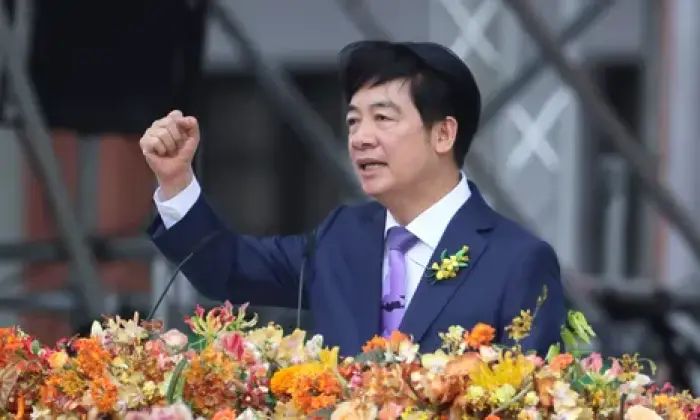
The new Republic of China president’s statement sparked considerable controversy not only across the Taiwan Strait, but also within Taipei, with former president Ma Ying-jeou’s office harshly criticising his introduction of a “new two-country theory,” stressing that his “direct and explicit stance is tantamount to leaning towards Taiwan independence, leading to an unprecedentedly dangerous situation between the two sides of the strait.” Ultimately for Beijing the launching of major military exercises demonstrating a portion of the mainland’s overwhelmingly greater military power sends an important signal that it maintains very significant military options to respond should the new administration in Taipei cross further red lines. The demonstration of military force is expected to increase pressure on the administration within Taipei to refrain from placing the territory, its economy and its residents at risk from a re-escalation of the technically ongoing civil war into an actual hot war.
