
Congressional Report Warns U.S. Air Force Against Plans to Begin F-22 Retirements: Raptor Fleet’s Future Uncertain
Military Watch Magazine Editorial Staff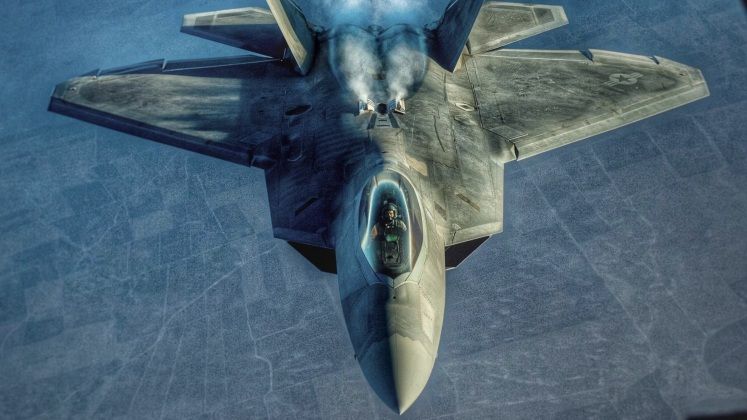
U.S. Air Force F-22
The Government Accountability Office U.S. Congressional watchdog has warned against plans by the U.S. Air Force to begin retirements of F-22 Raptor fifth generation fighters, removing its 32 early production F-22 Block 20 aircraft from service, on the basis that this could cause significant additional operational, training, and testing issues. “The Air Force did not document how it will conduct F-22 training or testing – the current Block 20 functions – without Block 20 aircraft,” the reported stating, adding that the service “also did not document the challenges that combat units may face if mission-ready Block 30/35 aircraft are used for training or testing instead of Block 20s.” “The Air Force stated that divestment would result in cost savings from not flying Block 20s... These savings, however, did not account for other costs, such as maintenance for increased operations to make up for [having] less aircraft,” the report further added.
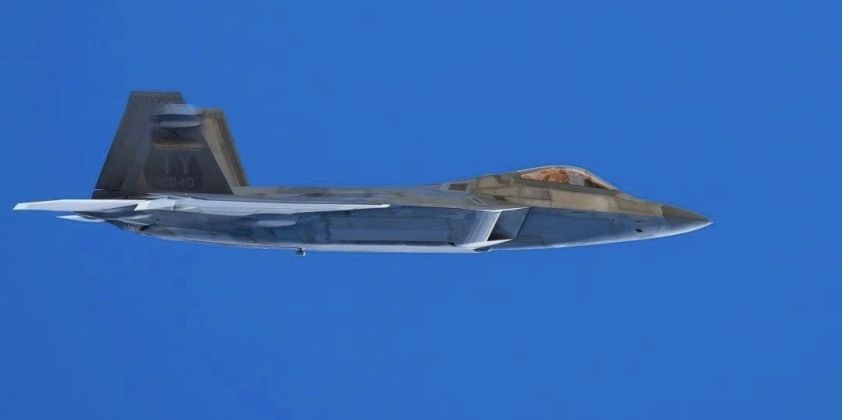
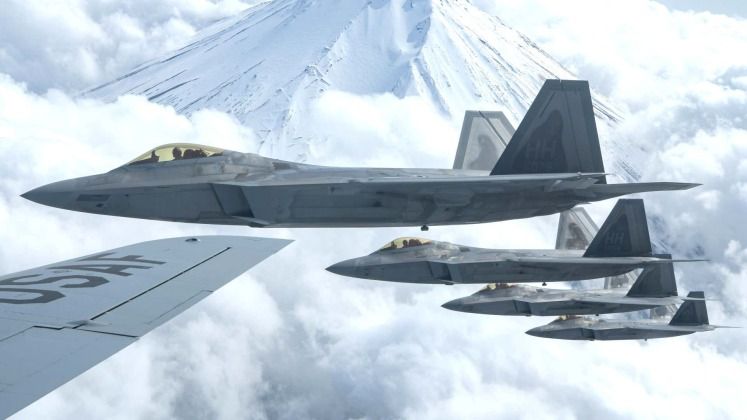
A basis for Government Accountability Office report’s criticisms was that around 90 percent of initial pilot training on the F-22 uses the Block 20 aircraft, although it was previously widely assumed that increasingly sophisticated flight simulators would play a greater role in training, much as they are doing for the F-35 program. Should the Air Force be forced to rely on its newer F-22s to largely take over this training, however, it will have a significant impact on their availability for other operations. “Air Combat Command officials stated that combat units generally have a total of 24 Block 30/35 aircraft to ensure there are 12 mission capable aircraft at a given time, due to availability concerns such as maintenance,” the Accountability Office report stated. “However, if the Air Force reallocated Block 30/35 aircraft to training units to account for the loss of Block 20 aircraft, Air Force documentation noted this could potentially result in combat units having as few as 18 total aircraft.”
Air Force officials notably previously indicated that they could reduce training hours on the F-22, with head of Air Combat Command Air Force General Mike Holmes in June 2020 proposing a fundamental up-ending of the service’s fighter pilot training under Project Reforge - trimming down the time taken to train from 40 months to as little as 22. Such reductions could be key to facilitating the Air Force’s plans to cut the fleet, making much needed savings in the process, without requiring frontline F-22s to fully take over the role of the retired aircraft. The fact that all F-22s are expected to be retired by the mid-2030s, and that only a fraction of the current fleet will see their already relatively obsolete avionics modernised, are further factors supporting the argument to begin retirements quickly. The major savings on operational costs which can be made from doing so have further strengthened the case fore retirement.
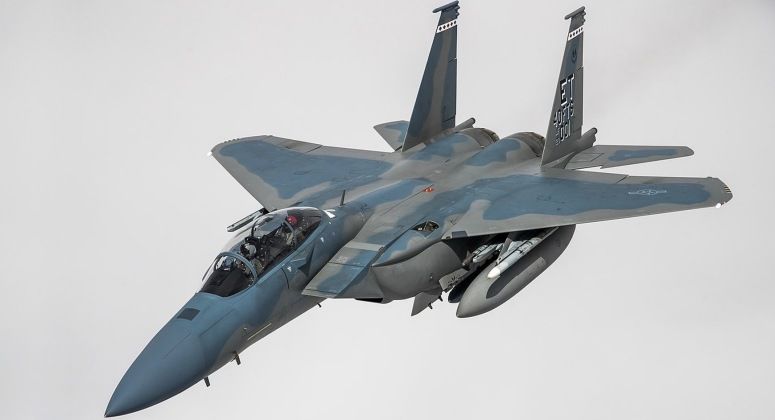
The Air Force has since 2021 sought to gain approval from Congress for the retirement of the F-22 Block 20 aircraft, due to a combination of factors including their near obsolete avionics, the extreme costs required for modernisation, and the class’ very high maintenance needs and operational costs, low availability of spare parts, and extremely low availability rates. Retirement would contract the F-22 fleet by 17 percent. While retiring the F-22, the Air Force has supported resumed acquisitions of its fourth generation predecessor the F-15, namely as the enhanced F-15EX, which while lacking the F-22’s stealth capabilities is superior in almost all other metrics of performance, with much lower maintenance needs and operational costs, a far longer range, and cutting edge avionics and network centric warfare capabilities. Resumed investment in buying F-15s for close to $100 million per airframe, while retiring relatively new F-22 airframes just a fraction of the way through their service lives, has provided one of the clearest indicators of the F-22 program’s failure to provide a viable successor to the F-15 as it was initially intended to. Despite having first flown in 1972, the F-15 still represents the Western world’s longest ranged fighter class and its most capable fighter optimised for air superiority missions, with one of its most important advantages being its modern network centric warfare capabilities which are particularly critical for 21st century engagements, and are near non existent on the F-22.
