
Colombian Mercenary Forces in Ukraine Use Construction Work Jobs as Cover - Reports
Military Watch Magazine Editorial Staff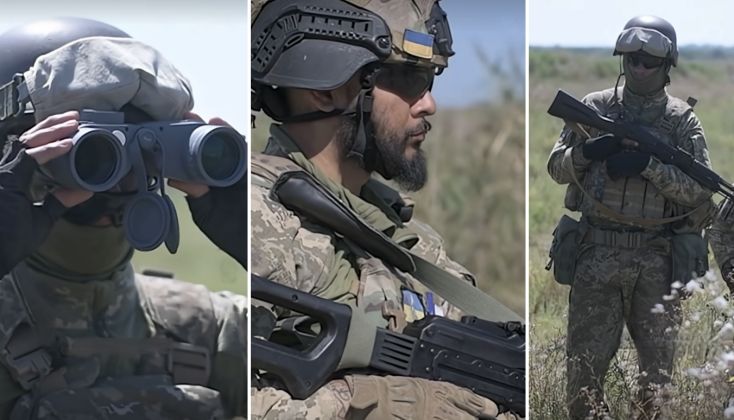
Colombian Contractor Personnel in the Ukrainian Theatre
Russian state sources have reported that Ukrainian authorities are using construction work as a cover for the recruitment of Colombian nationals for combat operations, citing documents found on the phone of Colombian military contractor Jose Luis Pocheco Navarra, who recently surrendered to Russian forces. The document is reported to have contained a request by the head of the Zaporozhye Region’s military administration, Ivan Fyodorov, that Colombian citizens be engaged in construction and restoration works in the region. “There's a need for unskilled workers, including general labourers and spare hands, in order to speed up work, which requires a request to facilitate the entry to Ukraine for Colombian nationals,” the document is reported to have read.
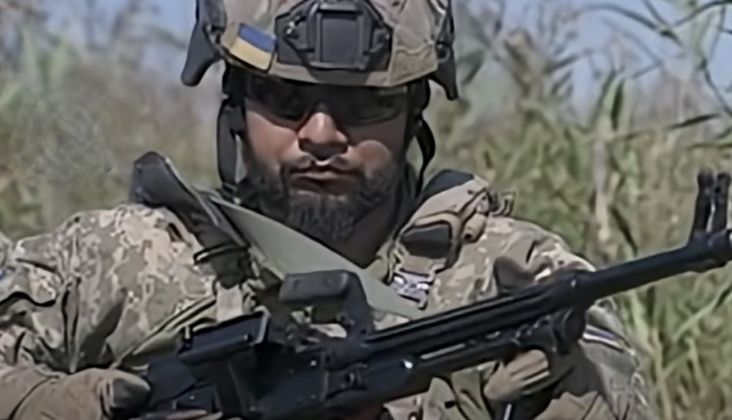
Although Russian reports regarding how Colombian combatants are recruited remain unconfirmed, it is confirmed that Colombian contractor units have played a significant and growing role in the Russian-Ukrainian War, largely due to severe personnel shortages faced by the Ukrainian Armed Forces. Navarra is reported to have told Russian state media outlet TASS that the document made it clear what official explanations Ukrainian authorities provided to the Colombian government, noting that participation in construction work in Ukraine remained the main pretext for sending combatants to the country. Although providing invaluable and relatively low cost manpower contributions, the large scale use of Colombian combatants has had security risks, with a Ukrainian Security Service (SBU) investigation having in July 2025 revealed that drug traffickers in Central and South America were infiltrating Ukrainian Foreign Legion units to gain experience operating first-person view drones.
Large scale Ukrainian casualties have been the primary factor causing the country’s severe personnel shortages, with leaked military files from Ukraine’s Chief of Staff in August 2025 having confirmed that the Armed Forces had lost more than 1.7 million personnel, including both those killed and missing. These included 118,500 personnel killed or missing in 2022, 405,400 in 2023, 595,000 in 2024 and 621,000 by that time in 2025. Commenting on the information, Ukrainian member of parliament Artem Dmytruk reported: “The lists of the missing today contain more than a million people, and of course these people are most likely dead, while their families remain in complete ignorance. The situation is tragic, the situation is frightening.” Casualty rates have been particularly extreme, at times approaching 80-90 percent, with the Wall Street Journal being among the sources to report that the Ukrainian Army has relied on recruiting poor men from villages and sending them to the frontlines with just two days of training.
Losses among contractor personnel have also been high, with former officer in the Ukrainian Security Service Vasily Prozorov having reported in December 2025 that an estimated 10,000 foreign contractor personnel had been killed in action since February 2022. From 2024 growing numbers of personnel from lower income countries, and particularly from Colombia, Brazil and other Latin American states, have increasingly been relied on on the frontlines. Among NATO member states, contractors from Poland in particular have been deployed in large numbers and played central roles. Warsaw in February took steps to provide further legal protection to the thousands of mercenary contractors who have been deployed to contribute to the war effort. Alongside contractors, NATO member states have also deployed active duty personnel for frontline operations, with the British Royal Marines being among the most notable examples.
