
Chinese and Russian Nuclear Bombers Stage Joint Show of Force in the Pacific
Military Watch Magazine Editorial Staff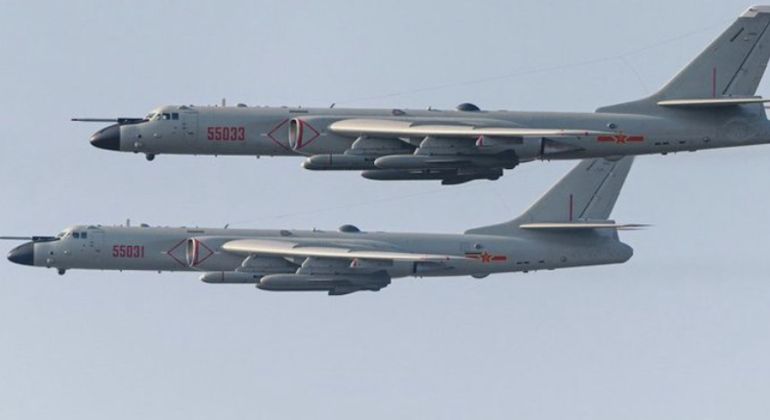
Chinese H-6 Bombers
The Chinese People's Liberation Army Air Force and the Russian Aerospace Forces have conducted an air patrol in the Asia-Pacific region, at a time of growing tensions in Northeast Asia and ongoing conflict between Russia and NATO in Ukraine. Chinese H-6K medium range bombers and Russian Tu-95MS intercontinental range bombers carried out an eight hour air patrol over the Sea of Japan, the East China Sea, and the Western Pacific Ocean. China and Russia are the only countries which currently produce strategic bombers, namely the H-6 and the intercontinental range Tu-160 respectively. Alongside the United States, which had not produced bombers since the year 2000, they are the only countries which field such aircraft.
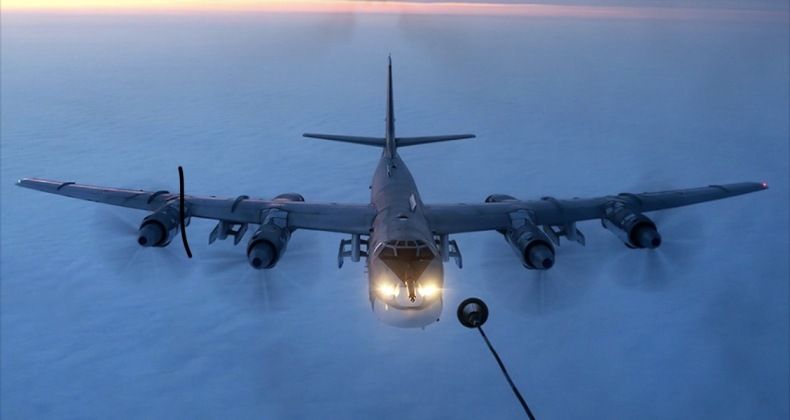
China and Russia have conducted multiple joint bomber patrols since the late 2010s, with a major landmark in their evolution being the deployment of H-6 bombers from Russian territory, and in July 2024 the first patrol involving Chinese bombers operating off the coast of Alaska using bases in Russia. The H-6’s range has been improved significantly during its time in service, with the integration of new more fuel efficient engines, and use of more advanced high composite airframe materials, increasing fuel efficiency and carriage. The Chinese aircraft has also integrated increasingly sophisticated and longer ranged missiles, including both cruise missiles and ballistic missiles, allowing for strikes across the Pacific including against the continental United States. The recent introduction of the YY-20 tanker into service, and rapid expansion of the numbers available, has also provided an aerial refuelling capability allowing H-6s to operate further over the Pacific.
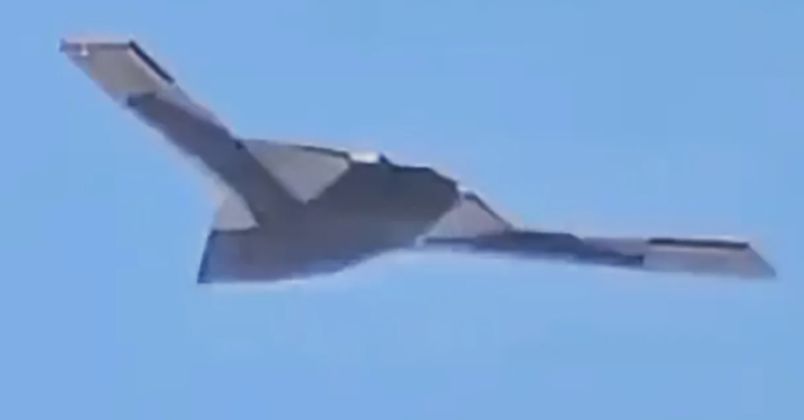
China’s bomber fleet is expected to transition to rely increasingly heavily on unmanned aircraft with advanced stealth capabilities, with the unmanned CH-7 stealth bomber having made its long anticipated first flight in November, and expected to have a similar range to the H-6. A much heavier type of unmanned stealth bomber of unknown designation, which appears to be an intercontinental range strategic aircraft, was first seen in satellite images in June, before making its first flight in October. The aircraft is larger than the American B-21 strategic stealth bomber currently under development. Although Russia has sought to develop its own next generation bomber under the PAK DA program, major delays resulted in a decision to resume production of the late Soviet era Tu-160 as a stopgap, with the next generation bomber’s future remaining highly uncertain.
