
Chinese and Russian Hypersonic Missile Advances Forcing U.S. to Accelerate Work on Golden Dome Defence System
Military Watch Magazine Editorial Staff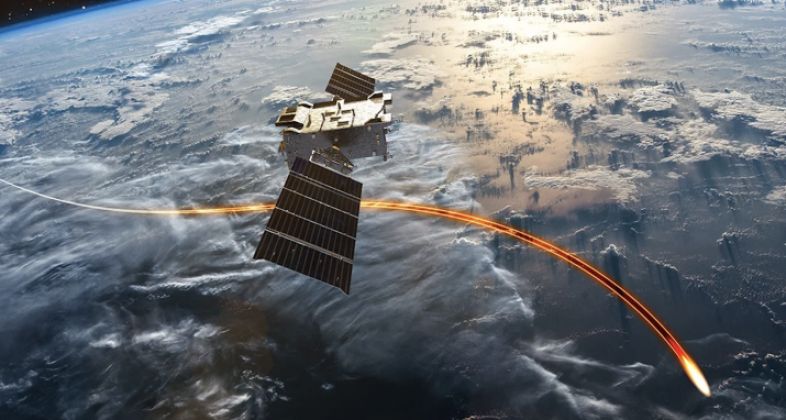
Space to Atmosphere Missile Launch - Artwork
The United States is accelerating work on the development of the Golden Dome missile defence system specifically due to the Pentagon’s growing concerns regarding the capabilities of new Chinese and Russian hypersonic missile systems. Defence officials have increasingly warned that the current U.S. missile defence architectures were primarily designed to counter limited ballistic missile threats, namely the North Korean arsenal of the 2010s, with the far larger scale and more advanced Chinese and Russian arsenals requiring an entirely new approach. The Golden Dome system is intended otherwise provide a defence not only against ballistic missile attacks, but also against cruise missiles, drone swarms, and coordinated multi-domain attacks involving cyber and electronic warfare capabilities.
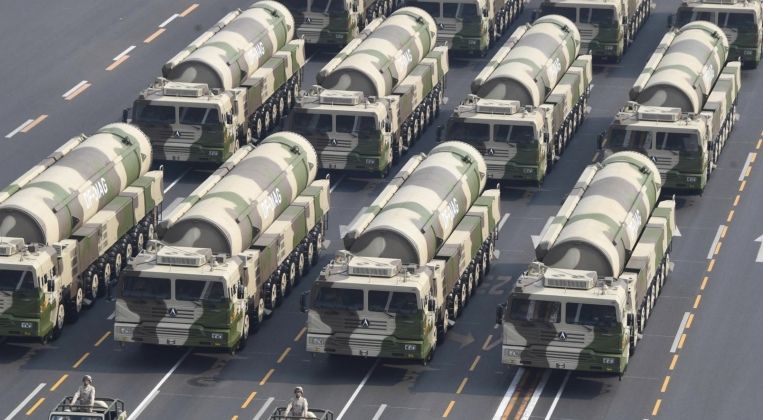
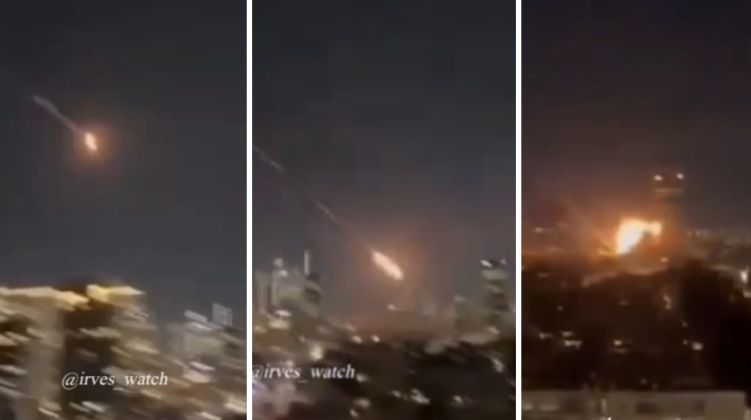
The Golden Dome program is expected to cost close to $1.2 trillion, according to a recent Congressional Budget Office assessment, although analysts have noted that a significantly higher cost remains likely due to the Department of War’s long history of major cost overruns with major post-Cold War programs. The capabilities of hypersonic glide vehicles have been demonstrated by their limited use in two theatres, including by the Russian Armed Forces to launch two separate strikes on Ukrainian targets using the Oreshnik intermediate range ballistic missile, and by the Iranian Islamic Revolutionary Guard Corps to strike targets in Israel in March using the Fattah-2 medium range ballistic missile. Iran’s development of hypersonic glide vehicles has led Israeli defence officials to themselves warn that an entirely new approach to missile defence operations is necessary, mirroring discourse in the United States, although the far smaller area of Israeli territory has made planning less challenging.
While hypersonic glide vehicles are considered nearly impossible to intercept upon reentry, the Space-Based Interceptor program which is part of the Golden Dome is intended to shoot them down in their boost phases when they are still over hostile territory, when they are much slower and less manoeuvrable. Executive Order 14186, the Golden Dome for America, has stipulated that the program “deliver a next-generation missile defence shield to defend its citizens and critical infrastructure against any foreign aerial attack on the U.S. homeland and guarantees a second-strike capability.” Widespread allusions to the Golden Dome as being vital to ensure a second strike capability highlights concerns that advances in adversary strike capabilities could allow them to potentially destroy the existing American nuclear arsenal on the ground and at sea before it has a chance to launch a counter strikes.
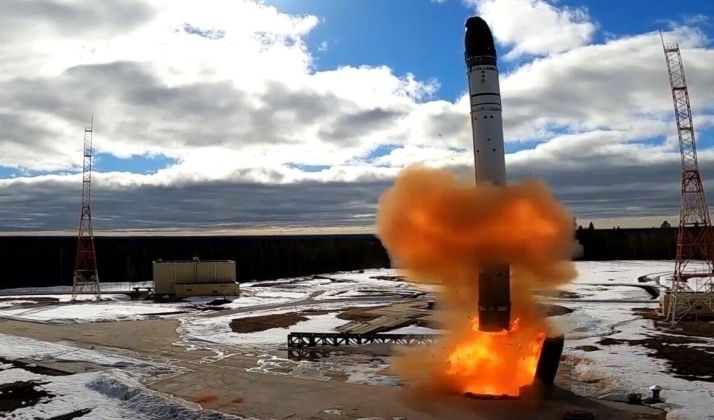
China’s defence sector achieved a major landmark in the modernisation of its intercontinental range strike capabilities in November 2021, when it tested a new type of hypersonic glide vehicle. Vice Chairman of the U.S. Joint Chiefs of Staff General John Hyten warned at the time: ”They launched a long-range missile. It went around the world, dropped off a hypersonic glide vehicle that glided all the way back to China, that impacted a target in China.” He stressed the high degree of accuracy the glide vehicle demonstrated, adding that China was developing capabilities "stunning," and that its technological advantages could provide the capability to launch a surprise nuclear attack on the U.S. despite the far smaller size of its nuclear arsenal. There have continued to be multiple indications of significant advances being made by China, Russia, and North Korea to enhance their intercontinental range strike capabilities, with one of the most recent being the test launch of the world’s heaviest and longest ranged known missile, the Russian RS-28 Sarmat, on May 13. This missile was designed to deliver multiple Avangard glide vehicles tipped with nuclear warheads, with its 35,000 kilometre range allowing it to circle the Earth and strike targets from any direction.
